


 一键配货
一键配货
化合物详情
CAS15584-04-0
分子式AsO4
分子量- g/mol
非危品
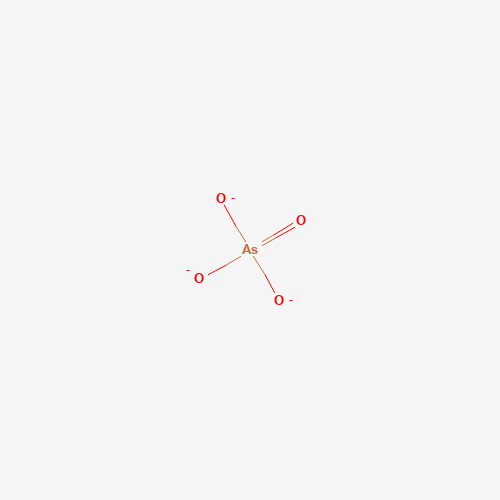
Arsenate(3-) is an arsenate ion resulting from the removal of three protons from arsenic acid. It is a conjugate base of an arsenate(2-).
科学粮草官-词典编辑部,修订于:2026-07-06
Toxicity
ToxicitySymptoms
Exposure to lower levels of arsenic can cause nausea and vomiting, decreased production of red and white blood cells, abnormal heart rhythm, and damage to blood vessels.
Treatment
Arsenic poisoning can be treated by chelation therapy, using chelating agents such as dimercaprol, EDTA or DMSA. Charcoal tablets may also be used for less severe cases. In addition, maintaining a diet high in sulfur helps eliminate arsenic from the body. (L20)
Toxicity Data
LD50: 48 mg/kg (Oral, Rat) (T14) LD50: 8 mg/kg (Intravenous, Rabbit) (T52) LD50 in rabbits is 6 mg/kg (0.006 g/kg).
Health Effects
Arsenic poisoning can lead to death from multi-system organ failure, probably from necrotic cell death and not apoptosis. Arsenic is also a known carcinogen, especially in skin, liver, bladder and lung cancers. (T1, L20)
Exposure Routes
Oral (L2); inhalation (L2); dermal (L2)
Toxicity Summary
Arsenic and its metabolites disrupt ATP production through several mechanisms. At the level of the citric acid cycle, arsenic inhibits pyruvate dehydrogenase. By competing with phosphate it uncouples oxidative phosphorylation, thus inhibiting energy-linked reduction of NAD+, mitochondrial respiration, and ATP synthesis. Hydrogen peroxide production is also increased, which might form reactive oxygen species and oxidative stress. Arsenic's carginogenicity is influenced by the arsenical binding of tubulin, which results in aneuploidy, polyploidy and mitotic arrests. The binding of other arsenic protein targets may also cause altered DNA repair enzyme activity, altered DNA methylation patterns and cell proliferation. (T1, A17)
Minimum Risk Level
Acute Oral: 0.005 mg/kg/day (L134) Chronic Oral: 0.0003 mg/kg/day (L134) Chronic Inhalation: 0.01 mg/m3 (L134)
Carcinogen Classification
1, carcinogenic to humans. (L135)









