


 一键配货
一键配货
化合物详情
CAS10588-01-9
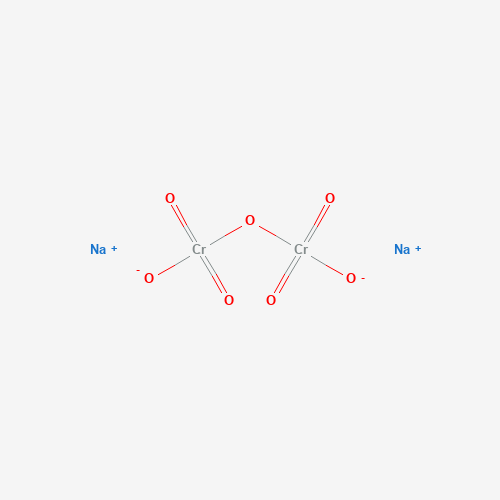
分子式Cr2Na2O7
分子量261.97 g/mol
危化品
Physical Description | Sodium dichromate appears as a red or red-orange crystalline solid. May be strongly irritating to skin, eyes and mucous membranes. Used as a corrosion inhibitor, and in the manufacture of other chemicals.
科学粮草官-词典编辑部,修订于:2026-07-06
Toxicity
ToxicityEnvironmental Biodegradation
Sodium dichromate is reported to be non-biodegradable based on results of the Japanese MITI test(1); however, BOD values and test protocols were not reported(SRC).
Environmental Bioconcentration
Using carp (Cyprinus carpio) which were exposed over a 4-week period to sodium dichromate dihydrate concentrations of 1 and 0.1 mg/L, the BCF ranged from <3.6 to <36(1). According to a classification scheme(2), this BCF range suggests that bioconcentration in aquatic organisms is low(SRC).
Environmental Water Concentrations
DRINKING WATER: Sodium dichromate dihydrate is one of a number of inorganic compounds containing hexavalent chromium (CrVI) found in drinking water source supplies as a contaminant resulting from various industrial processes including electroplating operations, leather tanning, and textile manufacturing(1).
Ecotoxicity Excerpts
/PLANTS/ The Allium anaphase-telophase test was evaluated to find out if it could be recommended in the screening of wastewater for genotoxicity. Five mutagenic or carcinogenic chemicals usually found in wastewater were tested in the Allium anaphase-telophase test. Sodium dichromate (25 uM), benzene (100 uM), dichloromethane (175 uM) and 1,1,1-trichloromethane (175 uM) increased the frequency of chromosome aberrations in the root cells, whereas formaldehyde (1 mM) was found to be non-mutagenic in this test system. Other studies where chemicals were tested in the Allium test were reviewed. For 15 chemicals the results were compared with results from the Ames test, the Microscreen assay, and carcinogenicity tests in rodents. The sensitivity of the Allium test was calculated to be 82%. In...
ICSC Environmental Data
The substance is very toxic to aquatic organisms. The substance may cause long-term effects in the aquatic environment. It is strongly advised not to let the chemical enter into the environment.
Probable Routes of Human Exposure
NIOSH (NOES Survey 1981-1983) has statistically estimated that 136,313 workers (24,542 of these are female) were potentially exposed to sodium dichromate in the US(1). Occupational exposure to sodium dichromate may occur through inhalation and dermal contact with this compound at workplaces where sodium dichromate is produced or used(2).
Symptoms
Breathing hexavalent chromium can cause irritation to the lining of the nose, nose ulcers, runny nose, and breathing problems, such as asthma, cough, shortness of breath, or wheezing. Ingestion of hexavalent chromium causes irritation and ulcers in the stomach and small intestine, as well as anemia. Skin contact can cause skin ulcers. (L16)
Treatment
There is no know antidote for chromium poisoning. Exposure is usually handled with symptomatic treatment. (L16)
Toxicity Data
LD50: 51.10 mg/kg (Oral, Rat) (L16) LD50: 1000 mg/kg (Dermal, Rabbit) (L16) LC50: 124.42 mg/m3 over 4 hours (Inhalation, Rat) (L16)
Health Effects
Hexavalent chromium is a known carcinogen. Chronic inhalation especially has been linked to lung cancer. Hexavalent chromium has also been know to cause reproductive and developmental defects. (A12)
Adverse Effects
ACGIH Carcinogen - Confirmed Human.
Exposure Routes
Inhalation (L16); oral (L16); dermal (L16)
Toxicity Summary
Hexavalent chromium's carcinogenic effects are caused by its metabolites, pentavalent and trivalent chromium. The DNA damage may be caused by hydroxyl radicals produced during reoxidation of pentavalent chromium by hydrogen peroxide molecules present in the cell. Trivalent chromium may also form complexes with peptides, proteins, and DNA, resulting in DNA-protein crosslinks, DNA strand breaks, DNA-DNA interstrand crosslinks, chromium-DNA adducts, chromosomal aberrations and alterations in cellular signaling pathways. It has been shown to induce carcinogenesis by overstimulating cellular regulatory pathways and increasing peroxide levels by activating certain mitogen-activated protein kinases. It can also cause transcriptional repression by cross-linking histone deacetylase 1-DNA methylt...
Minimum Risk Level
Intermediate Oral: 0.005 mg/kg/day (L134) Chronic Oral: 0.001 mg/kg/day (L134)
RAIS Toxicity Values
Oral Slope Factor Reference: CALEPA
Carcinogen Classification
1, carcinogenic to humans. (L135)
Non-Human Toxicity Values
LD50 Rat oral 50 mg/kg
Populations at Special Risk
Although the genotoxic mechanism(s) of hexavalent chromium (CrVI) carcinogenicity remain to be fully elucidated, intracellular reduction of CrVI and concomitant generation of reactive intermediates including reactive oxygen species and subsequent oxidative damage to DNA is believed to contribute to the process of carcinogenesis. In the current study, substantial interindividual variation (7.19-25.84% and 8.79-34.72% tail DNA as assessed by conventional and FPG-modified comet assay, respectively) in levels of DNA strand breaks after in vitro treatment of WBC with sodium dichromate (100 micromol/L, 1 hour) was shown within a group of healthy adult volunteers (n = 72) as assessed by both comet and formamidopyrimidine glycosylase-modified comet assays. No statistically significant correlati...









