


 一键配货
一键配货
化合物详情
CAS7784-33-0
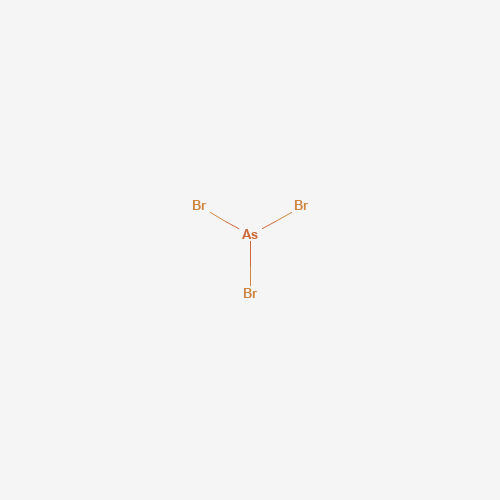
分子式AsBr3
分子量314.63 g/mol
危化品
Physical Description | Arsenic bromide appears as a yellowish white crystalline solid. Absorbs moisture from the air. Decomposed by water to form arsenic acid and hydrobromic acid, a corrosive. Intensely toxic.
科学粮草官-词典编辑部,修订于:2026-07-06
Toxicity
ToxicitySymptoms
Exposure to lower levels of arsenic can cause nausea and vomiting, decreased production of red and white blood cells, abnormal heart rhythm, damage to blood vessels, and a sensation of
Treatment
EYES: irrigate opened eyes for several minutes under running water. INGESTION: do not induce vomiting. Rinse mouth with water (never give anything by mouth to an unconscious person). Seek immediate medical advice. SKIN: should be treated immediately by rinsing the affected parts in cold running water for at least 15 minutes, followed by thorough washing with soap and water. If necessary, the person should shower and change contaminated clothing and shoes, and then must seek medical attention. INHALATION: supply fresh air. If required provide artificial respiration.
Health Effects
Arsenic poisoning can lead to death from multi-system organ failure, probably from necrotic cell death, not apoptosis. Arsenic is also a known carcinogen, esepcially in skin, liver, bladder and lung cancers. Bromine vapour causes irritation and direct damage to the mucous membranes. Elemental bromine also burns the skin. The bromide ion is a central nervous system depressant and chronic exposure produces neuronal effects. This is called bromism and can result in central reactions reaching from somnolence to coma, cachexia, exicosis, loss of reflexes or pathologic reflexes, clonic seizures, tremor, ataxia, loss of neural sensitivity, paresis, papillar edema of the eyes, abnormal speech, cerebral edema, delirium, aggressiveness, and psychoses. (L625, L626, L627, T1, L20)
Adverse Effects
ACGIH Carcinogen - Confirmed Human.
Exposure Routes
Oral (L2); inhalation (L2); dermal (L2)
Toxicity Summary
Arsenic and its metabolites disrupt ATP production through several mechanisms. At the level of the citric acid cycle, arsenic inhibits pyruvate dehydrogenase and by competing with phosphate it uncouples oxidative phosphorylation, thus inhibiting energy-linked reduction of NAD+, mitochondrial respiration, and ATP synthesis. Hydrogen peroxide production is also increased, which might form reactive oxygen species and oxidative stress. Arsenic's carginogenicity is influenced by the arsenical binding of tubulin, which results in aneuploidy, polyploidy and mitotic arrests. The binding of other arsenic protein targets may also cause altered DNA repair enzyme activity, altered DNA methylation patterns and cell proliferation. Bromine is a powerful oxidizing agent and is able to release oxygen fr...
Minimum Risk Level
Acute Oral: 0.005 mg/kg/day (Arsenic) (L134) Chronic Oral: 0.0003 mg/kg/day (Arsenic) (L134) Chronic Inhalation: 0.01 mg/m3 (Arsenic) (L134)
Acceptable Daily Intakes
WHO= 0.002 mg/kg /Inorganic arsenic cmpd, as As; from table/
Carcinogen Classification
1, carcinogenic to humans. (L135)









