


 一键配货
一键配货
化合物详情
CAS66332-96-5
分子式C17H16F3NO2
分子量313.33 g/mol g/mol
危化品
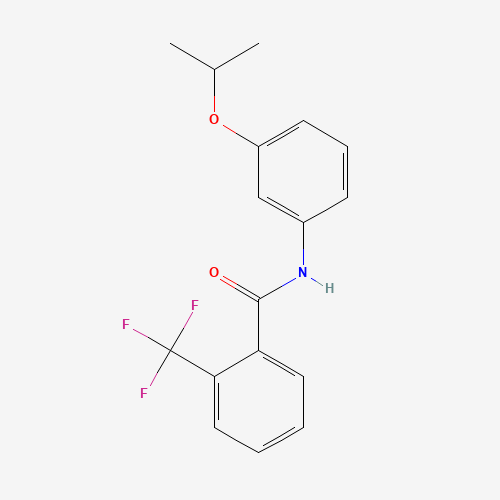
Flutolanil is a member of the class of benzamides, obtained by formal condensation of the carboxy group of 2-(trifluoromethyl)benzoic acid with the amino group of 3-(ispropyloxy)aniline. A fungicide used to control a range of pathogens especially Rhizoctonia spp. on rice, turf and other crops. It has a role as an EC 1.3.5.1 [succinate dehydrogenase (quinone)] inhibitor and an antifungal agrochemical. It is a member of benzamides, an aromatic ether, a member of (trifluoromethyl)benzenes and a benzanilide fungicide.
科学粮草官-词典编辑部,修订于:2026-07-06
Toxicity
ToxicityEPA Ecotoxicity
Pesticide Ecotoxicity Data from EPA: 54
Ecotoxicity Values
LD50; Species: Colinus virginianus (Northern bobwhite) age 18 weeks; oral via capsule >2000 mg/kg /97.5% purity/
Fate Summary
ATMOSPHERIC FATE: According to a model of gas/particle partitioning of semivolatile organic compounds in the atmosphere(1), flutolanil, which has a vapor pressure of 1.33X10⁻⁵ mm Hg mm Hg at 25 °C(2), will exist in both the vapor and particulate phases in the ambient atmosphere. Vapor-phase flutolanil is degraded in the atmosphere by reaction with photochemically-produced hydroxyl radicals(SRC); the half-life for this reaction in air is estimated to be 3 hours(SRC), calculated from its rate constant of 1.5X10⁻¹⁴ cu cm/molecule-sec at 25 °C that was derived using a structure estimation method(3). Particulate-phase flutolanil may be removed from the air by wet and dry deposition(SRC). Flutolanil contains chromophores that absorb at wavelengths >290 nm(4) and, therefore, may be susceptible...
Soil Adsorption / Mobility
A Koc of 418 was determined for flutolanil using soil columns with turf grass soils(1). Flutolanil has reported Koc values ranging between 457 and 1340 calculated from guideline studies using several soils such as sand, loam, clay, and sediment, and an average Koc from 10 soils of 780.7(2). According to a classification scheme(3), these Koc values suggests that flutolanil is expected to have moderate to low mobility in soil(SRC).
Environmental Biodegradation
ANAEROBIC: Flutolanil has half-lives of greater than 120 to 180 days in loamy, sandy loams, and clay soils resulting from guideline anaerobic soil metabolism studies(1). Flutolanil exhibited a half-life of 13 years in clay sediment at 25 °C, calculated from a guideline anaerobic aquatic metabolism study(1). Flutolanil exhibited a half-life of 361 days incubated in Zoysiagrass fairway soil incubated under anaerobic conditions(2).
Environmental Bioconcentration
A BCF value of 20 was measured for flutolanil in carp (Cyprinus carpio)(1). Flutolanil, present at 0.1 and 0.001 ppm, resulted in whole fish BCF values of 13-26 and 9.3-24, respectively, in Japanese carp (C. carpio)(2). An edible BCF of 13, a nonedible BCF of 270, and a whole body BCF of 150 was reported for flutolanil in bluegill sunfish (Lepomis macrochirus) exposed for 28 days in the EPA bioconcentration guideline 165-4/OPPTS 950.1730 test(2,3). The depuraton half-life in blugill sunfish was reported as 0.3 days(2). According to a classification scheme(4), BCF values of zero to 30 are low and from 100 to 1,000 are high(SRC).
Volatilization from Water / Soil
The Henry's Law constant for flutolanil is estimated as 7.1X10⁻⁷ atm-cu m/mole(1) derived from its vapor pressure, 1.33X10⁻⁵ mm Hg(2), and water solubility, 8.01 mg/L(3). This Henry's Law constant indicates that flutolanil is expected to be essentially nonvolatile from water surfaces(4). Flutolanil's estimated Henry's Law constant indicates that volatilization from moist soil surfaces in not expected(SRC). Flutolanil is not expected to volatilize from dry soil surfaces(SRC) based upon its vapor pressure(2).
Environmental Abiotic Degradation
The rate constant for the vapor-phase reaction of flutolanil with photochemically-produced hydroxyl radicals has been estimated as 1.5X10⁻¹⁴ cu cm/molecule-sec at 25 °C(SRC) using a structure estimation method(1). This corresponds to an atmospheric half-life of about 3 hours at an atmospheric concentration of 5X10+5 hydroxyl radicals per cu cm(1). Flutolanil is not expected to undergo hydrolysis in the environment as it is expected to be hydrolytically stable at pH 5, 7, and 9(2,3). Flutolanil contains chromophores that absorb at wavelengths >290 nm(4) and, therefore, may be susceptible to direct photolysis by sunlight(SRC). Flutolanil has an aqueous photolysis half-life of 277 days at pH 7 and 25 °C(5) and was found to be stable to photodegradation on soil(3). Flutolanil was not decomp...
Environmental Water Concentrations
RAIN/SNOW: In Utsunomiya, Japan, where fungicides are typically applied from July to September in rice fields, flutolanil was detected in rainwater during July, August, and September 1999 and in July 2000 at concentrations ranging from 0.4 to 9.5 ug/cu m; flutolanil was not detected in the rainwater from October 1999 through June 2000(1).
Food Survey Values
Results from an agricultural product monitoring effort in Japan during April 1995 through March 2000 reported flutolanil in 4 out of 51 rice samples at concentrations less than 0.01 ug/g(1). Mean concentrations for flutolanil of 65.9, 90.8, 85.2, 92.8, 84.2, 98.8, 72.1, 92.2, 101.1, and 87.9 ppm(ug/g) were quantified in brown rice, potato, cabbage, lettuce, carrot, cucumber, shiitake mushroom, apple, strawberry, and banana, respectively. Samples were collected from retail produce sources in Japan prior to 1994(2). Flutolanil was detected in 1 out of 173 agricultural product samples from a local market in Japan at a concentration of 31.1 ng/g; dates were not provided(3).
Ecotoxicity Excerpts
/PLANTS/ There is growing evidence that the application of biocontrol organisms (e.g., Pseudomonas and Bacillus spp., arbuscular mycorrhizal fungi-AMF) is a feasible option to reduce incidence of plant pathogens in an integrated control strategy. However, the utilization of these microorganisms, in particular AMF, may be threatened by the application of fungicides, a widely-used measure to control Rhizoctonia solani in various crops among /them,/ potato. Prior to their application, it is thus important to determine the impact of fungicides on AMF. The present study investigated, under in vitro controlled conditions, the impact of azoxystrobin (a systemic broad-spectrum fungicide), flutolanil (a systemic Basidiomycota-specific fungicide), and pencycuron (a contact Rhizoctonia-specific fu...
ICSC Environmental Data
The substance is toxic to aquatic organisms. Avoid release to the environment in circumstances different to normal use.
Atmospheric Concentrations
URBAN/SUBUBAN: In July 1991 flutolanil was detected in ambient air samples from Kitakyushu, Japan at a concentration of 0.46 ng/cu m(1).
Artificial Pollution Sources
Flutolanil's production may result in its release to the environment through various waste streams; its use as an agricultural fungicide(1), specifically a fungicide for seed treatment and protection(2) will result in its direct release to the environment(SRC). Flutolanil is an active ingredient in many formulated pesticide products used on numerous crops, nurseries and turf(3).
Sediment/Soil Concentrations
SEDIMENTS: In 2007 flutolanil was detected in sediments from the southern and northen basins of Lake Biwa in Japan at concentrations ranging between less than 1 to 5 ug/kg(1).
Probable Routes of Human Exposure
Occupational exposure to flutolanil may occur through inhalation and dermal contact with this compound at workplaces where flutolanil is produced or used. Limited monitoring data indicate exposure may occur via ingestion of imported foods containing flutolanil residues, and inhalation and dermal contact with soil and water in areas where this fungicide is applied (e.g. golf courses). (SRC)
Other Environmental Concentrations
Flutolanil was detected in 36 out of 123 drainage samples from 24 golf courses in Tokyo from 1994 to 1996, the maximum concentration found was 0.037 mg/L(1).
Environmental Fate / Exposure Summary
Flutolanil's production may result in its release to the environment through various waste streams; its use as an agricultural fungicide will result in its direct release to the environment. If released to air, a vapor pressure of 1.33X10⁻⁵ mm Hg at 25 °C indicates flutolanil will exist in both the vapor and particulate phases in the atmosphere. Vapor-phase flutolanil will be degraded in the atmosphere by reaction with photochemically-produced hydroxyl radicals; the half-life for this reaction in air is estimated to be 3 hours. Particulate-phase flutolanil will be removed from the atmosphere by wet and dry deposition. Flutolanil contains chromophores that absorb at wavelengths >290 nm and, therefore, may be susceptible to direct photolysis by sunlight. If released to soil, flutolanil is...
Target Organs
Reproductive
Toxicity Summary
IDENTIFICATION AND USE: Flutolantil is a solid. It acts against Basidiomycetes. It is used as a foliar fungicide for the control of Typhula on barley and sheath blight on rice, as well as a seed dressing against Rhizoctonia solani on potatoes and cucurbits. HUMAN EXPOSURE AND TOXICITY: Flutolanil exhibits estrogenic activities in human breast cancer cells. Negative results were seen in assays for clastogenicity in human lymphocytes. ANIMAL STUDIES: Conjunctival redness was seen in rabbits at 1 hr, and the redness was still present at 48 hr in four animals. All eyes were normal by 72 hr. Flutolanil was not carcinogenic in mice, rats and dogs. Flutolanil showed no specific reproductive effects in a two-generation study of reproductive toxicity in rats. The only sign of general toxicity, i...
RAIS Toxicity Values
Oral Chronic Reference Dose Reference: OPP
Human Toxicity Excerpts
/ALTERNATIVE and IN VITRO TESTS/ Endocrine disruptors, when absorbed into the body, interfere with the normal function by mimicking or blocking the hormone system. To investigate compounds mimicking estrogen in the drinking water source of the residence of Seoul, the Pal-dang reservoir was monitored over a period of 5 years, between 2000 and 2004. Nine kinds of pesticide (carbaryl, DBCP, diazinon, fenitrothion, fenobucarb, flutolanil, iprobenphos, isoprothiolane and parathion) were found to exist in the river water sample. These compounds were detected at low concentrations in the water samples. The total concentration and those of each of these pesticides were below the permissible limits of the National Institute of Environmental Research (NIER), Korea. The estrogenic potencies of the...
Carcinogen Classification
No indication of carcinogenicity to humans (not listed by IARC).
Non-Human Toxicity Values
LD50 Rat sc >10 g/kg
Non-Human Toxicity Excerpts
/LABORATORY ANIMALS: Subchronic or Prechronic Exposure/ In a range-finding study reported in 1987, ... groups of 12 CD-1 (ICR) BR mice of each sex received flutolanil (purity, 97.6%) in the diet at a concentration of 0, 500, 5,000 or 50,000 ppm for 90 days. Body weight, food consumption and clinical signs were monitored routinely ... All animals were necropsied grossly, and the adrenals, liver, bone marrow and spleen from controls and animals at the highest concentration, and livers from animals at the two lower concentrations were examined histologically. The findings were assessed statistically with the Dunnett test or Student t test. The homogeneity, stability and achieved concentrations in the diet were confirmed analytically to be within +/- 10% of nominal. The mean intakes were 0,...
1 or Cancer Risk Level 1E-06
Fraction of Contaminant Absorbed Dermally from Soil: 0.1
Evidence for Carcinogenicity
Cancer Classification: Group E Evidence of Non-carcinogenicity for Humans
Antidote and Emergency Treatment
/SRP:/ Advanced treatment: Consider orotracheal or nasotracheal intubation for airway control in the patient who is unconscious, has severe pulmonary edema, or is in severe respiratory distress. Positive-pressure ventilation techniques with a bag valve mask device may be beneficial. Consider drug therapy for pulmonary edema ... . Consider administering a beta agonist such as albuterol for severe bronchospasm ... . Monitor cardiac rhythm and treat arrhythmias as necessary ... . Start IV administration of D5W TKO /SRP: "To keep open", minimal flow rate/. Use 0.9% saline (NS) or lactated Ringer's (LR) if signs of hypovolemia are present. For hypotension with signs of hypovolemia, administer fluid cautiously. Watch for signs of fluid overload ... . Treat seizures with diazepam or lorazepam...
Hazard Quotient Level 3 or Cancer Risk Level 1E-04
Fraction of Contaminant Absorbed Dermally from Soil: 0.1









