


 一键配货
一键配货
化合物详情
CAS2682-20-4
分子式C4H5NOS
分子量115.15 g/mol g/mol
危化品
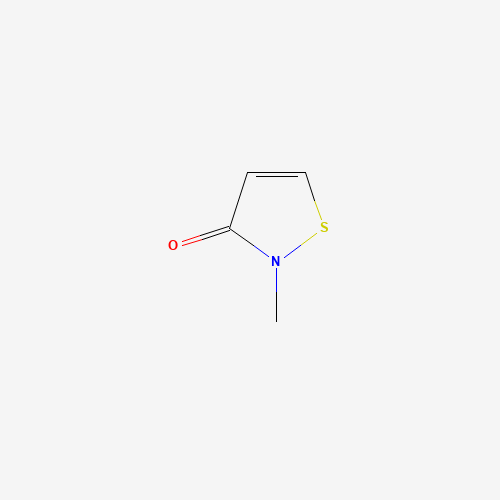
Methylisothiazolinone is a 1,2-thazole that is 4-isothiazolin-3-one bearing a methyl group on the nitrogen atom. It is a powerful biocide and preservative and is the minor active ingredient in the commercial product KathonTM. It has a role as an antimicrobial agent, an antifungal agent and an antifouling biocide.
科学粮草官-词典编辑部,修订于:2026-07-06
Toxicity
ToxicityFate Summary
ATMOSPHERIC FATE: According to a model of gas/particle partitioning of semivolatile organic compounds in the atmosphere(1), methylisothiazolinone, which has a vapor pressure of 0.062 mm Hg at 25 °C(2), is expected to exist solely as a vapor in the ambient atmosphere. Vapor-phase methylisothiazolinone is degraded in the atmosphere by reaction with photochemically-produced hydroxyl radicals(SRC); the half-life for this reaction in air is estimated to be 13 hours(SRC), calculated from its rate constant of 2.7X10⁻¹¹ cu cm/molecule-sec at 25 °C(SRC) that was derived using a structure estimation method(3). Methylisothiazolinone is not expected to be susceptible to direct photolysis by sunlight(2).
Soil Adsorption / Mobility
Using a structure estimation method based on molecular connectivity indices(1), the Koc of methylisothiazolinone can be estimated to be 12(SRC). According to a classification scheme(2), this estimated Koc value suggests that methylisothiazolinone is expected to have very high mobility in soil.
Environmental Biodegradation
AEROBIC: Utilizing a CO2 evolution test with a freshly prepared activated sludge inoculum, methylisothiazolinone reached 54.1, 55.8 and 47.6% CO2 evolution, at initial concentrations of 0.3, 0.03 and 0.01 ppm, respectively, over a 28 day incubation period; the results classified the compound as inherently biodegradable and demonstrated a dependence on concentration. Microcosm studies in aerobic water found degradation of methylisothiazolinone to be primarily due to biodegradation based on tests using sterile controls. The half-life of methylisothiazolinone in an aerobic microcosm using river water and sediment was 9 days(1).
Environmental Bioconcentration
A BCF of 3 was reported in bluegill sunfish (Lepomis macrochirus) for methylisothiazolinone(1). According to a classification scheme(2), this BCF suggests the potential for bioconcentration in aquatic organisms is low(SRC).
Volatilization from Water / Soil
The Henry's Law constant for methylisothiazolinone is estimated as 5.0X10⁻⁸ atm-cu m/mole(SRC) using a fragment constant estimation method(1). This Henry's Law constant indicates that methylisothiazolinone is expected to be essentially nonvolatile from moist soil and water surfaces(2). Methylisothiazolinone is not expected to volatilize from dry soil surfaces(SRC) based upon an estimated vapor pressure of 0.062 mm Hg(3).
Environmental Abiotic Degradation
The rate constant for the vapor-phase reaction of methylisothiazolinone with photochemically-produced hydroxyl radicals has been estimated as 2.7X10⁻¹¹ cu cm/molecule-sec at 25 °C(SRC) using a structure estimation method(1). This corresponds to an atmospheric half-life of about 13 hours at an atmospheric concentration of 5X10+5 hydroxyl radicals per cu cm(1). Methylisothiazolinone hydrolysis half-live was reported as >30 days at pH 5, 7 and 9(2). Using natural sunlight and a buffer solution the aqueous photodegradation half-life at pH 7 was reported as 11 days for methylisothiazolinone(2). Methylisothiazolinone is not expected to be susceptible to direct photolysis by sunlight(3).
Artificial Pollution Sources
Methylisothiazolinone's production and use as a biocide in cooling towers, paper and pulp mills, cosmetics and toiletries, emulsions, plastics, and anti-fouling paints(1) may result in its release to the environment through various waste streams(SRC).
Probable Routes of Human Exposure
NIOSH (NOES Survey 1981-1983) has statistically estimated that 56,188 workers (17,605 of these were female) were potentially exposed to methylisothiazolinone in the US(1). In a Danish National Survey conducted in 1989 occupational exposures to methylisothiazolinone were estimated at 250,000 with the highest exposures coming from personal services, cleaning and hair dressing (52,000), manufacture of fabricated metal products (48,000) and health services and pharmacies (24,000). Occupational exposure to methylisothiazolinone may occur through inhalation and dermal contact with this compound at workplaces where methylisothiazolinone is produced or used. Use data indicate that the general population may be exposed to methylisothiazolinone via inhalation of fumes from paint and cleaning prod...
Other Environmental Concentrations
Methylisothiazolinone was detected in commercial lotion samples at 3.8-4.1 mg/g(1).
Environmental Fate / Exposure Summary
Methylisothiazolinone's production and use as a biocide in cooling towers, paper and pulp mills, cosmetics and toiletries, emulsions, plastics, and anti-fouling paints may result in its release to the environment through various waste streams. If released to air, a vapor pressure of 0.062 mm Hg at 25 °C indicates methylisothiazolinone will exist solely as a vapor in the atmosphere. Vapor-phase methylisothiazolinone will be degraded in the atmosphere by reaction with photochemically-produced hydroxyl radicals; the half-life for this reaction in air is estimated to be 13 hours. Methylisothiazolinone is not expected to be susceptible to direct photolysis by sunlight. If released to soil, methylisothiazolinone is expected to have very high mobility based upon an estimated Koc of 12. Volatil...
Adverse Effects
Toxic Pneumonitis - Inflammation of the lungs induced by inhalation of metal fumes or toxic gases and vapors.
Toxicity Summary
IDENTIFICATION AND USE: Methylisothiazolinone (MIT) forms colorless prisms. It is used as preservative in personal care and cosmetics products such as leave-on products, namely hand and body lotions and moisturizers, sun tanning lotions and some rinse-off products like shampoos, surfactants and conditioners. In addition, MIT is an antimicrobial used to control slime-forming bacteria, fungi, and algae in cooling water systems, fuel storage tanks, pulp and paper mill water systems, oil extraction systems, and other industrial settings. It is also used to control the growth of mold, mildew, and sapstain on wood products. It is registered for use in the USA but approved pesticide uses may change periodically and so federal, state and local authorities must be consulted for currently approve...
Antidote and Emergency Treatment
/SRP:/ Advanced treatment: Consider orotracheal or nasotracheal intubation for airway control in the patient who is unconscious, has severe pulmonary edema, or is in severe respiratory distress. Positive-pressure ventilation techniques with a bag valve mask device may be beneficial. Consider drug therapy for pulmonary edema ... . Consider administering a beta agonist such as albuterol for severe bronchospasm ... . Monitor cardiac rhythm and treat arrhythmias as necessary ... . Start IV administration of D5W TKO /SRP: "To keep open", minimal flow rate/. Use 0.9% saline (NS) or lactated Ringer's (LR) if signs of hypovolemia are present. For hypotension with signs of hypovolemia, administer fluid cautiously. Watch for signs of fluid overload ... . Treat seizures with diazepam or lorazepam...









