

 一键配货
一键配货
化合物详情
CAS6485-39-8
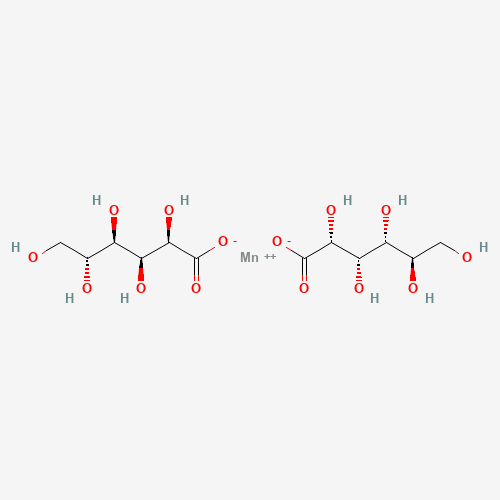
分子式C12H22MnO14
分子量445.232729 g/mol
非危品
Manganese gluconate is a manganese salt of gluconic acid with the chemical formula C12H22MnO14 x 2H2O. It is typically obtained by reacting manganese carbonate with gluconic acid in aqueous medium and then crystallizing the product to form a slightly pink powder. Manganese gluconate is a direct ingredient in food substances as a nutrient supplement. In pharmaceutical preparations it is used as a [DB06757] supplement.
科学粮草官-词典编辑部,修订于:2026-07-06
Toxicity
ToxicitySymptoms
Manganese mainly affects the nervous system and may cause behavioral changes and other nervous system effects, which include movements that may become slow and clumsy. This combination of symptoms when sufficiently severe is referred to as “manganism”. (L228)
Health Effects
Manganese mainly affects the nervous system and may cause behavioral changes and other nervous system effects, which include movements that may become slow and clumsy. This combination of symptoms when sufficiently severe is referred to as “manganism”. (L228)
Adverse Effects
Neurotoxin - Parkinsonism
Exposure Routes
Oral (L228); inhalation (L228)
Toxicity Summary
Manganese is a cellular toxicant that can impair transport systems, enzyme activities, and receptor functions. It primarily targets the central nervous system, particularily the globus pallidus of the basal ganglia. It is believed that the manganese ion, Mn(II), enhances the autoxidation or turnover of various intracellular catecholamines, leading to increased production of free radicals, reactive oxygen species, and other cytotoxic metabolites, along with a depletion of cellular antioxidant defense mechanisms, leading to oxidative damage and selective destruction of dopaminergic neurons. In addition to dopamine, manganese is thought to perturbations other neurotransmitters, such as GABA and glutamate. In order to produce oxidative damage, manganese must first overwhelm the antioxidant...
Minimum Risk Level
Chronic Inhalation: 0.0003 mg/m3 (L134)
Carcinogen Classification
No indication of carcinogenicity to humans (not listed by IARC).
Antidote and Emergency Treatment
Advanced treatment: Consider orotracheal or nasotracheal intubation for airway control in the patient who is unconscious or in severe respiratory distress. Monitor cardiac rhythm and treat arrhythmias if necessary ... . Start an IV with D5W /SRP: "To keep open", minimal flow rate/. Use lactated Ringer's if signs of hypovolemia are present. Consider drug therapy for pulmonary edema ... . For hypotension with signs of hypovolemia, administer fluid cautiously. Consider vasopressors for hypotension with a normal fluid volume. Watch for signs of fluid overload ... . Use proparacaine hydrochloride to assist eye irrigation ... . /Manganese and related compounds/