

 一键配货
一键配货
化合物详情
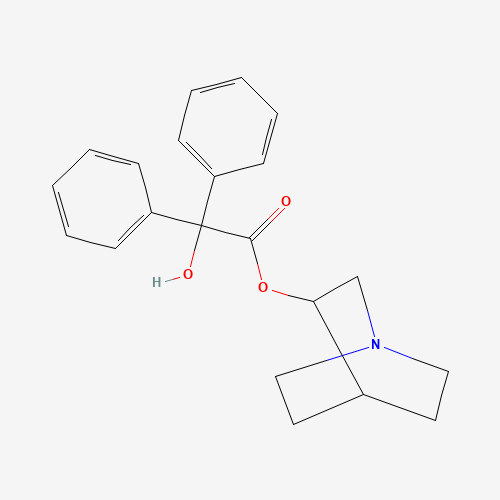
CAS6581-06-2
分子式C21H23NO3
分子量337.41 g/mol
非危品
Physical Description | 3-quinuclidinyl benzilate appears as a chemical warfare incapacitating agent. Colorless liquid, odorless to fruity.
科学粮草官-词典编辑部,修订于:2026-07-06
Toxicity
ToxicityFate Summary
ATMOSPHERIC FATE: Half-life of 3-4 weeks in moist air
Environmental Abiotic Degradation
Quinuclidinyl benzoate hydrolyzes to quinuclidine and benzylic acid; the hydrolysis rate at 25 °C and pH 6.8 and 8.10 was found to be 0.000377 and 0.0089 hr-1, respectively(1).
Symptoms
Skin Exposure: - See Inhalation Exposure.
Interactions
Male mice administered neostigmine in the drinking water a daily increasing concentrations (20-100 mg/L) for four days became tolerant to its toxicity and presented a reduced binding of [3H]quinuclidinyl benzilate ([3H]QNB) in the small intestine. An increased binding of [3H]QNB was found in the forebrains of neostigmine-treated animals. This was due to an increase in muscarinic cholinergic receptor density. ... Administration of methylatropine together with neostigmine prevented the decrease of [3H]QNB binding in the small intestine as well as the increase in the forebrain.
Adverse Effects
Neurotoxin - Other CNS neurotoxin
Exposure Routes
QNB can be absorbed into the body by inhalation, ingestion, skin contact, or eye contact. Inhalation and ingestion are important routes of exposure for the solid. Skin and eye contact are routes of exposure when QNB is mixed with a liquid solvent that would enhance absorption.
Non-Human Toxicity Values
The LD50 (lethal dose to 50% of an exposed population) for BZ is estimated to be similar to that of atropine, which is approximately 100 mg. Other factors, such as the exposed patient's preexisting health status and the time from exposure to medical care, are also important.
Populations at Special Risk
As noted with other antimuscarinic agents, patients at the extremes of age may be more susceptible to toxicity. Other factors expected to predispose a patient to toxicity include heat stress, volume depletion, and concurrent use of medications with antimuscarinic effects.
Antidote and Emergency Treatment
Advanced treatment: Consider orotracheal or nasotracheal intubation for airway control in the patient who is unconscious, has severe pulmonary edema, or is in severe respiratory distress. Positive-pressure ventilation techniques with a bag-valve-mask device may be beneficial. Consider drug therapy for pulmonary edema ... . Monitor cardiac rhythm and treat arrhythmias as necessary ... . Start IV administration of D5W /SRP: "To keep open", minimal flow rate/. Use 0.9% saline (NS) or lactated Ringer's (LR) if signs of hypovolemia are present. For hypotension with signs of hypovolemia, administer fluid cautiously. Consider vasopressors if patient is hypotensive with a normal fluid volume. Watch for signs of fluid overload ... . Treat seizures or sedate LSD patients with diazepam (Valium) or...