


 一键配货
一键配货
化合物详情
CAS7414-83-7
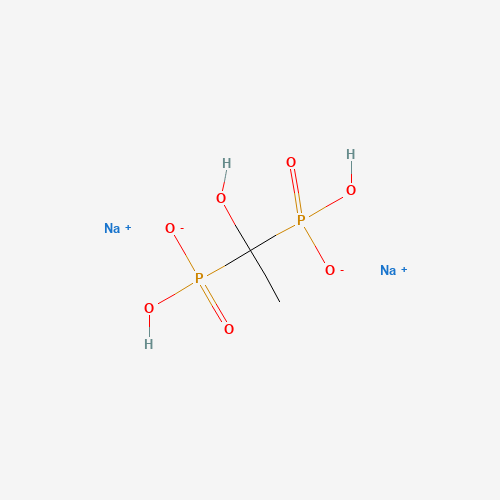
分子式C2H6Na2O7P2
分子量249.99 g/mol g/mol
危化品
Etidronate disodium is an organic sodium salt resulting from the replacement of two protons from etidronic acid (one from from each of the phosphonic acid groups) by sodium ions. It has a role as an antineoplastic agent, a chelator and a bone density conservation agent. It contains an etidronic acid(2-).
科学粮草官-词典编辑部,修订于:2026-07-06
Toxicity
ToxicitySymptoms
Clinical experience with acute etidronic acid overdosage is extremely limited. Decreases in serum calcium following substantial overdosage may be expected in some patients. Signs and symptoms of hypocalcemia also may occur in some of these patients. Some patients may develop vomiting. In one event, an 18-year-old female who ingested an estimated single dose of 4800 to 6000 mg (67 to 100 mg/kg) of etidronate was reported to be mildly hypocalcemic (7 .5 2 mg/ dl) and experienced paresthesia of the fingers.
Exposure Routes
The amount of drug absorbed after an oral dose is approximately 3%.
Toxicity Summary
Bisphosphonates, when attached to bone tissue, are absorbed by osteoclasts, the bone cells that breaks down bone tissue. Although the mechanism of action of non-nitrogenous bisphosphonates has not been fully elucidated, available data suggest that they bind strongly to hydroxyapatite crystals in the bone matrix, preferentially at the sites of increased bone turnover and inhibit the formation and dissolution of the crystals. Other actions may include direct inhibition of mature osteoclast function, promotion of osteoclast apoptosis, and interference with osteoblast-mediated osteoclast activation. Etidronic acid does not interfere with bone mineralization. In malignancy-related hypercalcemia, etidronic acid decreases serum calcium by inhibiting tumour-induced bone resorption and reducing...
Carcinogen Classification
No indication of carcinogenicity to humans (not listed by IARC).
Drug Induced Liver Injury
Reference: DOI:10.1016/j.drudis.2011.05.007









