


 一键配货
一键配货
化合物详情
CAS7446-08-4
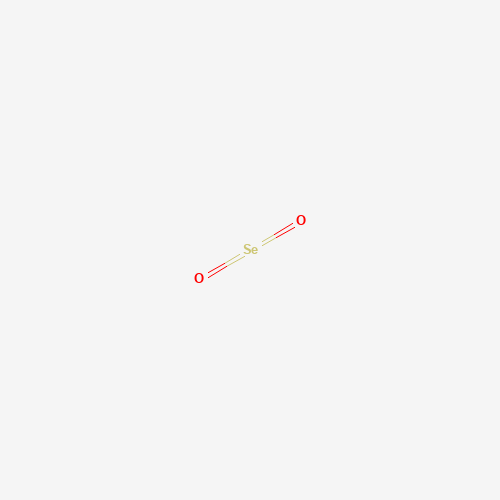
分子式SeO2
分子量110.96 g/mol g/mol
危化品
Physical Description | Selenium dioxide appears as a white or creamy-white volatile lustrous crystal or crystalline powder with a pungent sour smell. Melting point 340 deg C. Density 3.954 g / cm3. Toxic by ingestion and inhalation.
科学粮草官-词典编辑部,修订于:2026-07-06
Toxicity
ToxicityFate Summary
ATMOSPHERIC FATE: Volatile selenium dioxide is expected to exist in the gaseous state in the atmosphere(1,2). Selenium dioxide released to the air from the combustion of fossil fuels is expected to be reduced to elemental selenium by sulfur dioxide formed during the combustion(2). Selenium dioxide reacting with atmospheric moisture generates selenious acid aerosols(2).
Ecotoxicity Excerpts
/PLANTS/ The feasibility of using selenite ion (selenium dioxide (SeO2) or sodium selenite (Na2SeO3)) as a systemic deer repellent for the protection of Douglas fir seedlings is evaluated. When applied to the soil, the selenium (Se) is absorbed by the seedling roots, transported to the foliage, and thereafter volatilized. Acute phytotoxicity is observed only when Se foliar concn exceed 100 ppm, while animal repellency is demonstrated at concn as low as 1-2 ppm. ...
ICSC Environmental Data
The substance is harmful to aquatic organisms.
Atmospheric Concentrations
The atmospheric level of selenium in most urban regions ranges from 0.1 to 10 ng/cu m. A greater part of the atmospheric selenium is bound to fly ash and to suspended particles that contain from 1.4 to 11 ug/g and from 1 to 110 ug/g, respectively.
Artificial Pollution Sources
Up to 90% of the selenium content in ambient air is emitted during the burning of fossil fuels. Selenium dioxide is formed during combustion of elemental selenium present in fossil fuels.
Symptoms
Short-term oral exposure to high concentrations of selenium may cause nausea, vomiting, and diarrhea. Brief exposures to high levels of elemental selenium or selenium dioxide in air can result in respiratory tract irritation, bronchitis, difficulty breathing, and stomach pains. Longer-term exposure to either of these air-borne forms can cause respiratory irritation, bronchial spasms, and coughing. (L619)
Interactions
The effects of selenium on cadmium toxicokinetics and on the ability of cadmium to induce metallothionein, a metal-binding protein that is thought to confer tolerance to cadmium toxicity /is determined/. To assess the acute protective effects of selenium, male Wistar (WFr) rats were given selenium (as SeO2; 10 umol/kg, sc) at -24, and +24 hr relative to cadmium (as CdCl2; 45 umol/kg, sc). Over a 14-day period this dose of cadmium killed 6 out of 10 rats, while 100% of the cadmium-treated rats given concurrent selenium treatments survived. The acute increases in testicular weight that were seen with cadmium, indicative of edematous damage, were also prevented by concurrent selenium treatments.
Toxicity Data
LD50: 23 mg/kg (Oral, Mouse) (L727) LD50: 4 mg/kg (Dermal, Rabbit) (L727) LD50: 3.6 mg/kg (Intraperitoneal, Rat) (L727) LD50: 9 mg/kg (Intravenous, Mouse) (L727) LD50: 4 mg/kg (Subcutaneous, Rabbit) (L727)
Health Effects
Chronic oral exposure to high concentrations of selenium compounds can produce a disease called selenosis. The major signs of selenosis are hair loss, nail brittleness, and neurological abnormalities (such as numbness and other odd sensations in the extremities). Animal studies have shown that selenium may also affect sperm production and the female reproductive cycle. (L619)
Adverse Effects
Toxic Pneumonitis - Inflammation of the lungs induced by inhalation of metal fumes or toxic gases and vapors.
Exposure Routes
Oral (L619); inhalation (L619); dermal (L619)
Toxicity Summary
Selenium readily substitutes for sulfur in biomolecules and in many biochemical reactions, especially when the concentration of selenium is high and the concentration of sulfur is low. Inactivation of the sulfhydryl enzymes necessary for oxidative reactions in cellular respiration, through effects on mitochondrial and microsomal electron transport, might contribute to acute selenium toxicity. Selenomethionine (a common organic selenium compound) also appears to randomly substitute for methionine in protein synthesis. This substitution may affect the structure and functionability of the protein, for example, by altering disulfide bridges. Inorganic forms of selenium appear to react with tissue thiols by redox catalysis, resulting in formation of reactive oxygen species and causing damage...
Minimum Risk Level
Chronic Oral: 0.005 mg/kg/day (L134)
Carcinogen Classification
3, not classifiable as to its carcinogenicity to humans. (L135)
Non-Human Toxicity Values
LD50 Rabbit subcutaneous 4 mg/kg
Antidote and Emergency Treatment
Decontamination: Inhalation. Immediately remove the victim from exposure and give supplemental oxygen if available. Skin and eyes. Remove contaminated clothing and wash exposed skin with soap and copious water. Irrigate exposed eyes with copious tepid water or saline. Ingestion. Ingestion of elemental selenium or selenium salts does not usually benefit from GI decontamination. In light of the risk of severe corrosive GI injury, gastric lavage plus activated charcoal may be of value for ingestion s of selenious acid seen within 1 hour. Invitro experiments indicate that vitamin C can reduce selenium salts to elemental selenium, which poorly absorbed. Its use has not been studied in vivo, but oral or nasogastric administration of several grams of ascorbic acid has been recommended. /Selenium/









