


 一键配货
一键配货
化合物详情
CAS7446-11-9
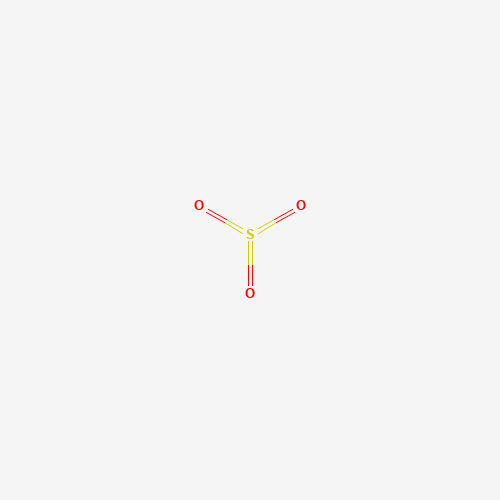
分子式O3S
分子量80.06 g/mol
危化品
Physical Description | Sulfur trioxide, is a colorless to white crystalline solid which will fume in air. Often shipped with inhibitor to prevent polymerization. It reacts violently with water to form sulfuric acid with the release of heat. It is corrosive to metals and tissue. It causes eye and skin burns. Ingestion causes severe burns of mouth esophagus and stomach. The vapor is very toxic by inhalation. It is a fire risk when in contact with organic materials such as wood, cotton, fiberboard, etc.
科学粮草官-词典编辑部,修订于:2026-07-06
Toxicity
ToxicityFate Summary
Atmospheric Fate: Sulfur trioxide is a highly reactive gas, and in the presence of moisture in the air it is rapidly hydrated to sulfuric acid. In the air, therefore, it is sulfuric acid in the form of an aerosol that is found rather than sulfur trioxide, and in general, it is associated with other pollutants in droplets or solid particles extending over a wide range of sizes.
ICSC Environmental Data
The substance is harmful to aquatic organisms.
Probable Routes of Human Exposure
NIOSH (NOES Survey 1981-1983) has statistically estimated that 56,102 workers (3,077 of these were female) were potentially exposed to sulfur trioxide in the US(1).
Symptoms
Ingestion Exposure: Burns in mouth and throat. Burning sensation behind the breastbone. Abdominal pain. Vomiting. Shock or collapse.
Toxicity Data
LCLo (guinea pig) = 30 mg/m3/6hr
Adverse Effects
Toxic Pneumonitis - Inflammation of the lungs induced by inhalation of metal fumes or toxic gases and vapors.
Exposure Routes
Serious local effects by all routes of exposure. The substance can be absorbed into the body by inhalation of its vapour.
RAIS Toxicity Values
Inhalation Chronic Reference Concentration Reference: CALEPA
Non-Human Toxicity Values
LC50 Rat/female inhalation 1136 mg SO3/cu m 1 hr
Non-Human Toxicity Excerpts
/GENOTOXICITY/ The 8-hydroxy-2'-deoxyguanosine (8-OHdG) formation and DNA damage by sulfur trioxide anion radicals (SO3.-) were investigated using ESR spin trapping, HPLC, and electrophoretic assays. Sulfite (SO3(2-) autoxidation generated both hydroxyl (.OH) and SO3.- radicals. Oxidation of SO3(2-) by chromium (VI) generated only SO3.- with much enhanced yield. Incubation of 2'-deoxyguanosine (dG) with SO3(2-) generated 8-OHdG albeit at low yield. Chromium (VI) enhanced the yield four-fold. Electrophoretic assays showed that SO3.- radicals generated by chromium (VI) oxidation of SO3(2-) caused DNA double strand breaks. The results demonstrate that SO3.- radicals are capable of causing dG hydroxylation and DNA double strand breaks.
1 or Cancer Risk Level 1E-06
Fraction of Contaminant Absorbed in Gastrointestinal Tract: 1
Antidote and Emergency Treatment
Advanced treatment: Consider orotracheal or nasotracheal intubation for airway control in the patient who is unconscious, has severe pulmonary edema, or is in severe respiratory distress. Early intubation, at the first sign of upper airway obstruction, may be necessary. Positive-pressure ventilation techniques with a bag valve mask device may be beneficial. Consider drug therapy for pulmonary edema ... . Consider administering a beta agonist such as albuterol for severe bronchospasm ... . Monitor cardiac rhythm and treat arrhythmias as necessary ... . Start IV administration of D5W /SRP: "To keep open", minimal flow rate/. Use 0.9% saline (NS) or lactated Ringer's(LR) if signs of hypovolemia are present. For hypotension with signs of hypovolemia, administer fluid cautiously. Consider va...
Hazard Quotient Level 3 or Cancer Risk Level 1E-04
Fraction of Contaminant Absorbed in Gastrointestinal Tract: 1









