


 一键配货
一键配货
化合物详情
CAS7481-89-2
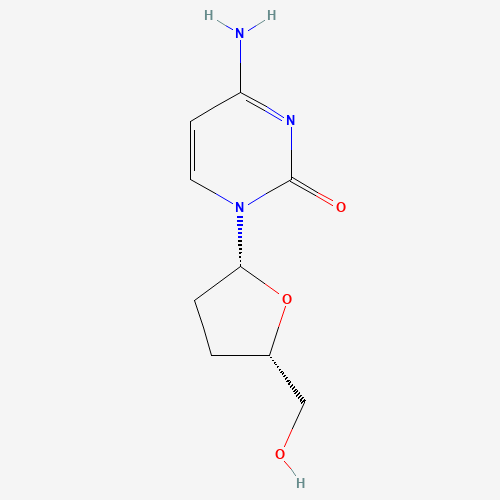
分子式C9H13N3O3
分子量211.22 g/mol g/mol
危化品
Zalcitabine can cause cancer according to California Labor Code.
科学粮草官-词典编辑部,修订于:2026-07-06
Toxicity
ToxicityToxicity Data
Acute overdose: Inadvertent pediatric overdoses have occurred with doses up to 1.5 mg/kg zalcitabine. Chronic overdose: in an initial dose-finding study in which zalcitabine was administered at doses 25 times (0.25 mg/kg every 8 hours) the currently recommended dose, one patient discontinued zalcitabine after 1.5 weeks of treatment subsequent to the development of a rash and fever.
Exposure Routes
Bioavailability is over 80% following oral administration.
Toxicity Summary
Zalcitabine is a nucleoside reverse transcriptase inhibitor (NRTI) with activity against Human Immunodeficiency Virus Type 1 (HIV-1). Within cells, zalcitabine is converted to its active metabolite, dideoxycytidine 5'-triphosphate (ddCTP), by the sequential action of cellular enzymes. ddCTP interferes with viral RNA-directed DNA polymerase (reverse transcriptase) by competing for utilization of the natural substrate deoxycytidine 5'-triphosphate (dCTP), as well as incorpating into viral DNA. Due to it's lack of a 3'-OH group, the formation of a 5' to 3' phosphodiester linkage that is necessary for DNA chain elongation is inhibited, thus leading to the termination of viral DNA growth.
Human Toxicity Excerpts
/SPECIAL STUDIES/ Human peripheral blood cells exposed to zalcitabine with and without exogenous metabolic activation showed increased frequencies of chromosomal aberrations at doses >/= 1.5 ug/ml.
Carcinogen Classification
2B, possibly carcinogenic to humans. (L135)
Drug Induced Liver Injury
References: DOI:10.1016/j.drudis.2019.09.022
Evidence for Carcinogenicity
Evaluation: There is inadequate evidence in humans for the carcinogenicity of zalcitabine. There is sufficient evidence in experimental animals for the carcinogenicity of zalcitabine. Overall evaluation: Zalcitabine is possibly carcinogenic to humans (Group 2B).
Antidote and Emergency Treatment
Maintain an open airway and assist ventilation if needed. Treat coma, seizures, hypotension or anaphylaxis if they occur. replace fluid losses resulting from gastroenteritis with intravenous crystalloids. Maintain steady urine flow with intravenous fluids to alleviate crystalluria and reverse renal dysfunction. Treat lactic acidosis with judicious doses of sodium bicarbonate and by withdrawal of the offending drug. There are no specific antidotes for these agents. Administer activated charcoal.









