


 一键配货
一键配货
化合物详情
CAS7487-94-7
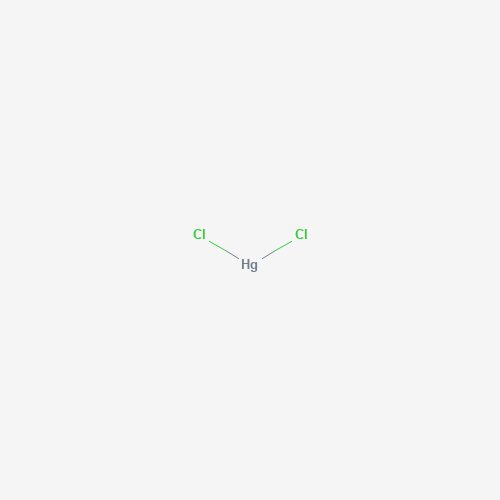
分子式Cl2Hg
分子量271.5 g/mol
危化品
Physical Description | Mercuric chloride appears as an odorless white crystalline solid. Density 5.4 g / cm3. Melting point 277 °C. Slightly volatile at ordinary temperatures. Can be sublimed unchanged. Corrosive to the mucous membranes. Toxic by inhalation (dusts, etc.), ingestion, and skin absorption. Used in photography, disinfectants, wood preservatives, fungicides.
科学粮草官-词典编辑部,修订于:2026-07-06
Toxicity
ToxicityEPA Ecotoxicity
Pesticide Ecotoxicity Data from EPA: 5
Fate Summary
Mercury adsorbed from mercuric chloride and 2-methoxy-ethylmercury chloride (Aretan) solutions by three contrasting soils showed a dependence on soil:solution ratio and initial mercury (Hg) concentration in soil solution. Changing the soil solution ratio from 1:10 to 1:100 but keeping the intitial concentration constant resulted in an increase in initial concentration on other hand, resulted in decrease in Hg adsorption. Upon manipulating of the pH of the surface soils, adsorption of mercuric chloride (HgCl2) at 100 mg Hg/l concentration increased from about 70 to over 95 mg Hg/kg when pH was raised from 5.0 to 8.0. Precipitation of Hg may also have contributed to this trend. Removal of organic matter from soil resulted in large reductions of Hg adsorbed, as much as 95% from the HgC12 s...
Environmental Bioconcentration
Bioconcentration factors of 10,000 and 40,000 have been obtained for mercuric chloride and methylmercury with oyster.
Environmental Abiotic Degradation
Mercuric compounds found in the atmosphere are likely to be transformed by chemical or physical processes. Theoretical calculations on the photodissociation of mercuric compounds have indicated that mercuric chloride and mercuric cyanide are stable, while mercuric hydroxide may dissociate in the gas phase(1). Exchange reactions between water and mercury compounds are likely to occur in the atmosphere(1). The result of these exchange reactions eventually results in the release of elemental mercury into the gaseous phase.
Plant Concentrations
The accumulation of mercury in plants increases with increasing soil mercury concn. Soil type has a considerable influence on this process with a high organic matter content decreasing the uptake(1). Generally, the highest concns of mercury are found at the roots, but translocation to other organs (e.g. leaves) occurs(1). In contrast to higher plants, mosses take up mercury via the atmosphere(1). In one study, 8 types of food were grown on soil amended with 4 or 20 mg/kg of mercuric chloride and later analyzed for uptake(1). Higher concns were found in the roots compared to the above-ground samples. At the highest treatment level, the mercury content of the roots ranged from 0.387 mg/kg for lettuce to 2.447 mg/kg for cauliflower(1). Spinach and radish tubers contained the highest concns...
ICSC Environmental Data
The substance is very toxic to aquatic organisms. Bioaccumulation of this chemical may occur along the food chain, for example in aquatic organisms. The substance may cause long-term effects in the aquatic environment. It is strongly advised not to let the chemical enter into the environment.
Atmospheric Concentrations
In the atmosphere, particulate bound mercury constitutes only approximately 2% of total mercury in the air and has normally been found to be less than 0.1 ng/cu m in regions unaffected by local sources(1). Some other mercury compounds which may exist in the atmosphere are mercuric chloride, mercuric bromide, mercuric hydroxide, mercuric sulfide, and mercuric cyanide(1). The rest is elemental mercury in the gaseous phase. In remote areas over the Atlantic and Pacific oceans, mercury bound to particulate matter concns are generally at or below the picogram per cubic meter level(1).
Artificial Pollution Sources
ENVIRONMENTAL ACCUMULATION: MONOMERIC VINYL CHLORIDE IS PRODUCED BY ... THE ADDITION OF HYDROGEN CHLORIDE TO ACETYLENE IN THE PRESENCE OF HGCL2. THIS PROCESS HAS BEEN RESPONSIBLE FOR THE INTRODUCTION OF MERCURY CMPD INTO NATURAL BODIES OF WATER FROM WHICH HG ... EVENTUALLY ABSORBED BY FISH ...
Symptoms
Common symptoms include peripheral neuropathy (presenting as paresthesia or itching, burning or pain), skin discoloration (pink cheeks, fingertips and toes), edema (swelling), and desquamation (dead skin peels off in layers). (A5)
Treatment
Mercury poisoning is treated by immediate decontamination and chelation therapy using DMSA, DMPS, DPCN, or dimercaprol. (A7)
Target Organs
Urinary
Toxicity Data
LD50: 1 mg/kg (Oral, Rat) (L721) LD50: 5 mg/kg (Intraperitoneal, Mouse) (L721) LD50: 14 mg/kg (Subcutaneous, Rat) (L721)
Health Effects
Mercury mainly affects the nervous system. Exposure to high levels of metallic, inorganic, or organic mercury can permanently damage the brain, kidneys, and developing fetus. Effects on brain functioning may result in irritability, shyness, tremors, changes in vision or hearing, and memory problems. Acrodynia, a type of mercury poisoning in children, is characterized by pain and pink discoloration of the hands and feet. Mercury poisoning can also cause Hunter-Russell syndrome and Minamata disease. (L7)
Adverse Effects
Skin Sensitizer - An agent that can induce an allergic reaction in the skin.
Exposure Routes
Oral (L7); inhalation (L7); dermal (L7)
Toxicity Summary
High-affinity binding of the divalent mercuric ion to thiol or sulfhydryl groups of proteins is believed to be the major mechanism for the activity of mercury. Through alterations in intracellular thiol status, mercury can promote oxidative stress, lipid peroxidation, mitochondrial dysfunction, and changes in heme metabolism. Mercury is known to bind to microsomal and mitochondrial enzymes, resulting in cell injury and death. For example, mercury is known to inhibit aquaporins, halting water flow across the cell membrane. It also inhibits the protein LCK, which causes decreased T-cell signalling and immune system depression. Mercury is also believed to inhibit neuronal excitability by acting on the postsynaptic neuronal membrane. It also affects the nervous system by inhibiting protein...
Minimum Risk Level
Chronic Inhalation: 0.0002 mg/m3 (L134)
RAIS Toxicity Values
Short-term Oral Reference Dose Reference: ATSDR Final
Carcinogen Classification
3, not classifiable as to its carcinogenicity to humans. (L135)
1 or Cancer Risk Level 1E-06
Fraction of Contaminant Absorbed in Gastrointestinal Tract: 0.07
Antidote and Emergency Treatment
A 19 yr old girl was treated for a heavy mercuric chloride intoxication (3 g mercuric chloride) with 2,3-dimercaptopropane-1-sulfonate and dialysis. The anuric stage lasted for 10 days. With 2,3-dimercaptopropane-1-sulfonate the mercury clearance by hemodialysis was 3.5-5.0 ml/min, with BAL 0.6 ml/min. 2,3-dimercaptopropane-1-sufonate is an effective water-soluble mercury chelator and is subjectively better tolerated and less toxic than 2,3-dimercaptopropanol.
Hazard Quotient Level 3 or Cancer Risk Level 1E-04
Fraction of Contaminant Absorbed in Gastrointestinal Tract: 0.07









