


 一键配货
一键配货
化合物详情
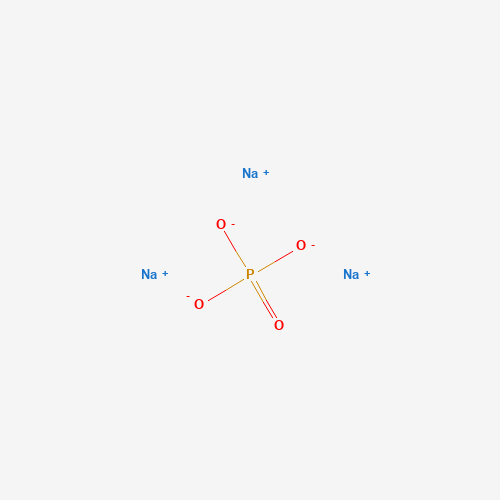
CAS7601-54-9
分子式Na3O4P
分子量163.94 g/mol
非危品
Physical Description | Sodium phosphate, tribasic appears as a colorless to white crystalline solid. Noncombustible.
科学粮草官-词典编辑部,修订于:2026-07-06
Toxicity
ToxicityEcotoxicity Values
LC50; Species: Clarias gariepinus (Zambezi barbel, fingerling); Conditions: freshwater, static; Concentration: 748169.5 ug/L for 96 hr
ICSC Environmental Data
Environmental effects from the substance have not been investigated adequately.
Probable Routes of Human Exposure
NIOSH (NOES Survey 1981-1983) has statistically estimated that 2,163 workers (278 of these were female) were potentially exposed to trisodium phosphate in the US(1). Occupational exposure to trisodium phosphate may occur through inhalation and dermal contact with this compound at workplaces where trisodium phosphate is produced or used.
Symptoms
Ingestion Exposure: Cough. Sore throat. Abdominal pain. Burning sensation. Shock or collapse.
Interactions
In rabbits fed an arteriosclerosis-inducing diet, simultaneous feeding of trisodium phosphate (50 mg/kg diet) prevented for the 1st month the rise in plasma total lipids and total cholesterol seen in the unmedicated controls. For the next month, these parameters increased to some extent, but less than in the controls. The mechanism of action is thought to involve the metabolism of inorganic phosphate.
Adverse Effects
Toxic Pneumonitis - Inflammation of the lungs induced by inhalation of metal fumes or toxic gases and vapors.
Exposure Routes
Serious local effects by all routes of exposure.
Toxicity Summary
Cosmetic Ingredient Review Finding(s): Safe for use in cosmetics, with qualifications
RAIS Toxicity Values
Oral Subchronic Chronic Reference Dose Reference: PPRTV Current
Non-Human Toxicity Values
LD50 Rabbit dermal /greater than or equal to/ 2 mg/kg bw
Non-Human Toxicity Excerpts
/LABORATORY ANIMALS: Chronic Exposure or Carcinogenicity/ Two-year toxicology and carcinogenesis studies of chlorinated trisodium phosphate, an inclusion complex of trisodium phosphate and sodium hypochlorite used in various cleaning compounds, were conducted by administering 0,500, or 1,000 mg/kg (dose volume: 10 mL/kg) of the chemical in water by gavage, 5 days per week for 103 weeks, to groups of 50 male and 50 female B6C3F1 mice. ... Under the conditions of these 2-year gavage studies, there was no evidence of carcinogenicity for either male or female B6C3F1 mice given chlorinated trisodium phosphate by gavage in water for 103 weeks at doses of 500 or 1,000 mg. Survival of dosed female mice was 78% and 72% after 80 weeks and 32% and 42% at the termination of the study. The studies i...
1 or Cancer Risk Level 1E-06
Fraction of Contaminant Absorbed in Gastrointestinal Tract: 1
Antidote and Emergency Treatment
/SRP:/ Advanced treatment: Consider orotracheal or nasotracheal intubation for airway control in the patient who is unconscious, has severe pulmonary edema, or is in severe respiratory distress. Early intubation, at the first sign of upper airway obstruction, may be necessary. Positive-pressure ventilation techniques with a bag valve mask device may be beneficial. Consider drug therapy for pulmonary edema ... . Consider administering a beta agonist such as albuterol for severe bronchospasm ... . Monitor cardiac rhythm and treat arrhythmias as necessary ... . Start IV administration of D5W /SRP: "To keep open", minimal flow rate/. Use 0.9% saline (NS) or lactated Ringer's(LR) if signs of hypovolemia are present. For hypotension with signs of hypovolemia, administer fluid cautiously. Cons...
Hazard Quotient Level 3 or Cancer Risk Level 1E-04
Fraction of Contaminant Absorbed in Gastrointestinal Tract: 1









