

 一键配货
一键配货
化合物详情
CAS7646-78-8
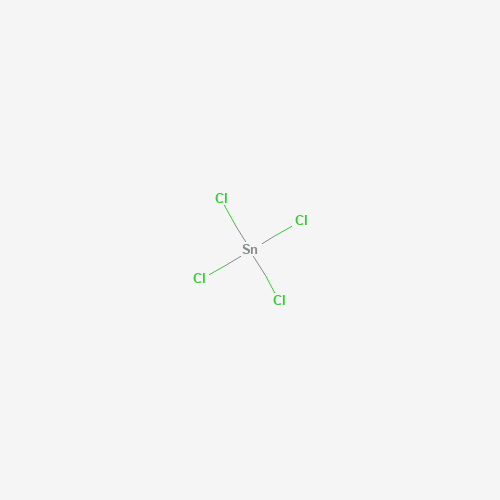
分子式SnCl4
分子量260.52 g/mol g/mol
危化品
Physical Description | Stannic chloride, anhydrous is a colorless fuming liquid with a pungent odor. It is soluble in cold water and decomposed by hot water to form hydrochloric acid with the evolution of heat. It is corrosive to metals and tissue.
科学粮草官-词典编辑部,修订于:2026-07-06
Toxicity
ToxicityEcotoxicity Values
USDA APHIS Chemical Effects: collection=usda_chemeffect&query_type=synonym&query='^10026-06-9$'
ICSC Environmental Data
The substance is harmful to aquatic organisms.
Symptoms
Inorganic or organic tin compounds placed on the skin or in the eyes can produce skin and eye irritation. (L308)
Treatment
EYES: irrigate opened eyes for several minutes under running water. INGESTION: do not induce vomiting. Rinse mouth with water (never give anything by mouth to an unconscious person). Seek immediate medical advice. SKIN: should be treated immediately by rinsing the affected parts in cold running water for at least 15 minutes, followed by thorough washing with soap and water. If necessary, the person should shower and change contaminated clothing and shoes, and then must seek medical attention. INHALATION: supply fresh air. If required provide artificial respiration.
Toxicity Data
LD50: 46 mg/kg (Intraperitoneal, Mouse) (T57) LC50: 2300 mg/m3 over 10 minutes (Inhalation, Rat) (T14)
Health Effects
Ingestion of large amounts of inorganic tin compounds can cause stomachache, anemia, and liver and kidney problems. (L307, L308)
Adverse Effects
Toxic Pneumonitis - Inflammation of the lungs induced by inhalation of metal fumes or toxic gases and vapors.
Exposure Routes
Oral (L308); inhalation (L308); dermal (L308)
Toxicity Summary
Inorganic and organic tin compounds are weak inhibitors of alcohol dehydrogenase. (A183)
Carcinogen Classification
No indication of carcinogenicity to humans (not listed by IARC).
Non-Human Toxicity Excerpts
Twenty one different metal chlorides have been tested for mutagenicity in the presence of 9-aminoacridine in strains of Salmonella typhimurium. Stannic chloride was not mutagenic alone, exhibited mutagenicity when combined with 9-aminoacridine in strains TA1537 and TA2637.