


 一键配货
一键配货
化合物详情
CAS7647-10-1
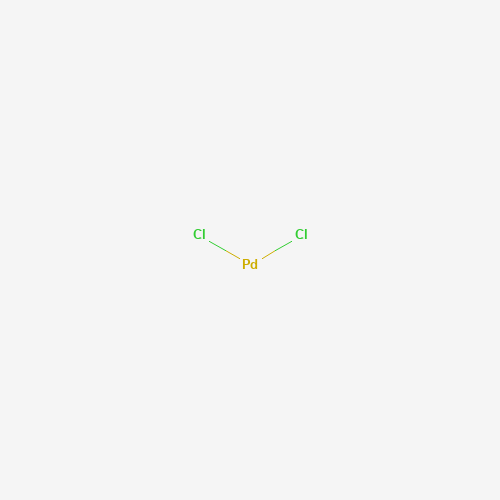
分子式PdCl2
分子量177.33 g/mol g/mol
危化品
Physical Description | Palladium chloride appears as dark brown crystals. (NTP, 1992)
科学粮草官-词典编辑部,修订于:2026-07-06
Toxicity
ToxicityEcotoxicity Values
LC50 Tubifex tubifex (Tubificid worm) 0.237 mg Pd2+/L/24 hr (95% confidence interval: 0.183-0.316 mg/L); 0.142 mg Pd2+/L/48 hr (95% confidence interval: 0.107-0.184 mg/L); 0.092 mg Pd2+/L/96 hr (95% confidence interval: 0.033-0.052 mg/L); renewal (every 24 hr) /from table/
Volatilization from Water / Soil
Palladium compounds are ionic and therefore volatilization from dry or moist soil and water surfaces is not expected to be an important fate process. (SRC)
Ecotoxicity Excerpts
/AQUATIC SPECIES/ The minimum 24-hr lethal concentration of palladium(II) chloride to cyprinodont freshwater fish medaka (Oryzias latipes; n=3 per group) has been reported to be 0.04 mmol/L (7 mg/L [4.2 mg palladium/L]). Compared with platinum (hexachloroplatinic acid: 0.08 mmol/L), palladium was more toxic.
Symptoms
Skin contact with palladium may cause contact dermatitis, erythema, and oedema. (L798)
Treatment
EYES: irrigate opened eyes for several minutes under running water. INGESTION: do not induce vomiting. Rinse mouth with water (never give anything by mouth to an unconscious person). Seek immediate medical advice. SKIN: should be treated immediately by rinsing the affected parts in cold running water for at least 15 minutes, followed by thorough washing with soap and water. If necessary, the person should shower and change contaminated clothing and shoes, and then must seek medical attention. INHALATION: supply fresh air. If required provide artificial respiration.
Interactions
In guinea-pigs sensitized to palladium(II) chloride, cross-reactivity to nickel sulfate was observed. However, animals induced with nickel sulfate or chromate or cobalt salts did not react upon challenge with palladium(II) chloride.
Toxicity Data
LD50: 2704 mg/kg (Oral, Rat) (T14) LD50: 70 mg/kg (Intraperitoneal, Rat) (T14) LD50: 3 mg/kg (Intravenous, Rat) (T29)
Health Effects
Contact with palladium may cause palladium sensitivity and allergy. Animal studies have shown that palladium may damage the liver and kidney. (L798)
Adverse Effects
Skin Sensitizer - An agent that can induce an allergic reaction in the skin.
Toxicity Summary
Due to their ability to form strong complexes with both inorganic and organic ligands, palladium ions can disturb cellular equilibria, replace other essential ions, and interact with functional groups of macromolecules, such as proteins or DNA. Palladium complexes binding to DNA and RNA leads to strand breakage. Palladium ions are able to inhibit most major cellular functions, including DNA and RNA synthesis. Palladium compounds have been shown to bind to and inhibit various enzymes, including creatine kinase and prolyl hydroxylase. (L798)
Carcinogen Classification
No indication of carcinogenicity to humans (not listed by IARC).
Antidote and Emergency Treatment
Advanced treatment: Consider orotracheal or nasotracheal intubation for airway control in the patient who is unconscious, has severe pulmonary edema, or is in respiratory arrest. Positive pressure ventilation techniques with a bag valve mask device may be beneficial. Monitor cardiac rhythm and treat arrhythmias as necessary ... . Start an IV with D5W /SRP: "To keep open", minimal flow rate/. Use lactated Ringer's if signs of hypovolemia are present. Watch for signs of fluid overload. Consider drug therapy for pulmonary edema ... . For hypotension with signs of hypovolemia, administer fluid cautiously. Watch for signs of fluid overload ... . Treat seizures with diazepam (Valium) ... . Use proparacaine hydrochloride to assist eye irrigation ... . /Poison A and B/









