


 一键配货
一键配货
化合物详情
CAS7718-54-9
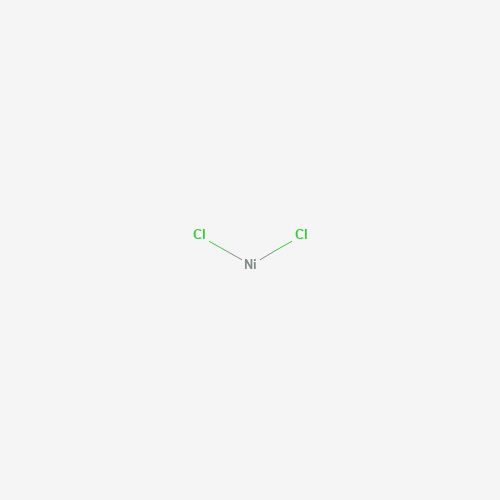
分子式NiCl2
分子量129.60 g/mol g/mol
危化品
Physical Description | Nickel chloride appears as a brown or green colored solid. Denser than water. Contact may irritate skin, eyes and mucous membranes. May be toxic by ingestion. Used to make other chemicals.
科学粮草官-词典编辑部,修订于:2026-07-06
Toxicity
ToxicityFate Summary
AQUATIC FATE: Nickel chloride is water soluble and would be expected to release divalent nickel into the water.
Symptoms
Symptoms of nickel poisoning include headache, nausea, vomiting, dizziness, irritability, and difficulty sleeping, followed by chest pains, sweating, rapid heart beat, and a dry cough. (L42)
Treatment
Excess exposure to nickel is usually handled by preventing further exposure and symptomatic treatment. Nickel poisoning may also be treated using chelation therapy with sodium diethyldithiocarbamate. (L42)
Toxicity Data
LD50: 105 mg/kg (Oral, Rat) (L506)
Health Effects
The most common harmful health effect of nickel in humans is an allergic reaction. This usually manifests as a skin rash, although some people experience asthma attacks. Long term inhahation of nickel causes chronic bronchitis and reduced lung function, as well as damage to the naval cavity. Ingestion of excess nickel results in damage to the stomach, blood, liver, kidneys, and immune system, as well as having adverse effects on reproduction and development. (L41)
Adverse Effects
ACGIH Carcinogen - Not Classifiable.
Exposure Routes
Inhalation (L41); oral (L41); dermal (L41)
Toxicity Summary
Nickel is known to substitute for other essential elements in certain enzmes, such as calcineurin. It is genotoxic, and some nickel compounds have been shown to promote cell proliferation. Nickel has a high affinity for chromatin proteins, particularly histones and protamines. The complexing of nickel ions with heterochromatin results in a number of alterations including condensation, DNA hypermethylation, gene silencing, and inhibition of histone acetylation, which have been shown to disturb gene expression. Nickel has also been shown to alter several transcription factors, including hypoxia-inducible transcription factor, activating transcription factor, and NF-KB transcription factor. There is also evidence that nickel ions inhibit DNA repair, either by directly inhibiting DNA repair...
Minimum Risk Level
Chronic Inhalation: 0.0001 mg/m3 (L134) Intermediate Oral: 0.01 mg/kg/day (L134)
RAIS Toxicity Values
Oral Chronic Reference Dose Reference: CALEPA
Human Toxicity Excerpts
When aqueous solutions of nickel chloride were applied to the back, the threshold concentrations for irritancy were 1% with occlusion and 10% without occlusion ... .
Carcinogen Classification
1, carcinogenic to humans. (L135)
Non-Human Toxicity Values
LD50 rat female pregnant im 71 mg/kg /From table./
Evidence for Carcinogenicity
Evaluation: There is sufficient evidence in humans for the carcinogenicity of nickel sulfate, and of the combinations of nickel sulfides and oxides encountered in the nickel refining industry. There is inadequate evidence in humans for the carcinogenicity of metallic nickel and nickel alloys. There is sufficient evidence in experimental animals for the carcinogenicity of metallic nickel, nickel monoxides, nickel hydroxides and crystalline nickel sulfides. There is limited evidence in experimental animals for the carcinogenicity of nickel alloys, nickelocene, nickel carbonyl, nickel salts, nickel arsenides, nickel antimonide, nickel selenides and nickel telluride. There is inadequate evidence in experimental animals for the carcinogenicity of nickel trioxide, amorphous nickel sulfide and...
Antidote and Emergency Treatment
Advanced treatment: Consider orotracheal or nasotracheal intubation for airway control in the patient who is unconscious. Positive pressure ventilation techniques with a bag valve mask device may be beneficial. Monitor cardiac rhythm and treat arrhythmias if necessary ... . Consider drug therapy for pulmonary edema ... . Start an IV with D5W /SRP: "To keep open", minimal flow rate/. Use lactated Ringer's if signs of hypovolemia are present. For hypotension with signs of hypovolemia, administer fluid cautiously. Consider vasopressors for hypotension with a normal fluid volume. Watch for signs of fluid overload ... . Use proparacaine hydrochloride to assist eye irrigation ... . /Nickel and related compounds/









