


 一键配货
一键配货
化合物详情
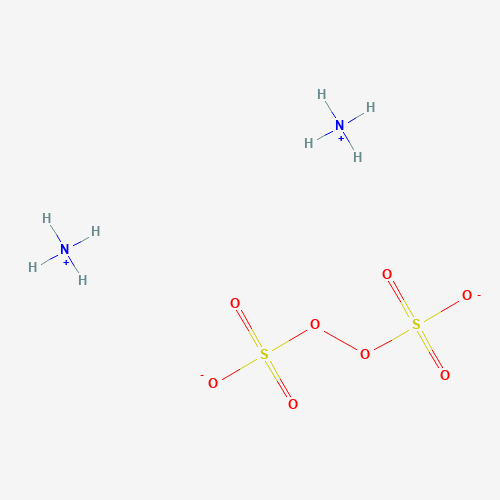
CAS7727-54-0
分子式H8N2O8S2
分子量228.20 g/mol g/mol
危化品
Physical Description | Ammonium persulfate appears as a white crystalline solid. A strong oxidizing agent. Does not burn readily, but may cause spontaneous ignition of organic materials. Used as a bleaching agent and as a food preservative.
科学粮草官-词典编辑部,修订于:2026-07-06
Toxicity
ToxicityICSC Environmental Data
The substance is harmful to aquatic organisms.
Probable Routes of Human Exposure
NIOSH (NOES Survey 1981-1983) has statistically estimated that 249,578 workers (81,412 of these are female) are potentially exposed to ammonium peroxydisulfate in the US(1).
Symptoms
Ingestion Exposure: Nausea. Diarrhoea. Vomiting. Sore throat.
Interactions
Ammonium persulphate (APS) and hydrogen peroxide (H2O2) are used as oxidants in many industrial processes and are the main constituents of standard hair bleaching products. In a previous study, it was demonstrated that aerosols of APS induce alterations in airway responsiveness. The present study examined whether exposure for 4 hr to a hair bleach composition (containing APS, potassium persulphate and H2O2) or H2O2 could induce airway hyperresponsiveness and/or an obstructive ventilation pattern in a rabbit model. Exposure to the aerosols altered neither baseline airway resistance, dynamic elastance, slope of inspiratory pressure generation nor arterial blood pressure and blood gas measurements. Similarly to APS, hair bleach aerosols containing > or =10.9 mg /per/ cu m persulphate (ammo...
Adverse Effects
Asthma - Reversible bronchoconstriction (narrowing of bronchioles) initiated by the inhalation of irritating or allergenic agents.
Exposure Routes
The substance can be absorbed into the body by inhalation of its aerosol and by ingestion.
Toxicity Summary
Cosmetic Ingredient Review Finding(s): The available data are insufficient to support safety
Human Toxicity Excerpts
/CASE REPORTS/ ... A 24-year-old woman ... acquired dermatitis following contact with bleaching substances while working as a hairdresser. After changing her profession, the dermatitis disappeared. Following the private use of a hairdressing bleach containing ammonium persulphate, she suffered a severe anaphylactic reaction with unconsciousness. The patient also developed an anaphylactic reaction three hours following patch testing with the hairdresser battery. The rub test with ammonium persulphate (2.5%) in a 1:100 solution was positive.
Non-Human Toxicity Values
LD50 Rat dermal >2000 mg/kg
Non-Human Toxicity Excerpts
/LABORATORY ANIMALS: Subchronic or Prechronic Exposure/ BALB/c mice were dermally treated on days 1 and 8, with dimethylsulfoxide (DMSO), 1% /ammonium persulfate/ (AP) or 5% AP (20 uL/ear). On day 15, the auricular lymph nodes were removed and an in vitro lymphocyte proliferation test (LPT) was performed. AP was tested for its ability to elicit an asthmatic response using a locally developed mouse model of chemical-induced asthma. On days 1 and 8, BALB/c mice received 20 uL AP (5%) or DMSO on each ear. On day 15, they received an intranasal instillation of AP (1%) or saline. Afterwards, ventilatory, inflammatory and immunological parameters were assessed. The LPT showed that in vitro stimulation of lymphocytes with AP leads to specific proliferation of lymphocytes from AP-sensitized mic...
Antidote and Emergency Treatment
/SRP:/ Advanced treatment: Consider orotracheal or nasotracheal intubation for airway control in the patient who is unconscious, has severe pulmonary edema, or is in severe respiratory distress. Early intubation, at the first sign of upper airway obstruction, may be necessary. Positive-pressure ventilation techniques with a bag valve mask device may be beneficial. Consider drug therapy for pulmonary edema ... . Consider administering a beta agonist such as albuterol for severe bronchospasm ... . Monitor cardiac rhythm and treat arrhythmias as necessary ... . Start IV administration of D5W /SRP: "To keep open", minimal flow rate/. Use 0.9% saline (NS) or lactated Ringer's(LR) if signs of hypovolemia are present. For hypotension with signs of hypovolemia, administer fluid cautiously. Cons...









