

 一键配货
一键配货
化合物详情
CAS7757-83-7
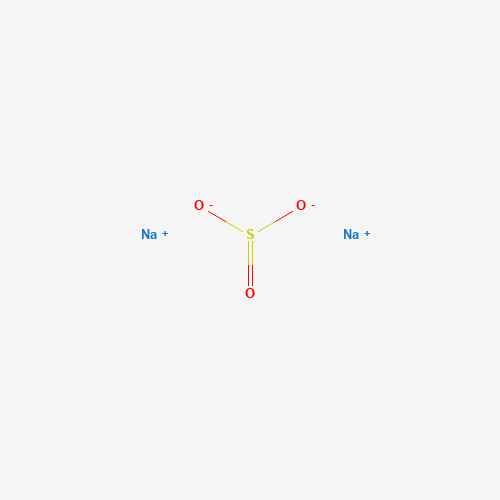
分子式Na2O3S
分子量126.04 g/mol
非危品
Physical Description | Sodium sulfite is a white odorless powder. Density 2.633 g / cm3. Moderately toxic. Sinks in water and dissolves slowly. Also transported as a heptahydrate Na2SO3.7H2O.
科学粮草官-词典编辑部,修订于:2026-07-06
Toxicity
ToxicityEcotoxicity Values
LC50; Species: Daphnia magna (Water flea); Conditions: freshwater, static, 21-25 °C; Concentration: 203000 ug/L for 4.2 days
ICSC Environmental Data
The substance is harmful to aquatic organisms.
Probable Routes of Human Exposure
NIOSH (NOES Survey 1981-1983) has statistically estimated that 309,663 workers (122,038 of these were female) were potentially exposed to sodium sulfite in the US(1).
Symptoms
Inhalation Exposure: Cough. Sore throat. See Effects of long-term or repeated exposure.
Toxicity Data
LC50 (rat) > 5,500 mg/m3/4h
Adverse Effects
Asthma - Reversible bronchoconstriction (narrowing of bronchioles) initiated by the inhalation of irritating or allergenic agents.
Exposure Routes
The substance can be absorbed into the body by inhalation and by ingestion.
Toxicity Summary
IDENTIFICATION AND USE: Sodium sulfite forms small white crystals or powder. Sodium sulfite used as reducing agent and antioxidant in cosmetic formulations. Other uses include paper industry, water treatment, and dietary supplements. It is also used as antioxidant and antiseptic in veterinary. HUMAN STUDIES: Clinical oral and ocular-exposure studies reported no adverse effects. Sodium sulfite was not irritating or sensitizing in clinical tests. It may however, produce positive reactions in dermatologic patients under patch test. The majority of patients with positive reactions to sodium metabisulfite are also positive to sodium sulfite. Most studies report a prevalence of sulfite sensitivity of 3 to 10% among asthmatic subjects who ingest these additives. However, the severity of these...
Non-Human Toxicity Values
LD50 Rabbit iv 65 mg/kg
Populations at Special Risk
Some asthmatics are said to be dangerously sensitive to minute amounts of sulfites in foods. /Sulfites/
Evidence for Carcinogenicity
Evaluation: There is inadequate evidence for the carcinogenicity in humans of sulfur dioxide, sulfites, bisulfites and metabisulfites. There is limited evidence for the carcinogenicity in experimental animals of sulfur dioxide. There is inadequate evidence for the carcinogenicity in experimental animals of sulfites, bisulfites and metabisulfites. Overall evaluation: Sulfur dioxide, sulfites, bisulfites and metabisulfites are not classifiable as to their carcinogenicity to humans (Group 3).
Antidote and Emergency Treatment
/SRP:/ Advanced treatment: Consider orotracheal or nasotracheal intubation for airway control in the patient who is unconscious. Early intubation at the first sign of upper airway obstruction may be necessary. Monitor cardiac rhythm and treat arrhythmias if necessary ... . Start an IV with D5W /SRP: "To keep open", minimal flow rate/. Use lactated Ringer's if signs of hypovolemia are present. Watch for signs of fluid overload. Consider drug therapy for pulmonary edema ... . Treat seizures with diazepam (Valium) ... . For hypotension with signs of hypovolemia, administer fluid cautiously. Consider vasopressors for hypotension with a normal fluid volume. Watch for signs of fluid overload ... . Use proparacaine hydrochloride to assist eye irrigation ... . /Sulfur and related compounds/