


 一键配货
一键配货
化合物详情
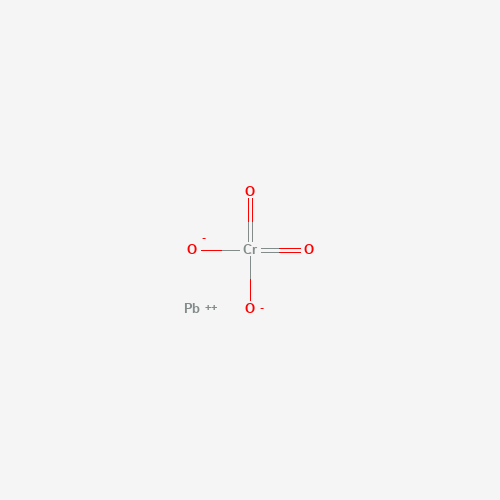
CAS7758-97-6
分子式CrO4Pb
分子量323.19 g/mol
危化品
Physical Description | Lead chromate appears as yellow or orange-yellow powder. One of the most insoluble salts. Basic lead chromates are used as pigments. (NTP, 1992)
科学粮草官-词典编辑部,修订于:2026-07-06
Toxicity
ToxicityBody Burden
The mean chromium level in the urine of 10 production workers working in a pigment plant making lead chromate was 265 nmol/mmol creatinine (range 41-1250)(1).
Ecotoxicity Excerpts
/AQUATIC SPECIES/ Chromium (Cr) is a global marine pollutant, present in marine mammal tissues. Hexavalent chromium [Cr(VI)] is a known human carcinogen. In this study, we compare the cytotoxic and clastogenic effects of Cr(VI) in human (Homo sapiens) and sperm whale (Physeter macrocephalus) skin fibroblasts. Our data show that increasing concentrations of both particulate /lead chromate/ and soluble /sodium chromate/ Cr(VI) induce increasing amounts of cytotoxicity and clastogenicity in human and sperm whale skin cells. Furthermore, the data show that sperm whale cells are resistant to these effects exhibiting less cytotoxicity and genotoxicity than the human cells. Differences in Cr uptake accounted for some but not all of the differences in particulate and soluble Cr(VI) genotoxicity...
ICSC Environmental Data
Bioaccumulation of this chemical may occur along the food chain. The substance is very toxic to aquatic organisms. It is strongly advised not to let the chemical enter into the environment.
Natural Pollution Sources
Crocoite, a natural lead chromate, found use as a pigment because of its beautiful, permanent orange-red color(1). However, this mineral was very rare(1). Lead chromate occurs in nature as the minerals crocoite and phoenicochroite(2).
Probable Routes of Human Exposure
NIOSH (NOES Survey 1981-1983) has statistically estimated that 31,932 workers (8,639 of these are female) were potentially exposed to lead chromate in the US(1). Occupational exposure to lead chromate may occur through inhalation of dust and partuculates and dermal contact with this compound at workplaces where lead chromate is produced or used(2). Exposure to lead chromate may occur during the removal of lead paints containing lead chromate(3).
Symptoms
Symptions of chronic lead poisoning include reduced cognitive abilities, nausea, abdominal pain, irritability, insomnia, metal taste in the mouth, excess lethargy or hyperactivity, chest pain, headache and, in extreme cases, seizures, comas, and death. There are also associated gastrointestinal problems, such as constipation, diarrhea, vomiting, poor appetite, weight loss, which are common in acute poisoning. Breathing hexavalent chromium can cause irritation to the lining of the nose, nose ulcers, runny nose, and breathing problems, such as asthma, cough, shortness of breath, or wheezing. Ingestion of hexavalent chromium causes irritation and ulcers in the stomach and small intestine, as well as anemia. Skin contact can cause skin ulcers. (L16, A2, L21)
Treatment
Lead poisoning is usually treated with chelation therapy using DMSA, EDTA, or dimercaprol. There is no know antidote for chromium poisoning. Exposure is usually handled with symptomatic treatment. (L16, L21)
Interactions
13 lead chromate-based pigments were assayed for mutagenicity and toxicity using Salmonella typhimurium TA100. The compounds were assayed with and without S9, both in the presence and absence of the chelating agent, nitrilotriacetic acid (NTA). In general, the use of NTA to solubilize the compounds resulted in mutagenicity and/or toxicity being observed where it had not in the absence of NTA, or being observed at lower concentrations than when water alone was used. Encapsulation of pigments with amorphous silica rendered these pigments non-mutagenic and non-toxic, indicating that the active moieties were biologically unavailable to the bacteria. Varying the percentage of silica encapsulation on one pigment, medium chrome yellow, indicated that 5% encapsulation did not alter the mutageni...
Toxicity Data
LD50: >12 g/kg (Oral, Mouse) (T14) LD50: 400 mg/kg (Intraperitoneal, Guinea pig) (L530)
Health Effects
Lead is a neurotoxin and has been known to cause brain damage and reduced cognitive capacity, especially in children. Lead exposure can result in nephropathy, as well as blood disorders such as high blood pressure and anemia. Lead also exhibits reproductive toxicity and can results in miscarriages and reduced sperm production. Hexavalent chromium is a known carcinogen. Chronic inhalation especially has been linked to lung cancer. Hexavalent chromium has also been know to cause reproductive and developmental defects. (A12, L21)
Adverse Effects
ACGIH Carcinogen - Confirmed Human.
Exposure Routes
Oral (L136); inhalation (L136); dermal (L136)
Toxicity Summary
Lead mimics other biologically important metals, such as zinc, calcium, and iron, competing as cofactors for many of their respective enzymatic reactions. For example, lead has been shown to competitively inhibit calcium's binding of calmodulin, interferring with neurotransmitter release. It exhibits similar competitive inhibition at the NMDA receptor and protein kinase C, which impairs brain microvascular formation and function, as well as alters the blood-brain barrier. Lead also affects the nervous system by impairing regulation of dopamine synthesis and blocking evoked release of acetylcholine. However, its main mechanism of action occurs by inhibiting delta-aminolevulinic acid dehydratase, an enzyme vital in the biosynthesis of heme, which is a necesssary cofactor of hemoglobin. He...
Minimum Risk Level
Chronic Inhalation: 0.05 mg/m3 (Lead) (L134) Intermediate Oral: 0.005 mg/kg/day (Hexavalent chromium) (L134) Chronic Oral: 0.001 mg/kg/day (Hexavalent chromium) (L134)
RAIS Toxicity Values
Oral Slope Factor Reference: CALEPA
Carcinogen Classification
1, carcinogenic to humans. (L135)
Non-Human Toxicity Values
LD50 Mouse oral >12 g/kg









