


 一键配货
一键配货
化合物详情
CAS7773-06-0
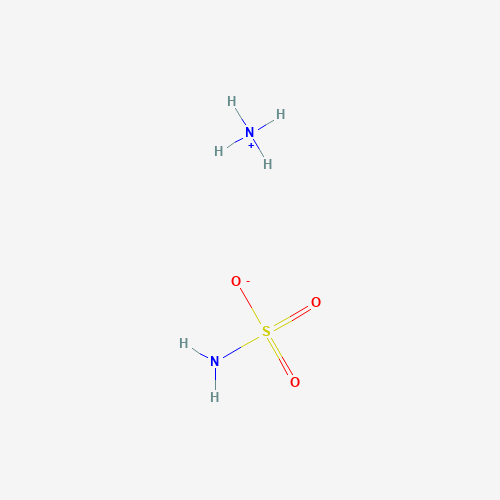
分子式H6N2O3S
分子量114.12 g/mol
非危品
Physical Description | Ammonium sulfamate is a white crystalline solid. It is soluble in water. The primary hazard is the threat to the environment. Immediate steps should be taken to limit its spread to the environment. It is used to flameproof fabrics and papers, in weed or brush killing products, and for other uses.
科学粮草官-词典编辑部,修订于:2026-07-06
Toxicity
ToxicityEPA Ecotoxicity
Pesticide Ecotoxicity Data from EPA: 2
Soil Adsorption / Mobility
FROM ITS LACK OF RESPONSE TO SOIL TYPE AND ITS BEHAVIOR IN FIELD PLOTS ... /IT WAS/ CONCLUDED THAT /AMMONIUM SULFAMATE/ IS NOT RETAINED IN SOIL, BUT MOVES WITH SOIL MOISTURE LIKE CHLORATE.
Environmental Biodegradation
STRAINS OF AUREOBASIDUM (PULLULARIA) PULLULANS, APHALOSPORIUM ACREMONIUM, & 2 UNIDENTIFIED SPECIES OF ACHROMOBACTER & FLAVOBACTERIUM USED SULFAMIC ACID (SODIUM SALT) AS SOURCE OF NITROGEN. BOTH FUNGI & BACTERIA CONVERTED SULFAMATE TO SULFATE IN APPROX EQUIMOLAR PROP TO AMT OF NITROGEN ASSIMILATED.
Environmental Bioconcentration
Food chain concn potential: none
Ecotoxicity Excerpts
/BIRDS and MAMMALS/ In 14 days continuous administration to quail in feed, 150 and 590 mg/kg/day produced no change in body weight or any other noticeable changes. Fertility of quail was not affected by 2 periods of 10 days continuous administration of mixed feed containing ammonium sulfamate at rate of 150 mg/kg/day.
Artificial Pollution Sources
The use of urea-formaldehyde resins as temporary binders in the firing of refractories and ceramics at high temperatures can lead to the formation of substantial deposits of ammonium sulfamate in the cooler parts of kilns, should a fuel oil containing appreciable amount of sulfur be used for firing. Ammonia from decomposition of the resin combines with sulfur trioxide to form ammonium sulfamate which accumulates as either a solidified deposit in flues or as a white deposit on walls. ...
Probable Routes of Human Exposure
Inhalation, ingestion, skin, and eye contact.
Symptoms
irritation eyes, nose, throat; cough, dyspnea (breathing difficulty)
Target Organs
Eyes, respiratory system
Exposure Routes
inhalation, skin and/or eye contact
RAIS Toxicity Values
Oral Chronic Reference Dose Reference: IRIS Current
Human Toxicity Excerpts
/HUMAN EXPOSURE STUDIES/ Ammonium sulfamate is of low toxicity. ...Repeated application of a 4% solution to the anterior surface of one arm of each of 5 human subjects for 5 days caused no skin irritation.
Acceptable Daily Intakes
Oral RfD: 0.2 mg/kg/day (Uncertainty factor: 1000, Modifying factor: 1)
Non-Human Toxicity Values
LD50 Mouse sc 1438 mg/kg
1 or Cancer Risk Level 1E-06
Fraction of Contaminant Absorbed in Gastrointestinal Tract: 1
Antidote and Emergency Treatment
Advanced treatment: Consider orotracheal or nasotracheal intubation for airway control in the patient who is unconscious. Early intubation at the first sign of upper airway obstruction may be necessary. Monitor cardiac rhythm and treat arrhythmias if necessary ... . Start an IV with D5W /SRP: "To keep open", minimal flow rate/. Use lactated Ringer's if signs of hypovolemia are present. Watch for signs of fluid overload. Consider drug therapy for pulmonary edema ... . Treat seizures with diazepam ... . For hypotension with signs of hypovolemia, administer fluid cautiously. Consider vasopressors for hypotension with a normal fluid volume. Watch for signs of fluid overload ... . Use proparacaine hydrochloride to assist eye irrigation ... . /Sulfur and related compounds/
Hazard Quotient Level 3 or Cancer Risk Level 1E-04
Fraction of Contaminant Absorbed in Gastrointestinal Tract: 1









