


 一键配货
一键配货
化合物详情
CAS7775-14-6
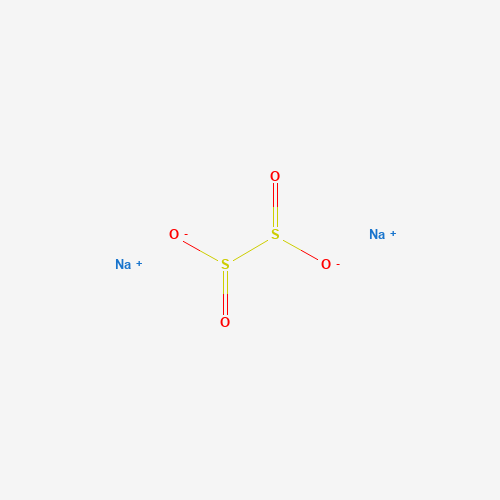
分子式Na2O4S2
分子量174.11 g/mol
危化品
Physical Description | Sodium dithionite is a whitish to light yellow crystalline solid having a sulfur dioxide-like odor. It spontaneously heats on contact with air and moisture. This heat may be sufficient to ignite surrounding combustible materials. Under prolonged exposure to fire or intense heat containers of this material may violently rupture. It is used in dyeing and to bleach paper pulp.
科学粮草官-词典编辑部,修订于:2026-07-06
Toxicity
ToxicityEcotoxicity Values
EC50; Species: Daphnia magna (water flea); Conditions: Directive 79.831 EEC, C2; Concentration: 98.3 mg/L for 48 hr, endpoint: immobilization /Effect not given in source/
Environmental Biodegradation
AEROBIC: At 20 °C, the 5-day BOD of sodium dithionite was 22%, through the action of sewage bacteria(1).
Environmental Abiotic Degradation
The hydrolysis products of aqueous sodium dithionite solutions can be trapped as sodium 1-hydroxyalkane-sulfinates and 1-hydroxyalkanesulfonates by addition of aldehydes or ketones(1).
Ecotoxicity Excerpts
/AQUATIC SPECIES/ The following chronic toxicity test with aquatic organisms is available: Water flea (Daphnia magna): NOEC (21 d) > 10 mg/L. Three concentrations (1, 5, and 10 mg/L) were tested.
ICSC Environmental Data
The substance is harmful to aquatic organisms.
Probable Routes of Human Exposure
NIOSH (NOES Survey 1981-1983) has statistically estimated that 76,179 workers (26,281 of these were female) were potentially exposed to sodium dithionite in the US(1).
Symptoms
Ingestion Exposure: Nausea. Abdominal pain. Vomiting. Diarrhoea.
Interactions
Sodium hyposulfite at a concentration of 1 x 10⁻⁵ M decreased the number of chromosome fragments produced by cobalt 60 gamma rays in Tradescantia paludosa (clone B2-2) root tip by 46%. Concentrations of 1 x 10⁻⁴ or 1 x 10⁻³ M were no more effective, and the 1 x 10⁻³ M concentration was toxic to the root tips.
Adverse Effects
Toxic Pneumonitis - Inflammation of the lungs induced by inhalation of metal fumes or toxic gases and vapors.
Exposure Routes
The substance can be absorbed into the body by ingestion.
Toxicity Summary
Human Health: Sodium dithionite is not stable under physiological conditions, with the rate of decomposition increasing with increasing acidity. Upon contact with moisture, it is oxidized to hydrogen sulfite, sulfite and hydrogen sulfate, and under strongly acidic conditions it may liberate sulfur dioxide. Under anaerobic conditions (such as in the lower gastrointestinal tract), hydrogen sulfite and thiosulfate may be formed. Hydrogen sulfite can be absorbed after ingestion. It is efficiently metabolized, and the major part rapidly excreted as sulfate into the urine. The acute oral LD50 of sodium dithionite in rats was about 2500 mg/kg bw, with atony, gastro-intestinal irritation, diarrhea and dyspnea as the main clinical and pathological signs at doses near to or exceeding the LD50. Th...
Human Toxicity Excerpts
/OTHER TOXICITY INFORMATION/ Under acidic conditions, sodium dithionite may liberate sulfur dioxide (SO2). Sulfur dioxide is known to induce respiratory irritation and in disposed humans also bronchospasms. The hypersensitivity reaction is also known as "sulfite-asthma" and linked to SO2 exposure or the use of SO2 or bisulfite as antioxidants in foodstuffs. About 10 % of asthmatic humans are reportedly sulfite- or SO2-sensitive.
Non-Human Toxicity Values
LD50 Mouse ip 900 mg/kg bw
Antidote and Emergency Treatment
Advanced treatment: Consider orotracheal or nasotracheal intubation for airway control in the patient who is unconscious, has severe pulmonary edema, or is in severe respiratory distress. Positive-pressure ventilation techniques with a bag-valve-mask device may be beneficial. Consider drug therapy for pulmonary edema ... . Consider administering a beta agonist such as albuterol for severe bronchospasms ... . Monitor cardiac rhythm and treat arrhythmias if necessary ... . Start IV administration of D5W /SRP: "To keep open", minimal flow rate/. Use 0.9% saline (NS) or lactated Ringer's (LR) if signs of hypovolemia are present. For hypotension with signs of hypovolemia, administer fluid cautiously. Consider vasopressors if patient is hypotensive with a normal fluid volume. Watch for signs...









