

 一键配货
一键配货
化合物详情
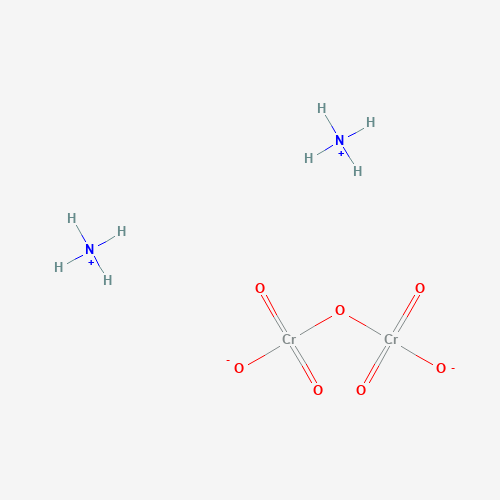
CAS7789-09-5
分子式H8Cr2N2O7
分子量252.06 g/mol g/mol
危化品
Physical Description | Ammonium dichromate is a bright orange red crystalline solid. It is readily ignited and burns producing a voluminous green residue. If heated in a closed container, the container may rupture due to the decomposition of the material. It may also act as a strong oxidizing agent if mixed with or contaminated with combustible material. It is soluble in water.
科学粮草官-词典编辑部,修订于:2026-07-06
Toxicity
ToxicityEcotoxicity Values
LC50; Species: Gambusia affinis (Western Mosquitofish); Conditions: freshwater, static, 18-20 °C, pH 5.7-7.4; Concentration: 136000 ug/L for 96 hr
Ecotoxicity Excerpts
/AQUATIC SPECIES/ Acute Hazard Level: Strong irritant. Ammonium toxicity stems from unionized fraction. Chromium will usually be the allergen and limiting factor of the two; Highly toxic by ingestion or inhalation. Threshold concentration for fresh and saltwater fish: 0.05 ppm Cr(VI). Threshold concentration for free ammonia to fish: 0.5 ppm Cr(VI). Toxic to plants.
ICSC Environmental Data
The substance is very toxic to aquatic organisms. The substance may cause long-term effects in the aquatic environment. It is strongly advised not to let the chemical enter into the environment.
Artificial Pollution Sources
Ammonium dichromate's production and use in dyeing, pigments, manufacturing of alizarin, chrome alum, oil purification, pickling, manufacture of catalysts, leather tanning, synthetic perfumes, photography, process engraving and lithography, chromic oxide and pyrotechnics(1) may result in its release to the environment through various waste streams(SRC). Its use in pyrotechnics will result in its direct release to the environment(SRC). Its former use as a pesticide(2) resulted in its direct release to the environment(SRC).
Probable Routes of Human Exposure
Effects of chromium encountered in occupations where chromium cmpd are mfr & used are due to +6 chromium & involve mainly skin & resp system.
Symptoms
Breathing hexavalent chromium can cause irritation to the lining of the nose, nose ulcers, runny nose, and breathing problems, such as asthma, cough, shortness of breath, or wheezing. Ingestion of hexavalent chromium causes irritation and ulcers in the stomach and small intestine, as well as anemia. Skin contact can cause skin ulcers. (L16)
Treatment
There is no know antidote for chromium poisoning. Exposure is usually handled with symptomatic treatment. (L16)
Toxicity Data
LD50: 22 mg/kg (Oral, Rat) (L16) LD50: 30 mg/kg (Intravenous, Rat) (T22) LD50: 763 mg/kg (Dermal, Rabbit) (L16) L C50: 82 mg/m3 over 4 hours (Inhalation, Rat) (L16)
Health Effects
Hexavalent chromium is a known carcinogen. Chronic inhalation especially has been linked to lung cancer. Hexavalent chromium has also been know to cause reproductive and developmental defects. (A12)
Adverse Effects
ACGIH Carcinogen - Confirmed Human.
Exposure Routes
Inhalation (L16); oral (L16); dermal (L16)
Toxicity Summary
Hexavalent chromium's carcinogenic effects are caused by its metabolites, pentavalent and trivalent chromium. The DNA damage may be caused by hydroxyl radicals produced during reoxidation of pentavalent chromium by hydrogen peroxide molecules present in the cell. Trivalent chromium may also form complexes with peptides, proteins, and DNA, resulting in DNA-protein crosslinks, DNA strand breaks, DNA-DNA interstrand crosslinks, chromium-DNA adducts, chromosomal aberrations and alterations in cellular signaling pathways. It has been shown to induce carcinogenesis by overstimulating cellular regulatory pathways and increasing peroxide levels by activating certain mitogen-activated protein kinases. It can also cause transcriptional repression by cross-linking histone deacetylase 1-DNA methylt...
Minimum Risk Level
Intermediate Inhalation: 0.0002 mg/m3 (L134) Chronic Inhalation: 0.00009 mg/m3 (L134)
Carcinogen Classification
1, carcinogenic to humans. (L135)
Non-Human Toxicity Values
LD50 rat intravenous 30 mg/kg
Non-Human Toxicity Excerpts
/OTHER TOXICITY INFORMATION/ Expt on rats showed inhalation of dust caused edema in perivascular & peribronchial tissue. Ammonium dichromate caused more pronounced changes than did sodium dichromate.
Evidence for Carcinogenicity
A1; Confirmed human carcinogen. /Insoluble Cr(VI) inorganic compounds/
Antidote and Emergency Treatment
Advanced treatment: Consider orotracheal or nasotracheal intubation for airway control if signs of upper airway obstruction are present or if the patient who is unconscious, has severe pulmonary edema, or is in severe respiratory distress. Positive-pressure ventilation techniques with a bag-valve-mask device may be beneficial. Consider drug therapy for pulmonary edema ... . Consider administering a beta agonist such as albuterol for severe bronchospasm ... . Monitor cardiac rhythm and treat arrhythmias if necessary ... . Start IV administration of D5W TKO. Use 0.9% saline (NS) or lactated Ringer's (LR) if signs of hypovolemia are present. For hypotension with signs of hypovolemia, administer fluid cautiously. Consider vasopressors if patient is hypotensive with a normal fluid colume. Wa...