


 一键配货
一键配货
化合物详情
CAS7789-60-8
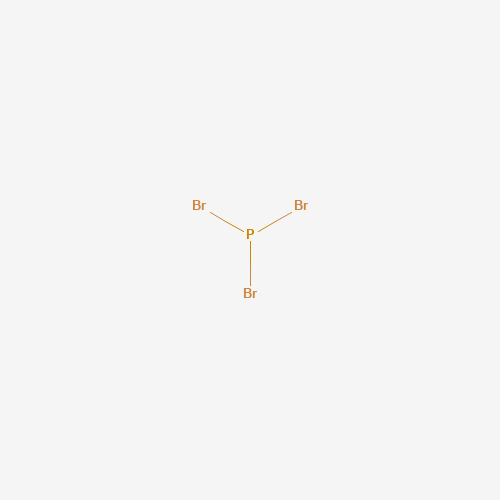
分子式PBr3
分子量270.69 g/mol g/mol
危化品
Physical Description | Phosphorus tribromide appears as a colorless fuming liquid with a pungent odor. Corrosive to metals and tissue. Boiling point 347 °F (175 °C). Freezing point -40 °F (-40 °C).
科学粮草官-词典编辑部,修订于:2026-07-06
Toxicity
ToxicityEcotoxicity Values
EC50 Daphnia magna at 22.6 mg/L (6.25 mg/L NOEC) for 48 hr.
Probable Routes of Human Exposure
Phosphorus tribromide reacts with moisture in the air to produce phosphonic acid and hydrogen bromide gas (HBr). A 10 cc cartridge of PBr3, tested as fire suppressant, would react to form an estimate 25 g of HBr. If uniformly distributed in a room 10X10X5 m in size, the maximum HBr concentration would be 0.05 mg/L (50 mg/cu inch); if in a 61.5X46.2X14.8 m /airplane/ hanger, it would be 5.9X10⁻⁴ mg/ L (0.59 mg/cu inch). Since the exposure limit for HBr is 10 mg/cu m, the maximal hanger concentration would be below the action level, indicating that an acceptable exposure level during usage on aircraft is possible based on the physical characteristics of PBr3 and the small amount necessary for fire suppression.
Symptoms
Bromine vapour causes irritation and direct damage to the mucous membranes. Symptoms include lacrimation, rhinorrhoea, eye irritation with mucous secretions from the oropharyngeal and upper airways, coughing, dyspnoea, choking, wheezing, epistaxis, and headache. The bromide ion is a central nervous system depressant producing ataxia, slurred speech, tremor, nausea, vomiting, lethargy, dizziness, visual disturbances, unsteadiness, headaches, impaired memory and concentration, disorientation and hallucinations. This is called bromism. (L626, L627)
Treatment
EYES: irrigate opened eyes for several minutes under running water. INGESTION: do not induce vomiting. Rinse mouth with water (never give anything by mouth to an unconscious person). Seek immediate medical advice. SKIN: should be treated immediately by rinsing the affected parts in cold running water for at least 15 minutes, followed by thorough washing with soap and water. If necessary, the person should shower and change contaminated clothing and shoes, and then must seek medical attention. INHALATION: supply fresh air. If required provide artificial respiration.
Health Effects
Bromine vapour causes irritation and direct damage to the mucous membranes. Elemental bromine also burns the skin. The bromide ion is a central nervous system depressant and chronic exposure produces neuronal effects. This is called bromism and can result in central reactions reaching from somnolence to coma, cachexia, exicosis, loss of reflexes or pathologic reflexes, clonic seizures, tremor, ataxia, loss of neural sensitivity, paresis, papillar edema of the eyes, abnormal speech, cerebral edema, delirium, aggressiveness, and psychoses. (L625, L626, L627)
Adverse Effects
Toxic Pneumonitis - Inflammation of the lungs induced by inhalation of metal fumes or toxic gases and vapors.
Exposure Routes
Oral (L626); inhalation (L626); dermal (L626)
Toxicity Summary
Bromine is a powerful oxidizing agent and is able to release oxygen free radicals from the water in mucous membranes. These free radicals are also potent oxidizers and produce tissue damage. In additon, the formation of hydrobromic and bromic acids will result in secondary irritation. The bromide ion is also known to affect the central nervous system, causing bromism. This is believed to be a result of bromide ions substituting for chloride ions in the in actions of neurotransmitters and transport systems, thus affecting numerous synaptic processes. (L626, L627, A543)
Human Toxicity Excerpts
/OTHER TOXICITY INFORMATION/ Extremely destructive to tissue of the mucous membranes and upper respiratory tract. Inhalation may be fatal as a result of spasm, inflammation and edema of the larynx and bronchi, chemical pneumonitis and pulmonary edema.[Gangolli, S. (2005). Dictionary of Substances and Their Effects (DOSE, 3rd Electronic Edition). Royal Society of Chemistry . Online version Available from, as of NOvember 17, 2006: http://www.knovel.com/knovel2/Toc.jsp?BookID=527&VerticalID=0]
Carcinogen Classification
No indication of carcinogenicity to humans (not listed by IARC).
Non-Human Toxicity Values
LC50 fathead minnows at 71 mg/L (25 mg/L NOEC) for 96 hr.
Non-Human Toxicity Excerpts
/GENOTOXICITY/ Results of genotoxicity testing using bacterial Salmonella strains indicated PBr3 is not a mutagen for either frame shift or base-pair substitution tester strains in both buffered and unbuffered solutions.[Mattle DR et al; Risk Assessment for Phosphorus Tribromide. MANTECH-GEOCENTERS JOINT VENTURE DAYTON OH. Report number A296483 (1998) Available from, as of November 17, 2006: http://www.stormingmedia.us/29/2964/A296483.html]
Antidote and Emergency Treatment
Advanced treatment: Consider orotracheal or nasotracheal intubation for airway control in the patient who is unconscious, has severe pulmonary edema, or is in severe respiratory distress. Positive-pressure ventilation techniques with a bag valve mask device may be beneficial. Consider drug therapy for pulmonary edema ... . Monitor cardiac rhythm and treat arrhythmias if necessary ... . Start IV administration of D5W /SRP: "To keep open", minimal flow rate/. Use 0.9% saline (NS) or lactated Ringer's (LR) if signs of hypovolemia are present. For hypotension with signs of hypovolemia, administer fluid cautiously. Watch for signs of fluid overload ... . Treat seizures with diazepam or lorazepam ... . Monitor for signs of hypoglycemia (decreased LOC, tachycardia, pallor, dilated pupils, diap...









