


 一键配货
一键配货
化合物详情
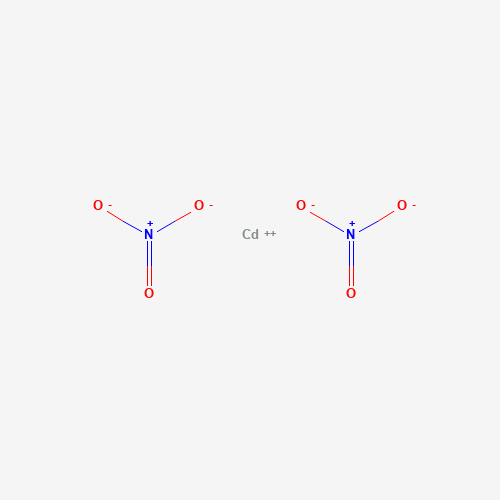
CAS10325-94-7
分子式CdN2O6
分子量236.42 g/mol
危化品
Physical Description | Cadmium nitrate is an odorless white solid. Sinks in water. (USCG, 1999)
科学粮草官-词典编辑部,修订于:2026-07-06
Toxicity
ToxicitySoil Adsorption / Mobility
An adsorption rate of 1.22/hr in river sediments from the Nagara River, Japan, which is heavily impacted by industrial effluents and urban wastes, has been reported for cadmium nitrate; the desorption rate was reported as 0.0038/hr. These values correspond to a concentration factor of 321(1).
Environmental Bioconcentration
Lemna valdiviana (duck weed) exposed to cadmium nitrate for 21 days exhibited a bioconcentration factor of 603.
Probable Routes of Human Exposure
According to the 2006 TSCA Inventory Update Reporting data, the number of persons reasonably likely to be exposed in the industrial manufacturing, processing, and use of cadmium nitrate is 1 to 99; the data may be greatly underestimated(1).
Symptoms
Acute inhalation of cadmium fumes results in metal fume fever, which is characterized by chills, fever, headache, weakness, dryness of the nose and throat, chest pain, and coughing. Ingestion of cadmium causes vomiting and diarrhea. Nitrate and nitrite poisoning causes methemoglobinemia. Symptoms include cyanosis, cardiac dysrhythmias and circulatory failure, and progressive central nervous system (CNS) effects. CNS effects can range from mild dizziness and lethargy to coma and convulsions. (L1137, L6)
Treatment
Cadmium poisoning is treated by removal from exposure and supportive care. If ingested, induced vomiting or gastric lavage may be performed. Methemoglobinemia can be treated with supplemental oxygen and methylene blue 1% solution administered intravenously slowly over five minutes followed by IV flush with normal saline. Methylene blue restores the iron in hemoglobin to its normal (reduced) oxygen-carrying state. (L1613, L139)
Toxicity Data
LD50: 100 mg/kg (Oral, Rat) (L449) LC50: 1925 ppm over 4 hours (Inhalation, Mouse) (L449)
Health Effects
Chronic exposure to cadmium fumes can cause chemical pneumonitis, pulmonary edema, and lung diseases such as bronchitis and emphysema. Cadmium also accumulates in the kidneys, causing permanent damage. Loss of bone density also occurs. Nitrate and nitrite poisoning causes methemoglobinemia. Nitrites may cause pregnancy complications and developmental effects. They may also be carcinogenic. (L1137, L6)
Adverse Effects
Reproductive Toxin - A chemical that is toxic to the reproductive system, including defects in the progeny and injury to male or female reproductive function. Reproductive toxicity includes developmental effects. See Guidelines for Reproductive Toxicity Risk Assessment.
Exposure Routes
Oral (L6); inhalation (L6); dermal (L6)
Toxicity Summary
Cadmium initially binds to metallothionein and is transported to the kidney. Toxic effects are observed once the concentration of cadmium exceeds that of available metallothionein, and it has also been shown that the cadmium-metallothionein complex may be damaging. Accumulation of cadmium in the kidney results in increased excretion of vital low and high weight molecular proteins. Cadmium is a high affinity zinc analog and can interfere in its biological processes. It also binds to and activates the estrogen receptor, likely stimulating the growth of certain types of cancer cells and causing other estrogenic effects, such as reproductive dysfunction. Cadmium causes cell apoptosis by activating mitogen-activated protein kinases. Nitrate's toxicity is a result of it's conversion to nitrit...
Minimum Risk Level
Acute Inhalation: 0.00003 mg/m3 (L134) Chronic Inhalation: 0.00001 mg/m3 (L134) Intermediate Oral: 0.0005 mg/kg/day (L134) Chronic Oral: 0.0001 mg/kg/day (L134)
Human Toxicity Excerpts
/ALTERNATIVE and IN VITRO TESTS/ Recent reports, highlighting the relationships of cadmium exposure and vascular diseases, indicated that vascular endothelial cell was the target of cadmium (Cd) toxicity. However, the underlying mechanisms have not been fully elucidated. ...this study...evaluated the internalization of Cd(2+) into human umbilical vein endothelial cells (HUVECs) by a novel Cd(2+)-selective sensor suitable for living cells. Then, we detected apoptosis in the treated cells. Our results showed that Cd(2+) at low concentrations (< 10 umol/L) inhibited apoptosis induced by deprivation of serum and basic fibroblast growth factor (bFGF). To investigate the corresponding molecular mechanisms, we employed acridine orange staining and Western blotting of /microtubule-associated pr...
Carcinogen Classification
1, carcinogenic to humans. (L135)
Non-Human Toxicity Values
LD50 Mouse oral 100 mg/kg
Evidence for Carcinogenicity
Cadmium and Cadmium Compounds: known to be human carcinogens.
Antidote and Emergency Treatment
Advanced treatment: Consider orotracheal or nasotracheal intubation for airway control in the patient who is unconscious, has severe pulmonary edema, or is in severe respiratory distress. Positive-pressure ventilation techniques with a bag valve mask device may be beneficial. Consider drug therapy for pulmonary edema ... . Monitor cardiac rhythm and treat arrhythmias if necessary ... . Start IV administration of D5W /SRP: "To keep open", minimal flow rate/. Use 0.9% saline (NS) or lactated Ringer's (LR) if signs of hypovolemia are present. For hypotension with signs of hypovolemia, administer fluid cautiously. Watch for signs of fluid overload ... .... . Treat seizures with diazepam or lorazepam ... . Use proparacaine hydrochloride to assist eye irrigation ... . /Cadmium and Related Com...









