


 一键配货
一键配货
化合物详情
CAS10421-48-4
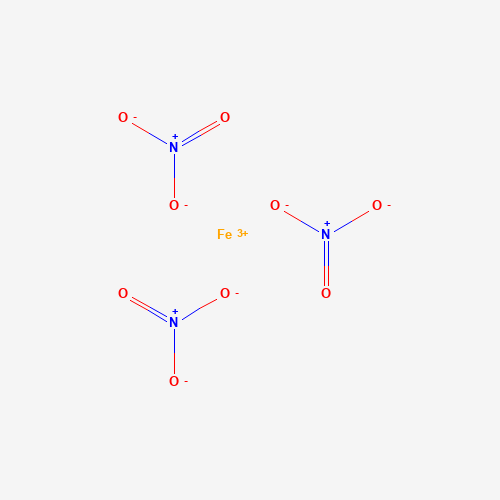
分子式FeN3O9
分子量241.86 g/mol
危化品
Physical Description | Ferric nitrate appears as a violet crystalline solid. Noncombustible but it will accelerate the burning of combustible materials. If large quantities are involved in the fire or the combustible material is finely divided an explosion may result. Prolonged exposure of the material to fire or heat may result in an explosion. Toxic oxides of nitrogen are produced in fires involving this material. It is used for dyeing and tanning, in chemical analysis, and in medicine.
科学粮草官-词典编辑部,修订于:2026-07-06
Toxicity
ToxicityEcotoxicity Values
LC50 Caenorhabditis elegans (Nematode) 0.32 ug/L/24 hr; static
Symptoms
Nitrate and nitrite poisoning causes methemoglobinemia. Symptoms include cyanosis, cardiac dysrhythmias and circulatory failure, and progressive central nervous system (CNS) effects. CNS effects can range from mild dizziness and lethargy to coma and convulsions. (L1137)
Treatment
Methemoglobinemia can be treated with supplemental oxygen and methylene blue 1% solution administered intravenously slowly over five minutes followed by IV flush with normal saline. Methylene blue restores the iron in hemoglobin to its normal (reduced) oxygen-carrying state. (L1613)
Health Effects
Nitrate and nitrite poisoning causes methemoglobinemia. Nitrites may cause pregnancy complications and developmental effects. They may also be carcinogenic. (L1137)
Adverse Effects
Methemoglobinemia - The presence of increased methemoglobin in the blood; the compound is classified as secondary toxic effect
Exposure Routes
Oral (L1137); inhalation (L1137)
Toxicity Summary
Nitrate's toxicity is a result of it's conversion to nitrite once in the body. Nitrite causes the autocatalytic oxidation of oxyhemoglobin to hydrogen peroxide and methemoglobin. This elevation of methemoglobin levels is a condition known as methemoglobinemia, and is characterized by tissue hypoxia, as methemoglobin cannot bind oxygen. (A2450, L1613)
Carcinogen Classification
Ingested nitrate or nitrite under conditions that result in endogenous nitrosation is probably carcinogenic to humans (Group 2A). (L135)
Non-Human Toxicity Values
LD50 Rat oral 3,250 mg/kg /Nonahydrate/
Non-Human Toxicity Excerpts
/LABORATORY ANIMALS: Acute Exposure/ /After intake of nitrate/ signs of abdominal pain & diarrhea are seen owing to irritant action of nitrate ion, accompanied by muscular weakness & incoordination, convulsions, accelerated heart rate, dyspnea, & in severe cases, progressive cyanosis, first visible as a bluish discoloration of the mucous membranes and unpigmented areas of the body, leading to torpor, coma and death. /Nitrate/
Antidote and Emergency Treatment
Hemodialysis and hemoperfusion are not effective for removing iron but may be necessary to remove iron-deferoxamine complex in patients with renal failure. Exchange transfusion is occasionally used for massive pediatric ingestions but is of questionable efficacy.









