


 一键配货
一键配货
化合物详情
CAS12124-97-9
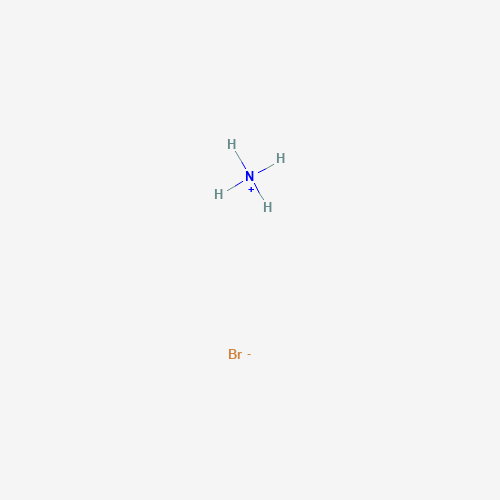
分子式NH4Br
分子量97.94 g/mol g/mol
危化品
Physical Description | Ammonium bromide appears as white odorless crystals or granules that become yellow upon exposure to air. Sinks and mixes in water. (USCG, 1999)
科学粮草官-词典编辑部,修订于:2026-07-06
Toxicity
ToxicityEPA Ecotoxicity
Pesticide Ecotoxicity Data from EPA: 9
Probable Routes of Human Exposure
NIOSH (NOES Survey 1981-1983) has statistically estimated that 16,770 workers (3,784 of these were female) were potentially exposed to ammonium bromide in the US(1).
Symptoms
Bromine vapour causes irritation and direct damage to the mucous membranes. Symptoms include lacrimation, rhinorrhoea, eye irritation with mucous secretions from the oropharyngeal and upper airways, coughing, dyspnoea, choking, wheezing, epistaxis, and headache. The bromide ion is a central nervous system depressant producing ataxia, slurred speech, tremor, nausea, vomiting, lethargy, dizziness, visual disturbances, unsteadiness, headaches, impaired memory and concentration, disorientation and hallucinations. This is called bromism. (L626, L627)
Treatment
EYES: irrigate opened eyes for several minutes under running water. INGESTION: do not induce vomiting. Rinse mouth with water (never give anything by mouth to an unconscious person). Seek immediate medical advice. SKIN: should be treated immediately by rinsing the affected parts in cold running water for at least 15 minutes, followed by thorough washing with soap and water. If necessary, the person should shower and change contaminated clothing and shoes, and then must seek medical attention. INHALATION: supply fresh air. If required provide artificial respiration.
Health Effects
Bromine vapour causes irritation and direct damage to the mucous membranes. Elemental bromine also burns the skin. The bromide ion is a central nervous system depressant and chronic exposure produces neuronal effects. This is called bromism and can result in central reactions reaching from somnolence to coma, cachexia, exicosis, loss of reflexes or pathologic reflexes, clonic seizures, tremor, ataxia, loss of neural sensitivity, paresis, papillar edema of the eyes, abnormal speech, cerebral edema, delirium, aggressiveness, and psychoses. (L625, L626, L627)
Adverse Effects
Neurotoxin - Other CNS neurotoxin
Exposure Routes
Oral (L626); inhalation (L626); dermal (L626)
Toxicity Summary
Bromine is a powerful oxidizing agent and is able to release oxygen free radicals from the water in mucous membranes. These free radicals are also potent oxidizers and produce tissue damage. In additon, the formation of hydrobromic and bromic acids will result in secondary irritation. The bromide ion is also known to affect the central nervous system, causing bromism. This is believed to be a result of bromide ions substituting for chloride ions in the in actions of neurotransmitters and transport systems, thus affecting numerous synaptic processes. (L626, L627, A543)
Human Toxicity Values
A blood bromide concentration of 1 g (12.5 mmol) per liter is often regarded as the minimum intoxication level, though toxic symptoms may occur at lower concentrations, 2g/L produces toxic symptoms in most cases and 3 g/L is dangerous to life.
Carcinogen Classification
No indication of carcinogenicity to humans (not listed by IARC).
Non-Human Toxicity Values
LD50 Rat oral 2714 mg/kg bw
Non-Human Toxicity Excerpts
/GENOTOXICITY/ Ames test /was conducted in/ Salmonella typhimurium strains TA1535,TA100,TA1538,TA98,TA1537 at concentrations 250, 500, 1250, 2500, 5000 ug/plate, with and without metabolic activation. The test levels selected were based on results of a preliminary toxicity test in strain TA98. Each test was conducted in duplicate and was carried out on two separate occasions. Positive controls (sodium azide, ICR-191, 4-nitro-o-phenylenediamine (NPD), 2-aminoanthracene) induced significant increases in reverant colony numbers with all strains, confirming sensitivity of the cultures and activity of S-9 mix. No significant increases in reversion to prototrophy were obtained with any of the 5 bacterial strains at the compound levels tested, either in the absence or presence of S-9 mix. Ammo...
Antidote and Emergency Treatment
Advanced treatment: Consider orotracheal or nasotracheal intubation for airway control in the patient who is unconscious, has severe pulmonary edema, or is in severe respiratory distress. Positive-pressure ventilation techniques with a bag valve mask device may be beneficial. Consider drug therapy for pulmonary edema ... . Consider administering a beta agonist such as albuterol for severe bronchospasm ... . Monitor cardiac rhythm and treat arrhythmias if necessary ... . Start IV administration of D5W /SRP: "To keep open", minimal flow rate/. Use 0.9% saline (NS) or lactated Ringer's (LR) if signs of hypovolemia are present. For hypotension with signs of hypovolemia, administer fluid cautiously. Consider vasopressors if patient is hypotensive with a normal fluid volume. Watch for signs o...









