


 一键配货
一键配货
化合物详情
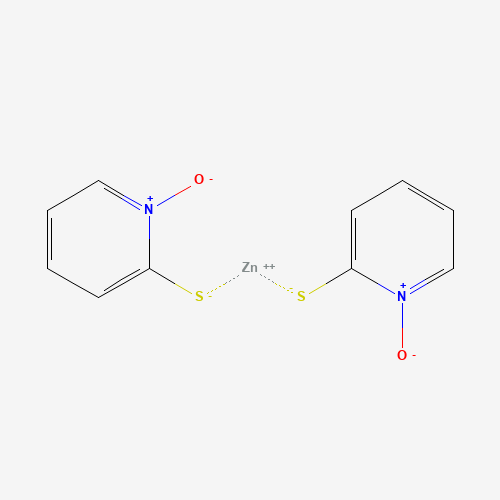
CAS13463-41-7
分子式C10H8N2O2S2Zn
分子量317.7 g/mol g/mol
危化品
Physical Description | Zinc pyrithione is a fine beige granules. (NTP, 1992)
科学粮草官-词典编辑部,修订于:2026-07-06
Toxicity
ToxicityEPA Ecotoxicity
Pesticide Ecotoxicity Data from EPA: 37
Ecotoxicity Values
USDA APHIS Chemical Effects: collection=usda_chemeffect&query_type=synonym&query='^13463-41-7$'
Fate Summary
ATMOSPHERIC FATE: If released to air, pyrithioine zinc absorbs UV light at 300 nm(1) and therefore is susceptible to direct photolysis in sunlight(SRC).
Soil Adsorption / Mobility
Pyrithione zinc is immobile in sediment(1).
Environmental Biodegradation
ANAEROBIC: Pyrithione zinc, present at 50 ng/g, exhibited a half-life of 0.5 hours when incubated in the dark at 25 °C using a seawater/sediment inoculum obtained from Marblehead Harbor, Marblehead, MA(1).
Environmental Bioconcentration
Values for BCF of 200 and 160 were measured in fish for pyrithione zinc at concentrations of 1 and 0.1 ug/L, respectively, using carp (Cyprinus carpio) which were exposed over a 60-day period(1). According to a classification scheme(3), these BCF values suggest that bioconcentration in aquatic organisms is high(SRC).
Environmental Abiotic Degradation
The hydrolysis half-life for pyrithrione zinc under abiotic dark conditions was reported to be >90 days(1). Zinc pyrithione absorbs UV light at 300 nm and therefore is susceptible to direct photolysis in sunlight. Photolytic half-lives between 9.2 and 15.1 minutes in aqueous media under solar irradiation using a xenon light source were reported; increasing dissolved organic matter accelerates the reaction as does the presence of nitrate ions. Photodegradation products identified included pyridine-N-oxide, 2-mercaptopyridine, 2,2'-dithiobis(pyridine-N-oxide), 2,2-dipyridyl disulfide and 2,2'-dithiobispyridine mono-N-oxide(2). Using artificial seawater placed in full sunlight outdoors in quartz tubes, a photodegradation half-life of less than 2 minutes was obtained for zinc pyrithione. Us...
Artificial Pollution Sources
Zinc pyrithione's production and use in preservation of cosmetics, metalworking fluids, and inhibition of bacterial and fungal growth on fabrics(1) may result in its release to the environment through various waste streams. It's use in marine antifouling paints(2) and as an additive in antidandruff preparations(2) may result in its direct release to the environment(SRC).
Probable Routes of Human Exposure
The number of manufacturers is small, but industrial applications are numerous, so industrial exposure to concentration and/or dilute solution is large. Primary routes of exposure are by skin or eye contact or by inhalation of dust, solution/dispersions or aerosols. Ingestion exposure should be minor.
Other Environmental Concentrations
Two antifouling marine paints containing zinc pyrithione were applied to wooden panels according to manufacturers specifications and immersed in seawater tanks containing magnetic stirrers. After stirring for 1 hour, each panel was transferred to one liter of still, unexposed seawater. Zinc pyrithione was detected in the water at a concentration of 4, 0, 0, and 0 nM 1, 2, 3, and 4 hours, respectively, after initial exposure(1).
Environmental Fate / Exposure Summary
Zinc pyrithione's production and use in preservation of cosmetics, metalworking fluids, and inhibition of bacterial and fungal growth on fabrics may result in its release to the environment through various waste streams. It's use in marine antifouling paints and as an additive in antidandruff preparations may result in its direct release to the environment. If released to air, zinc pyrithione absorbs UV light at 300nm and therefore is susceptible to direct photolysis in sunlight. If released to soil, zinc pyrithione is expected to be immobile based upon its immobility in sediment. Utilizing a seawater/sediment inoculum, half-lives of 2-22 hours under aerobic conditions indicate that biodegradation may be an important environmental fate process in soil. If released into water, zinc pyrit...
Symptoms
Ingestion of large doses of zinc causes stomach cramps, nausea, and vomiting. Acute inhalation of large amounts of zinc causes metal fume fever, which is characterized by chills, fever, headache, weakness, dryness of the nose and throat, chest pain, and coughing. Dermal contact with zinc results in skin irritation. (L49)
Treatment
Zinc poisoning is treated symptomatically, often by administering fluids such as water or milk, or with gastric lavage. (L49)
Interactions
DMSO (dimethylsulfoxide) aided the percutaneous penetration of zinc pyrithione in comparison with water, as evidenced by earlier onset of toxic signs.
Toxicity Data
LD50: 177 mg/kg (Oral, Rat) (L545) LD50: 100 mg/kg (Dermal, Rabbit) (L545) LC50: 140 mg/m3 over 4 hours (Inhalation, Rat) (L545)
Health Effects
Chronic exposure to zinc causes anemia, atazia, lethargy, and decreases the level of good cholesterol in the body. It is also believed to cause pancreatic and reproductive damage. (L49)
Exposure Routes
Inhalation (L49); oral (L49); dermal (L49)
Toxicity Summary
Anaemia results from the excessive absorption of zinc suppressing copper and iron absorption, most likely through competitive binding of intestinal mucosal cells. Unbalanced levels of copper and zinc binding to Cu,Zn-superoxide dismutase has been linked to amyotrophic lateral sclerosis (ALS). Stomach acid dissolves metallic zinc to give corrosive zinc chloride, which can cause damage to the stomach lining. Metal fume fever is thought to be an immune response to inhaled zinc. (L48, L49, A49)
Minimum Risk Level
Intermediate Oral: 0.3 mg/kg/day (L134) Chronic Oral: 0.3 mg/kg/day (L134)
Carcinogen Classification
No indication of carcinogenicity to humans (not listed by IARC).
Antidote and Emergency Treatment
/SRP:/ Advanced treatment: Consider orotracheal or nasotracheal intubation for airway control in the patient who is unconscious, has severe pulmonary edema, or is in severe respiratory distress. Positive-pressure ventilation techniques with a bag valve mask device may be beneficial. Consider drug therapy for pulmonary edema ... . Consider administering a beta agonist such as albuterol for severe bronchospasm ... . Monitor cardiac rhythm and treat arrhythmias as necessary ... . Start IV administration of D5W /SRP: "To keep open", minimal flow rate/. Use 0.9% saline (NS) or lactated Ringer's if signs of hypovolemia are present. For hypotension with signs of hypovolemia, administer fluid cautiously. Watch for signs of fluid overload ... . Treat seizures with diazepam or lorazepam ... . Use...









