


 一键配货
一键配货
化合物详情
CAS13463-67-7
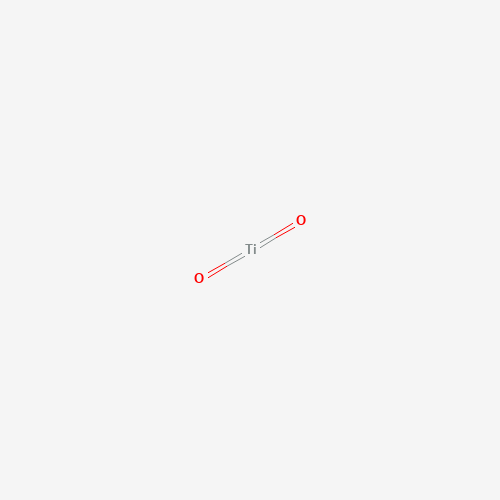
分子式TiO2
分子量79.87 g/mol g/mol
非危品
Titanium dioxide (airborne, unbound particles of respirable size) can cause cancer according to California Labor Code.
科学粮草官-词典编辑部,修订于:2026-07-06
Toxicity
ToxicityEcotoxicity Values
USDA APHIS Chemical Effects: collection=usda_chemeffect&query_type=synonym&query='^13463-67-7$'
Ecotoxicity Excerpts
/AQUATIC SPECIES/ This research evaluated the toxicity of TiO2 nanoparticles to freshwater aquatic organisms and the effects of organic and inorganic material on TiO2 toxicity. The fathead minnow was much less acutely sensitive to TiO2 (LC50 500 mg/L and higher) than Ceriodaphnia dubia /water flea/ and Daphnia pulex /water flea/ (mean LC50 values 7.6 and 9.2 mg/L, respectively). Total organic carbon levels of 1.5 mg/L decreased TiO2 acute toxicity to C. dubia (LC50 > 100 mg/L), but kaolinite clay decreased TiO2 toxicity to a lesser extent. In chronic toxicity tests, the green algae Pseudokirchneriella subcapitata was more sensitive to TiO2 (IC25 1-2 mg/L) than C. dubia (IC25 9.4-26.4 mg/L) and the fathead minnow (IC25 values over 340 mg/L). Study results indicate that the specific organ...
ICSC Environmental Data
This substance does enter the environment under normal use. Great care, however, should be taken to avoid any additional release, for example through inappropriate disposal.
Natural Pollution Sources
In the chloride process, the titanium-containing raw materials ilmenite, leucoxene, rutile, titanium slag, or anatase are chlorinated at 700 - 1200 °C. The TiCl4 is oxidized at temperatures of 900 - 1400 °C to form TiO2. This raw pigment is ground and coated with inorganic compounds.
Artificial Pollution Sources
Titanium tetrachloride hydrolyzes rapidly upon contact with moist air to form a vapor of hydrochloric acid, titanium dioxide, and titanium oxychloride(1).
Probable Routes of Human Exposure
Industrial exposures consist chiefly of dust and fume from electric furnace operations ... .
Symptoms
Lung fibrosis; [potential occupational carcinogen]
Cancer Sites
[in animals: lung tumors]
Interactions
Groups of 24 male and 24 female Syrian golden hamsters, 6-7 weeks of age, received intratracheal instillations of 3 mg titanium dioxide ((purity unspecified); particle size: 97% <5 um; 51% <0.5 um) plus 3 mg benzo(a)pyrene in 0.2 mL saline or 3 mg benzo(a)pyrene alone in saline (controls) once a week for 15 weeks. Animals were observed until spontaneous death; all control and treated hamsters had died by 90- 100 and 60-70 weeks, respectively. In the 48 hamsters treated with titanium dioxide plus benzo[a]pyrene, tumors (number of tumors per sex unspecified) occurred in the larynx (11 papillomas, five squamous-cell carcinomas), trachea (three papillomas, 14 squamouscell carcinomas, one adenocarcinoma) and lung (one adenoma, one adenocarcinoma, 15 squamous-cell carcinomas, one anaplastic c...
Target Organs
respiratory system
Adverse Effects
IARC Carcinogen - Class 3: Chemicals are not classifiable by the International Agency for Research on Cancer.
Exposure Routes
inhalation
Carcinogen Classification
Summary: It is concluded that under the conditions of this bioassay, titanium dioxide was not carcinogenic by the oral route for Fischer 344 rats or B6C3F1 mice.
Non-Human Toxicity Values
LD50 Rat oral > 10,000 mg/kg body weight
Populations at Special Risk
Because the absorptive characteristics of skin of children younger than 6 months of age may differ from those of adults and because the immaturity of metabolic and excretory pathways of these children may limit their ability to eliminate any percutaneously absorbed sunscreen agent, sunscreen products should be used in children younger than 6 months of age only as directed by a clinician. It is possible that the characteristics of geriatric skin also differ from those of skin in younger adults, but these characteristics and the need for special considerations regarding use of sunscreen preparations in this age group are poorly understood. /Sunscreens/
Evidence for Carcinogenicity
A4: Not classifiable as a human carcinogen.
Antidote and Emergency Treatment
/SRP:/ Advanced treatment: Consider orotracheal or nasotracheal intubation for airway control in the patient who is unconscious, has severe pulmonary edema, or is in severe respiratory distress. Positive-pressure ventilation techniques with a bag valve mask device may be beneficial. Consider drug therapy for pulmonary edema ... . Consider administering a beta agonist such as albuterol for severe bronchospasm ... . Monitor cardiac rhythm and treat arrhythmias as necessary ... . Start IV administration of D5W /SRP: "To keep open", minimal flow rate/. Use 0.9% saline (NS) or lactated Ringer's if signs of hypovolemia are present. For hypotension with signs of hypovolemia, administer fluid cautiously. Watch for signs of fluid overload ... . Treat seizures with diazepam or lorazepam ... . Use...









