


 一键配货
一键配货
化合物详情
CAS13473-90-0
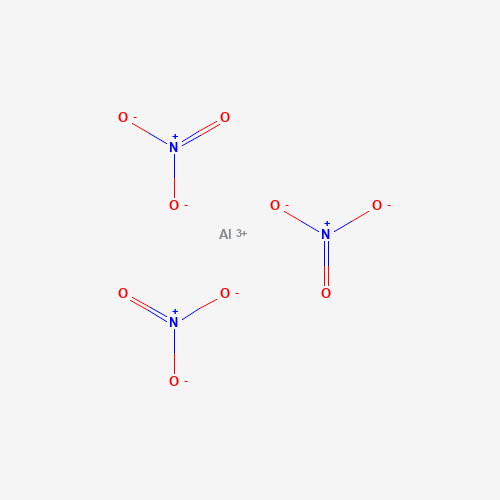
分子式Al.(NO3)3
分子量213 g/mol
非危品
Physical Description | Aluminum nitrate appears as a white, crystalline solid. Noncombustible but can accelerate the burning of combustible materials. If large quantities are involved or the combustible material is finely divided, an explosion may result. Prolonged exposure to fire or heat may result in an explosion. Fires that involve this material, produce oxides of nitrogen. Uses include, petroleum refining, dyeing, and leather tanning.
科学粮草官-词典编辑部,修订于:2026-07-06
Toxicity
ToxicityEcotoxicity Values
LC50 Caenorhabditis elegans (Nematode) 1.8 mg/L/96 hr (95% confidence interval: 1.6-1.9 mg/L); static /technical product/
Fate Summary
Albic and spodic soil horizons were sampled from old growth eastern white pine/mixed northern hardwoods sites in the Adirondacks, and an ochric soil horizon was sampled from the Appalachian Plateau of NY State. 9 Three-horizon forest floor, 9 mineral soil (field moist equivalent of 12.0 oven-dry albic, spodic, or ochric mineral soil) and 9 forest floor/mineral soil columns were leached with 60 ml of (a) 10 mM ammonium nitrate (control), (b) 1.0 mM nitric acid in 10 mM ammonium nitrate (pH 3), and (c) 1.0 mM ammonium nitrate (pH 3) at the rate of 10 ml/h. The above procedure was repeated on each mineral soil without a forest floor, except leaching soln were 0.5 mM calcium nitrate or calcium sulfate, each in 10 mM ammonium nitrate. Adding 2 and 0.5 cmol sub c (H+)/kg to forest floor and m...
Plant Concentrations
Two levels of phosphorus (20 and 80 kg P/ha) and 2 levels of aluminum (0 and 85 kg Al/ha, as aluminum nitrate) were applied to Enders soils of pH 4.4, 6.6, or 7.3. 16-day-old vegetable amaranth (Amaranthus iricolor L.) plants were transplanted 24 July 1986 and harvested 27 days later. Adding Al to the soil decr plant height (p = 0.05), leaf blade chlorophyll (p = 0.05), Nitrogen (p = 0.05), phosphorus (p = 0.01), and sodium (p = 0.05), but increased manganese (p = 0.05). At the termination of the expt, exchangeable soil Al was found only in soil at pH 4.4 (1.1 cmol/kg). The highest leaf blade Al concn (2473 mg/kg) was found in soil at pH 6.6 that received the low rate of supplemental P. Regardless of soil pH, leaf blade Al was negatively correlated with plant height (r = -0.78), plant d...
Symptoms
Inhalating aluminum dust causes coughing and abnormal chest X-rays. A small percentage of people are allergic to aluminium and experience contact dermatitis, digestive disorders, vomiting or other symptoms upon contact or ingestion of products containing aluminium. Nitrate and nitrite poisoning causes methemoglobinemia. Symptoms include cyanosis, cardiac dysrhythmias and circulatory failure, and progressive central nervous system (CNS) effects. CNS effects can range from mild dizziness and lethargy to coma and convulsions. (L1137, L739, L740)
Treatment
Methemoglobinemia can be treated with supplemental oxygen and methylene blue 1% solution administered intravenously slowly over five minutes followed by IV flush with normal saline. Methylene blue restores the iron in hemoglobin to its normal (reduced) oxygen-carrying state. (L1613)
Health Effects
Aluminum targets the nervous system and causes decreased nervous system performance and is associated with altered function of the blood-brain barrier. The accumulation of aluminum in the body may cause bone or brain diseases. High levels of aluminum have been linked to Alzheimer's disease. A small percentage of people are allergic to aluminium and experience contact dermatitis, digestive disorders, vomiting or other symptoms upon contact or ingestion of products containing aluminium. Nitrate and nitrite poisoning causes methemoglobinemia. Nitrites may cause pregnancy complications and developmental effects. They may also be carcinogenic. (L1137, L739, L740)
Adverse Effects
Methemoglobinemia - The presence of increased methemoglobin in the blood; the compound is classified as secondary toxic effect
Exposure Routes
Oral (L739); inhalation (L739)
Toxicity Summary
The main target organs of aluminum are the central nervous system and bone. Aluminum binds with dietary phosphorus and impairs gastrointestinal absorption of phosphorus. The decreased phosphate body burden results in osteomalacia (softening of the bones due to defective bone mineralization) and rickets. Aluminum's neurotoxicity is believed to involve several mechanisms. Changes in cytoskeletal protein functions as a results of altered phosphorylation, proteolysis, transport, and synthesis are believed to be one cause. Aluminum may induce neurobehavioral effects by affecting permeability of the blood-brain barrier, cholinergic activity, signal transduction pathways, lipid peroxidation, and impair neuronal glutamate nitric oxide-cyclic GMP pathway, as well as interfere with metabolism of...
Minimum Risk Level
Intermediate Oral: 1.0 mg/kg/day (L134) Chronic Oral: 1.0 mg/kg/day (L134)
Human Toxicity Excerpts
/SIGNS AND SYMPTOMS/ Contact with dust irritates eyes and skin.
Carcinogen Classification
Ingested nitrate or nitrite under conditions that result in endogenous nitrosation is probably carcinogenic to humans (Group 2A). (L135)
Antidote and Emergency Treatment
/Exposure to aluminum nitrate/: Call for medical aid. Dust: Irritating to eyes, nose and throat. Harmful if inhaled. If in eyes, hold eyelids open and flush with plenty of water. If breathing has stopped, give artificial respiration. If breathing is difficult, give oxygen. Solid: Irritating to skin and eyes. If swallowed will cause nausea or vomiting. Remove contaminated clothing and shoes. Flush affected areas with plenty of water. If in eyes, hold eyelids open and flush with plenty of water. If swallowed and victim is conscious, have victim drink water or milk. If swallowed and victim is unconscious or having convulsions, do nothing except keep victim warm.









