


 一键配货
一键配货
化合物详情
CAS13952-84-6
分子式C4H11N
分子量73.14 g/mol g/mol
危化品
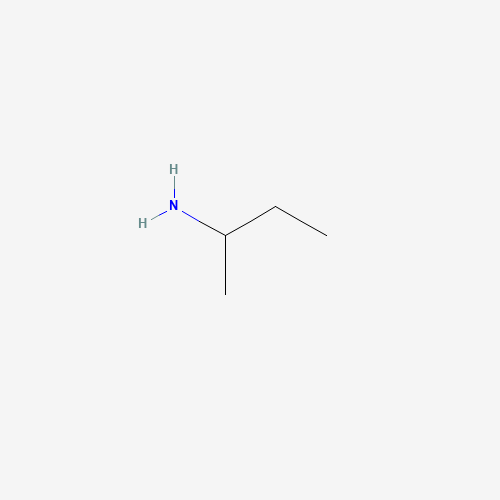
Physical Description | Sec-butylamine is a white liquid with an odor of ammonia. (USCG, 1999)
科学粮草官-词典编辑部,修订于:2026-07-06
Toxicity
ToxicityEPA Ecotoxicity
Pesticide Ecotoxicity Data from EPA: 2
Ecotoxicity Values
EC50; Species: Tetrahymena pyriformis (Ciliate, Stationary Growth Phase); Conditions: static, 23 °C; Concentration: 25000 ug/L for 36 hr; Effect: general growth
Fate Summary
ATMOSPHERIC FATE: According to a model of gas/particle partitioning of semivolatile organic compounds in the atmosphere(1), sec-butylamine, which has a vapor pressure of 178 mm Hg at 25 °C(2), is expected to exist solely as a vapor in the ambient atmosphere. Vapor-phase sec-butylamine is degraded in the atmosphere by reaction with photochemically-produced hydroxyl radicals(SRC); the half-life for this reaction in air is estimated to be 9 hours(SRC), calculated from its rate constant of 4.5X10⁻¹¹ cu cm/molecule-sec at 25 °C(SRC) that was derived using a structure estimation method(3). sec-Butylamine does not contain chromophores that absorb at wavelengths >290 nm(4) and therefore is not expected to be susceptible to direct photolysis by sunlight(SRC).
Soil Adsorption / Mobility
The Koc of sec-butylamine is estimated as 60(SRC), using a log Kow of 0.74(1) and a regression-derived equation(2). According to a classification scheme(3), this estimated Koc value suggests that sec-butylamine is expected to have high mobility in soil. The pKa of sec-butylamine is 10.56(4) indicating that this compound will exist almost entirely in the cation form in the environment and cations generally adsorb more strongly to soils containing organic carbon and clay than their neutral counterparts(5).
Environmental Biodegradation
ANAEROBIC: After an acclimation period of 52 days, 66% utilization of sec-butylamine occurred by anaerobic bacteria acclimated to acetate culture(1). sec-Butylamine was identified as being amenable to anaerobic biodegradation(2).
Environmental Bioconcentration
An estimated BCF of 3 was calculated in fish for sec-butylamine(SRC), using a log Kow of 0.74(1) and a regression-derived equation(2). According to a classification scheme(3), this BCF suggests the potential for bioconcentration in aquatic organisms is low(SRC).
Volatilization from Water / Soil
A pKa of 10.56(1) indicates sec-butylamine will exist almost entirely in the cation form at pH values of 5 to 9 and therefore volatilization from water surfaces is not expected to be an important fate process(2). sec-Butylamine's estimated Henry's Law constant indicates that volatilization from moist soil surfaces may occur(SRC). The potential for volatilization of sec-butylamine from dry soil surfaces may exist based upon its vapor pressure of 178 mm Hg(3).
Environmental Abiotic Degradation
The rate constant for the vapor-phase reaction of sec-butylamine with photochemically-produced hydroxyl radicals has been estimated as 4.5X10⁻¹¹ cu cm/molecule-sec at 25 °C(SRC) using a structure estimation method(1). This corresponds to an atmospheric half-life of about 9 hours at an atmospheric concentration of 5X10+5 hydroxyl radicals per cu cm(1). sec-Butylamine is not expected to undergo hydrolysis in the environment due to the lack of functional groups that hydrolyze under environmental conditions(2). sec-Butylamine does not contain chromophores that absorb at wavelengths >290 nm(2) and therefore is not expected to be susceptible to direct photolysis by sunlight(SRC).
Food Survey Values
... Residues /of sec-butylamine from post-harvest treatments/ in citrus fruit (orange, tangarine, mandarin, grapefruit and lemon) ranged from 0.88-7.65 ug/g ... Pome fruit residues ranged from 2.75-11.6 ug/g, with pears (11.2-11.6 ug/g) having 3-4 times higher residues than apples (2.75-3.61 ug/g). Whole green or ripened Cavendish bananas contained residues ranging from 15.1-27.6 ug/g, with 2% or less of the residue being found in the pulp.
Natural Pollution Sources
... amines from decomposing fish ... /Amines/
Artificial Pollution Sources
sec-Butylamine's production may result in its release to the environment through various waste streams; its former use in the US as a fungicide(1) resulted in its direct release to the environment(SRC).
Sediment/Soil Concentrations
SOIL: sec-Butylamine was found in the soil (loam) of the Moscow (USSR) region at an unspecified concentration(1).
Probable Routes of Human Exposure
Occupational exposure to sec-butylamine may occur through inhalation and dermal contact with this compound at workplaces where sec-butylamine is produced or used. Monitoring and use data indicate that the general population may be exposed to sec-butylamine via ingestion of food, and dermal contact with this compound and other products containing sec-butylamine. (SRC)
Other Environmental Concentrations
sec-Butylamine has been determined to be a volatile component of cattle feed lots, probably from the decomposition of manure(1).
Environmental Fate / Exposure Summary
sec-Butylamine's production may result in its release to the environment through various waste streams; its former use in the US as a fungicide resulted in its direct release to the environment. If released to air, a vapor pressure of 178 mm Hg at 25 °C indicates sec-butylamine will exist solely as a vapor in the atmosphere. Vapor-phase sec-butylamine will be degraded in the atmosphere by reaction with photochemically-produced hydroxyl radicals; the half-life for this reaction in air is estimated to be 9 hours. sec-Butylamine does not contain chromophores that absorb at wavelengths >290 nm and therefore is not expected to be susceptible to direct photolysis by sunlight. If released to soil, sec-butylamine is expected to have high mobility based upon an estimated Koc of 60. The pKa of se...
Symptoms
Ingestion Exposure: Diarrhoea. Sore throat. Vomiting. Abdominal pain. Burning sensation. Shock or collapse.
Adverse Effects
Toxic Pneumonitis - Inflammation of the lungs induced by inhalation of metal fumes or toxic gases and vapors.
Exposure Routes
The substance can be absorbed into the body by inhalation of its vapour and by ingestion.
Toxicity Summary
IDENTIFICATION: sec-Butylamine is a colorless liquid with an ammoniacal odor. It is miscible with water and most organic solvents. Formulated products include phosphate and carbonate salts. Mixed solutions are not stable beyond three days and concentrates or mixed solutions require protection from direct ight or extremes in temperatures. sec-Butylamine is a fungicide particularly effective for the control of fruit rotting fungi. ANIMAL STUDIES: Groups of dogs were administered this compound as the carbonate or acetate salt and data were recorded for heart rate, respiration, blood pressure and EEG apparatus. IV administration of either the acetate or carbonate resulted in elevated blood pressure, heart rate and respiration. Intragastric administration of larger doses resulted in similar...
Human Toxicity Excerpts
/OTHER TOXICITY INFORMATION/ Since the amines are bases and may form strongly alkaline solutions, they can be damaging if splashed in the eye or if allowed to contaminate the skin. ... The lower aliphatic amines are normal constituents of body tissues, so that they occur in a large number of foods, particularly fish, to which they impart a characteristic odor. One area of concern at present is the possibility that some aliphatic amines may react with nitrate or nitrite in vivo to form nitroso compounds, many of which are known to be potent carcinogens in animals ... . /Aliphatic amines/
Non-Human Toxicity Values
LD50 Rat oral (female, male) 152 mg/kg
Populations at Special Risk
... Employees /with chronic respiratory, skin, or eye disease are/ at increased risk from butylamine exposure. /n-Butylamine/









