


 一键配货
一键配货
化合物详情
CAS14324-55-1
分子式C10H20N2S4Zn
分子量361.93 g/mol g/mol
危化品
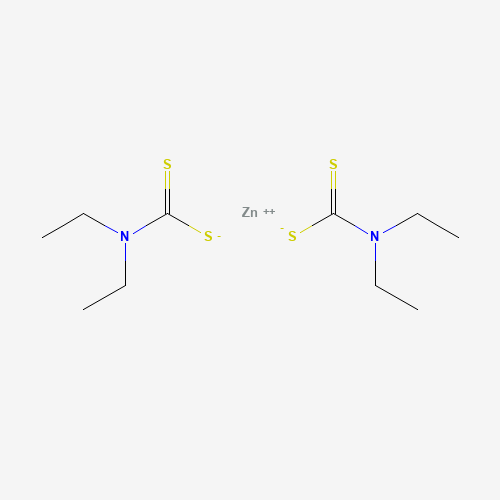
Zinc diethyldithiocarbamate is a dithiocarbamate salt that is the zinc salt of diethyldithiocarbamic acid. It is an accelerator and activator for natural rubber. It has a role as an antifungal agrochemical. It is a zinc molecular entity and a dithiocarbamate salt. It contains a diethyldithiocarbamate and a zinc(2+). It is functionally related to a diethyldithiocarbamic acid.
科学粮草官-词典编辑部,修订于:2026-07-06
Toxicity
ToxicityEcotoxicity Values
EC50 Chlorella pyrenoidosa (Green algae; growth inhibition) 1.1 mg/L/96 hr; static /formulated product/
Probable Routes of Human Exposure
Zinc diethyldithiocarbamate is used as an accelerator in vulcanization of rubber. Dithiocarbamates are frequently present in domestic rubber goods such as gloves, clothing & contraceptive sheaths, that may cause urticaria.
Other Environmental Concentrations
Diethyldithiocarbamic acid zinc salt has been identified in rubber household and surgical gloves(1).
Symptoms
Ingestion of large doses of zinc causes stomach cramps, nausea, and vomiting. Acute inhalation of large amounts of zinc causes metal fume fever, which is characterized by chills, fever, headache, weakness, dryness of the nose and throat, chest pain, and coughing. Dermal contact with zinc results in skin irritation. (L49)
Treatment
Zinc poisoning is treated symptomatically, often by administering fluids such as water or milk, or with gastric lavage. (L49)
Toxicity Data
LD50: 142 mg/kg (Oral, Mouse) (T14)
Health Effects
Chronic exposure to zinc causes anemia, atazia, lethargy, and decreases the level of good cholesterol in the body. It is also believed to cause pancreatic and reproductive damage. (L49)
Adverse Effects
Skin Sensitizer - An agent that can induce an allergic reaction in the skin.
Exposure Routes
Oral (L49); inhalation (L49); dermal (L49)
Toxicity Summary
Anaemia results from the excessive absorption of zinc suppressing copper and iron absorption, most likely through competitive binding of intestinal mucosal cells. Unbalanced levels of copper and zinc binding to Cu,Zn-superoxide dismutase has been linked to amyotrophic lateral sclerosis (ALS). Stomach acid dissolves metallic zinc to give corrosive zinc chloride, which can cause damage to the stomach lining. Metal fume fever is thought to be an immune response to inhaled zinc. (L48, L49, A49)
Minimum Risk Level
Intermediate Oral: 0.3 mg/kg/day (L134) Chronic Oral: 0.3 mg/kg/day (L134)
Human Toxicity Excerpts
/CASE REPORTS/ In Nov 1981 a 19-yr-old woman began work as a kitchen employee. In June 1982 she developed urticaria on wrists every time she washed dishes at work, where she wore cotton & Formi-rubber latex domestic gloves. Whealing began on wrists a few minutes after she began washing, & occasionally she had edema of eyelids. Symptoms lasted 0.5 hr after removal of gloves. Itching was intense, causing excoriations on arms. There were no signs of eczema. She had no history of skin disease or atopy. Immediate reactions were not observed in patch tests. In scratch chamber tests, a small piece of rubber gloves & /zinc diethyldithiocarbamate/ ZDC produced a weal greater than histamine control at 15 min. Patient used different gloves at work when test began & no urticaria appeared. ZDC seeme...
Carcinogen Classification
No indication of carcinogenicity to humans (not listed by IARC).
Non-Human Toxicity Values
LD50 Mouse oral 142 mg/kg
Antidote and Emergency Treatment
Persons who have absorbed any significant amount of thiocarbamates must avoid alcoholic beverages for at least three weeks. Disposition of thiocarbamates is slow, and their inhibitory effects on enzymes are slowly reversible. /Thiocarbamates/









