


 一键配货
一键配货
化合物详情
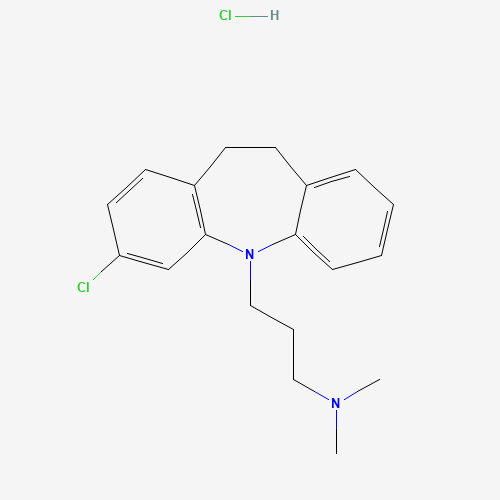
CAS17321-77-6
分子式C19H23ClN2.HCl
分子量351.32 g/mol
非危品
Clomipramine hydrochloride is a hydrochloride resulting from the reaction of equimolar amounts of clomipramine and hydrogen chloride. One of the more sedating tricyclic antidepressants, it is used for the treatment of depression as well as obsessive-compulsive disorder and phobias. It has a role as an anticoronaviral agent, an antidepressant, a serotonergic drug and a serotonergic antagonist. It contains a clomipramine(1+).
科学粮草官-词典编辑部,修订于:2026-07-06
Toxicity
ToxicitySymptoms
Signs and symptoms vary in severity depending upon factors such as the amount of drug absorbed, the age of the patient, and the time elapsed since drug ingestion. Critical manifestations of overdose include cardiac dysrhythmias, severe hypotension, convulsions, and CNS depression including coma. Changes in the electrocardiogram, particularly in QRS axis or width, are clinically significant indicators of tricyclic toxicity. In U.S. clinical trials, 2 deaths occurred in 12 reported cases of acute overdosage with Anafranil either alone or in combination with other drugs. One death involved a patient suspected of ingesting a dose of 7000 mg. The second death involved a patient suspected of ingesting a dose of 5750 mg.
Treatment
Obtain an ECG and immediately initiate cardiac monitoring. Protect the patient's airway, establish an intravenous line, and initiate gastric decontamination. A minimum of 6 hours of observation with cardiac monitoring and observation for signs of CNS or respiratory depression, hypotension, cardiac dysrhythmias and/or conduction blocks, and seizures is necessary. If signs of toxicity occur at any time during this period, extended monitoring is required. (L1712)
Lethal Dose
collection=toxvaldb&kind=^LD$
Exposure Routes
Well absorbed from the GI tract following oral administration. Bioavailability is approximately 50% orally due to extensive first-pass metabolism. Bioavailability is not affected by food. Peak plasma concentrations occurred 2-6 hours following oral administration of a single 50 mg dose. The peak plasma concentration ranged from 56 ng/mL to 154 mg/mL (mean, 92 ng/mL). There are large interindividual variations in plasma concentrations occur, partly due to genetic differences in clomipramine metabolism. On average, steady state plasma concentrations are achieved in 1-2 weeks following multiple dose oral administration. Smoking appears to lower the steady-state plasma concentration of clomipramine, but not its active metabolite desmethylclomipramine.
Toxicity Summary
Clomipramine is a strong, but not completely selective serotonin reuptake inhibitor (SRI), as the active main metabolite desmethyclomipramine acts preferably as an inhibitor of noradrenaline reuptake. α<sub>1</sub>-receptor blockage and β-down-regulation have been noted and most likely play a role in the short term effects of clomipramine. A blockade of sodium-channels and NDMA-receptors might, as with other tricyclics, account for its effect in chronic pain, in particular the neuropathic type.
Carcinogen Classification
No indication of carcinogenicity to humans (not listed by IARC).
Drug Induced Liver Injury
References: DOI:10.1016/j.drudis.2016.02.015









