


 一键配货
一键配货
化合物详情
CAS22560-50-5
分子式CH2Cl2Na2O6P2
分子量288.86 g/mol
非危品
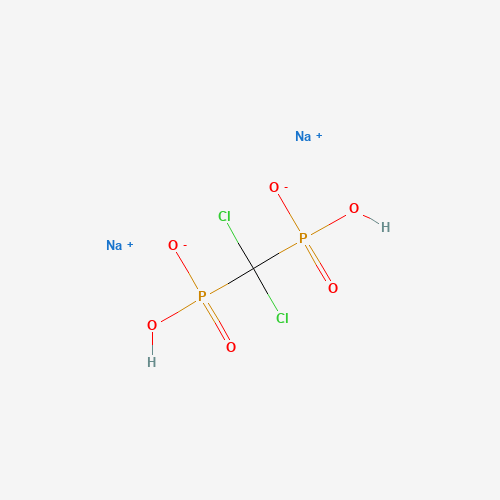
Clodronic acid disodium salt is the disodium salt of clodronic acid. It inhibits bone resorption and soft tissue calcification, and is used (generally as the tetrahydrate) as an adjunct in the treatment of severe hypercalcaemia associated with malignancy, and in the management of osteolytic lesions and bone pain associated with skeletal metastases. It has a role as a bone density conservation agent. It is an organic sodium salt and a one-carbon compound. It contains a clondronate(2-).
科学粮草官-词典编辑部,修订于:2026-07-06
Toxicity
ToxicitySymptoms
Signs and symptoms of hypocalcemia also may occur in some of these patients.
Health Effects
Decreases in serum calcium following substantial overdosage may be expected in some patients.
Exposure Routes
Oral, Intravenous. After oral administration, absorption is estimated at 1–3% of the ingested dose because of the low uptake from the gastrointestinal tract.
Toxicity Summary
The bisphosphonate group binds strongly to the bone mineral, hydroxyapatite. This explains the specific pharmacological action of these compounds on mineralized tissues, especially bone. The exact mechanism of action of clodronate is not known, however it is known that it does not inhibit protein isoprenylation but can be metabolized intracellularly to a β-γ-methylene (AppCp-type) analog of ATP (AppCCl2p), which is cytotoxic to macrophages in vitro. Inhibition of the ADP/ATP translocase by the metabolite AppCCl2p is a likely route by which clodronate causes osteoclast apoptosis and inhibits bone resorption. Recently, the slime mold <i>Dictyostelium discoideum</i> was shown to take up bisphosphonates by pinocytosis. In these cells, clodronate, but not other pharmacologically active bisph...
Carcinogen Classification
No indication of carcinogenicity to humans (not listed by IARC).









