

 一键配货
一键配货
化合物详情
CAS24307-26-4
分子式C7H16ClN
分子量149.66 g/mol g/mol
危化品
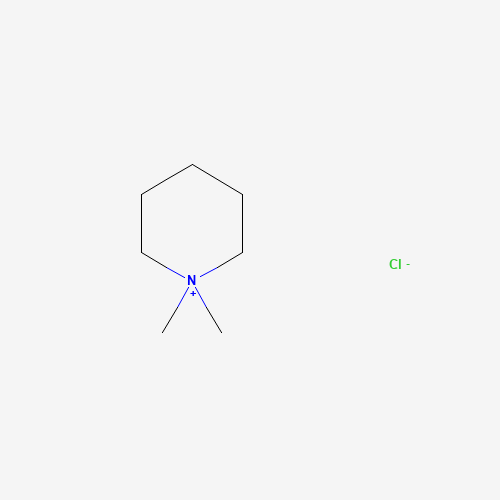
Mepiquat chloride is a quaternary ammonium salt consisting of equimolar amounts of mepiquat cations and chloride anions. A plant growth regulator, it is used in agriculture to reduce vegetative growth including sprout suppression in garlic, leeks and onions. It has a role as an agrochemical and a plant growth retardant. It is a chloride salt and a quaternary ammonium salt. It contains a mepiquat.
科学粮草官-词典编辑部,修订于:2026-07-06
Toxicity
ToxicityEPA Ecotoxicity
Pesticide Ecotoxicity Data from EPA: 66
Ecotoxicity Values
LC50/EC50 Mysid (Americamysis bahia) >136 ppm/96 hr (as a.i; 54.6%) measured, static
Fate Summary
ATMOSPHERIC FATE: Mepiquat chloride is a salt and will not volatilize. Particulate-phase mepiquat chloride may be removed from the air by wet and dry deposition. (SRC)
Soil Adsorption / Mobility
This compound, a salt, will exist in the dissociated form in the environment. Kd values of 9.88, 12.0, and 25.0, were reported for sandy loam, loam, and clay soils, respectively(1). A Kd of 0.22 was measured in sand(1). Koc values ranging from 67 to 4685 have also been reported(2). According to a classification scheme(3), these values suggest that mepiquat chloride is expected to have slight mobility in most soils although it may have high mobility in sand soils.
Environmental Biodegradation
Mepiquat chloride is fairly rapidly degraded in aerobic soil, at an initial concentration of 1 mg/l, to carbon dioxide with half- lives of 3 to 21 days for this process(1). In bare ground field studies (for cotton use) conducted in Mississippi, Texas, and California, half-lives of 3, 21, and 17 days, respectively, were reported(1). Bare ground field studies at higher application rates(for vineyard use) conducted in New York, Washington, and California provided half-lives of 6.5 to 87.2 days for the three sites(1). This compound is resistant to biodegradation under anaerobic conditions(1).
Environmental Bioconcentration
Mepiquat chloride is a salt and will exist as the cation in the environment. Based on a guideline study, mepiquat chloride is not expected to accumulate in fish(1).
Volatilization from Water / Soil
This compound, a salt, will exist in the dissociated form in the environment and therefore volatilization from moist soil and water surfaces is not expected to be an important fate process(SRC). Mepiquat chloride is not expected to volatilize from dry soil surfaces(SRC) based upon a vapor pressure of <2.3X10⁻⁶ mm Hg(1).
Environmental Abiotic Degradation
Less than 10% degradation at pH values of 3 to 9 was reported in a standardized hydrolysis test (USEPA guideline 161-1)(2). In a standardized aqueous photolysis test (USEPA guideline 161-2), mepiquat chloride was found to be stable to photolysis with recovery of the parent compound >95% at the end of the study(2).
Ecotoxicity Excerpts
/OTHER TERRESTRIAL SPECIES/ The LD50 of the technical product in Honey bee (Apis mellifera) is >100 ug/bee. The results indicate that mepiquat chloride is practically nontoxic to bees on an acute contact basis. /from tables/
Artificial Pollution Sources
Mepiquat chloride's production may result in its release to the environment through various waste streams; it's use as a growth regulator for crops(1) will result in its direct release to the environment(SRC).
Probable Routes of Human Exposure
Occupational exposure to mepiquat chloride may occur through dermal contact with this compound at workplaces where mepiquat chloride is produced or used. (SRC)
Environmental Fate / Exposure Summary
Mepiquat chloride's production may result in its release to the environment through various waste streams; it's use as a growth regulator for crops will result in its direct release to the environment. Mepiquat chloride is a salt and will not volatilize into the air. Particulate-phase mepiquat chloride will be removed from the atmosphere by wet and dry deposition. If released to soil, mepiquat chloride is expected to have moderate to slight mobility in most soils (Kd values from 9.88 to 25.0) although it may have high mobility in sand (Kd value of 0.22). As this compound will exist in the dissociated form in the environment, volatilization from moist soil and water surfaces will not occur. The major transformation pathway for mepiquat chloride is aerobic biodegradation; carbon dioxide i...
Target Organs
Nervous
Toxicity Data
LC50 (rat) > 4,890 mg/m3
Adverse Effects
Neurotoxin - Other CNS neurotoxin
RAIS Toxicity Values
Oral Chronic Reference Dose Reference: IRIS Current
Carcinogen Classification
No indication of carcinogenicity to humans (not listed by IARC).
Non-Human Toxicity Values
LD50 Rat dermal >2000 mg/kg
Non-Human Toxicity Excerpts
/LABORATORY ANIMALS: Subchronic or Prechronic Exposure/ An addnl study was conducted in which rats were fed diets containing 0 or 12,000 ppm (about 889 mg/kg/day) of mepiquat chloride for 3 months. Toxic effects observed were tremors in all rats; decr body weight gain, food consumption & food efficiency; incr in thromboplastin time; decr in serum calcium, creatinine glucose, total protein, albumin, globulin & the triglycerides; reduced grip strength of the forelimbs & hindlimbs in both sexes; prolonged reaction time in the hot plate test in males; decreased relative weight of liver, kidneys & adrenals in males, & liver & adrenals in females; decreased relative weight of liver in males; & increased relative weight of kidneys & testes in males & of kidneys in females. No effect on the mac...
1 or Cancer Risk Level 1E-06
Fraction of Contaminant Absorbed Dermally from Soil: 0.1
Antidote and Emergency Treatment
Advanced treatment: Consider orotracheal or nasotracheal intubation for airway control in the patient who is unconscious, has severe pulmonary edema, or is in respiratory arrest. Positive pressure ventilation techniques with a bag valve mask device may be beneficial. Monitor cardiac rhythm and treat arrhythmias as necessary ... . Start an IV with D5W /SRP: "To keep open", minimal flow rate/. Use lactated Ringer's if signs of hypovolemia are present. Watch for signs of fluid overload. Consider drug therapy for pulmonary edema ... . For hypotension with signs of hypovolemia, administer fluid cautiously. Watch for signs of fluid overload ... . Treat seizures with diazepam (Valium) ... . Use proparacaine hydrochloride to assist eye irrigation ... . /Poison A and B/
Hazard Quotient Level 3 or Cancer Risk Level 1E-04
Fraction of Contaminant Absorbed Dermally from Soil: 0.1