

 一键配货
一键配货
化合物详情
CAS25154-52-3
分子式C15H24O
分子量220.35 g/mol g/mol
危化品
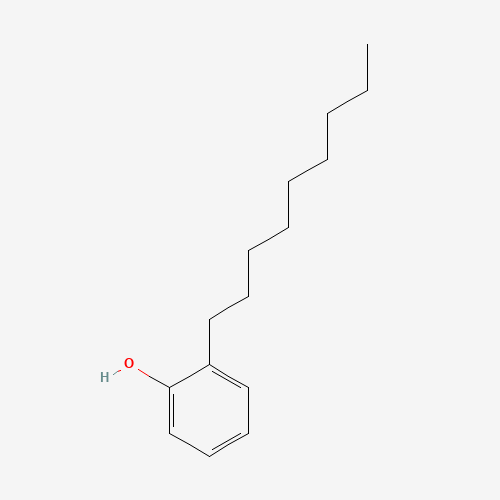
Physical Description | Nonylphenol appears as a thick, yellowish liquid with a slight phenolic odor. Insoluble in water. Flash point 285 °F. Burns although difficult to ignite. May irritate the skin. Used in the manufacture of oil additives, surfactants, fungicide preparations and plastics and rubber.
科学粮草官-词典编辑部,修订于:2026-07-06
Toxicity
ToxicityBody Burden
Nonylphenol has been detected in human breast milk, blood, and urine(1). Breast milk from German women contained nonylphenol levels of 0.3 ug/kg(2). Adipose tissues collected from surgeries in Italy between 2005 and 2007 contained nonylphenol concentrations of 10-226 ng/g with a mean concentration of 122 ng/g(3).
EPA Ecotoxicity
Pesticide Ecotoxicity Data from EPA: 2
Ecotoxicity Values
LC50; Species: Bay Mussel; Concentration: 3.0 mg/L for 96 hr /Conditions of bioassay not specified/
Fate Summary
ATMOSPHERIC FATE: Nonylphenol is a mixture of isomeric monoalkyl phenols, predominately para substituted with a nine-carbon chain(1). According to a model of gas/particle partitioning of semivolatile organic compounds in the atmosphere(2), nonylphenol, which has a vapor pressure of 9.4X10⁻⁵ mm Hg at 25 °C(3), will exist in both the vapor and particulate phases in the ambient atmosphere. Vapor-phase nonylphenol is degraded in the atmosphere by reaction with photochemically-produced hydroxyl radicals(SRC); the half-life for this reaction in air is estimated to be 7.5 hours(SRC), calculated from its rate constant of 5.2X10⁻¹¹ cu cm/molecule-sec at 25 °C(SRC) that was derived using a structure estimation method(4). Based on analogy to measured rate constants for various alkylphenols(5), the...
Soil Adsorption / Mobility
The partition coefficient (Kp) of nonylphenol was measured in a variety of soil samples having a wide diversity of soil organic carbon(1); over the range of soil samples(1), the log Koc had a standard deviation of about 0.5 and the mean log Koc of nonylphenol was nearly 4.00 (Koc of about 10,000)(2). The Koc of branched 4-nonylphenol in three soils of 0.82, 8.6 and 10.2% organic carbon ranged from 23,000 to 489,000(3). Koc values reported by various laboratory studies for nonylphenol vary from 3,000 to 489,000 with most values in the range of 10,000 to 50,000(3). According to a classification scheme(4), this Koc range suggests that nonylphenol is expected to be immobile in soil(SRC). Nonylphenol has been found to strongly absorb to sewage sludge(5,6) and stream and pond sediment(7). A K...
Environmental Biodegradation
ANAEROBIC: Under methanogenic conditions using anaerobic digesting sludge, 4-nonylphenol, at 50 mg carbon/liter, was not biodegraded(1). In sewage sludge simulation tests, nonylphenol had anaerobic primary degradation half-lives of 23.9-36.5 and 38.5 days respectively at 30 and 20 °C(2). In biodegradation tests in sediments, nonylphenol had anaerobic primary degradation half-lives of 46.2-69.3 and 99 days at 30 and 20 °C respectively(2). Nonylphenol dissipation of 25-30% was observed after 6 months in anaerobic sediment tests(2). Nonylphenol had 0% dissipation after 703 days in anaerobic sediments under various reducing conditions(2). Nonylphenol had a degradation half-life of >56 days in anaerobic marine sediment tests(2).
Environmental Bioconcentration
A BCF range of 90-330 was measured in fish for nonylyphenol using carp (Cyprinus carpio) which were exposed over an 8-week period(1). Over an 8-week period, nonylphenol was determined to be nonaccumulative in orange-red killifish with a BCF of <100(2). Fathead minnows (Pimephales promelas) were exposed to nonylphenol at concentrations of 55 ppb and 25 ppb which are levels that could occur in wastewater treatment plant effluents; after four days, the BCF was about 350(3). However, within two days after exposure to nonylphenol was stopped, nonylphenol levels in fish were no longer detectable, indicating that nonylphenol uptake is readily reversible(3). For stickleback (Gasterosteidae), a BCF of 1,250 was measured during a 16-day test(4); however, depuration was complete in 5-days after ex...
Volatilization from Water / Soil
The Henry's Law constant for nonylphenol is estimated as 5.6X10⁻⁶ atm-cu m/mole(SRC) derived from its vapor pressure, 9.4X10⁻⁵ mm Hg(1), and water solubility, 4.9 mg/L(2). This Henry's Law constant indicates that nonylphenol is expected to volatilize from water surfaces(3). Based on this Henry's Law constant, the volatilization half-life from a model river (1 m deep, flowing 1 m/sec, wind velocity of 3 m/sec)(3) is estimated as 10 days(SRC). The volatilization half-life from a model lake (1 m deep, flowing 0.05 m/sec, wind velocity of 0.5 m/sec)(3) is estimated as 77 days(SRC). However, volatilization from water surfaces is expected to be attenuated by adsorption to suspended solids and sediment in the water column(SRC). The estimated volatilization half-life from a model pond is about...
Environmental Abiotic Degradation
The rate constant for the vapor-phase reaction of nonylphenol with photochemically-produced hydroxyl radicals has been estimated as 5.2X10⁻¹¹ cu cm/molecule-sec at 25 °C(SRC) using a structure estimation method(1). This corresponds to an atmospheric half-life of approximately 7.5 hours at an atmospheric concentration of 5X10+5 hydroxyl radicals per cu cm(1). Based on analogy to measured rate constants for various alkylphenols(2), the rate constant for the vapor-phase reaction of nonylphenol with atmospheric nitrate radicals is about 1.0X10⁻¹¹ cu cm/molecule-sec at 25 °C(SRC); this corresponds to an atmospheric half-life of about 5 minutes at an atmospheric concentration of 2.5X10+8 nitrate radicals per cu cm(3). The nitrate radical (NO3) is the dominant atmospheric oxidant during the ni...
Environmental Water Concentrations
SURFACE WATER: In 1989, nonylphenol was found in 17 of 30 US river water samples at concentrations ranging from 0.11-0.64 ug/L (0.12 ug/L average, detection limit 0.11 ug/L)(1). It was detected but not quantified in samples from the lower Fox River, Wisconsin from 1966-67(2). Water samples obtained monthly from the Glatt River, Switzerland, had nonylphenol concentrations of 0.7-26 mg/cu m(3). It was detected at 0.04-2 ppb in 16 samples from the Delaware River, 1976-77(4). The concentration of nonylphenol in the Delaware River near Philadelphia, 1977, ranged from 0.02-1 ppb(5). Thirty rivers in the United States with relatively high nonylphenol contamination are: Bernard Bayou (MS), Grand Calumet (IN), Great Egg Harbor (NJ), and Delaware (NJ/PA) rivers(6). Nonylphenol in river water from...
Food Survey Values
Nonyphenol was identified in raw beef samples (concentration not specified)(1). Nonylphenol concentrations of 1.47-4.52 ug/kg dry weight were detected in farm vegetables (cabbage, spinach, lettuce, mustard, eggplant, cowpea, bitter gourd, ash gourd and leek) collected from 27 vegetable farms in the Pearl River Delta region of South China in 2009 and 2010(2). Results of analysis of 60 different foodstuffs commercially available in Germany for nonylphenols indicated the nonylphenols are ubiquitous in foods(3); the concentration of nonylphenols on a fresh weight basis varied from 0.1 to 19.4 ug/kg(3).
Milk Concentrations
ENVIRONMENTAL: Whole milk from Germany was found to contain mean nonylphenol concentrations of 0.4 ug/kg(1). Nonylphenol has been detected in human breast milk(2). Breast milk from German women contained nonylphenol levels of 0.3 ug/kg(1).
Ecotoxicity Excerpts
/AQUATIC SPECIES/ ...In this study, the effects of /nonylphenol/ NP on gonadal differentiation and development in Rivulus marmoratus (Osteichthyes, Cyprinodontiformes), a self-fertilizing, hermaphroditic species, were examined. Starting at hatching, fish were exposed to 150 or 300 g/L NP (nominal concentrations) in a static system with daily renewal. The measured concentration of NP in the test water decreased rapidly; half-life was 8.0 hr. After 60 days of exposure to NP, fish were kept in uncontaminated water for 20 days and were then preserved for histological examination. No fish exposed to 300 g/L NP (N=8) and only two of nine fish exposed to 150 g/L NP developed testicular tissue, compared with nine of 13 water-control fish and five of nine solvent-control fish. Oogenesis was also...
Plant Concentrations
Nonylphenol concentrations in algae collected from the Glatt River, Switzerland, 1984-85 were: Cladophora glomerata, 38 mg/kg dry wt; Fontinalis antipyretica, 4.2 mg/kg dry wt; and Potamogeton crispus, 2.5 mg/kg dry wt(1).
Animal Concentrations
Nonylphenol was identified in raw beef samples (concentration not provided)(1). The concentration of nonylphenol in wild mallard ducks (Anas Boscas) ranged from 0.03 to 1.20 mg/kg dry weight sampled near the Glatt River, Switzerland between 1984-85(2). Nonylphenol concentrations of <0.7-134 ng/g were detected in the livers of surf scoter sea ducks (Melanitta perspicillata) collected from Vancouver Harbor in 2001(3).
Effluent Concentrations
Nonylphenol was found at 0.5 ppm in the wastewater effluent of a specialty chemical manufacturer 1975-1976(1). The concentration of nonylphenol in the influent to 4 primary sewage treatment plants in Switzerland ranged from approx 100-300 umol/cu m(2). The concentration of nonylphenol in the sewage and activated sludge of a Swiss sewage treatment plant was 168 and 2,630 umol/kg, respectively; the concentration of nonylphenol in the influent was 259 umol/cu m(2). Nonylphenol was detected in the influent of Swiss sewage treatment plants at a concentration ranging from 110-430 umol/cu m(3). The concentration of nonylphenol in untreated septage, untreated wastewater, and treated septage/wastewater from Cape Cod, MA (sampled in 1996-97) ranged from 1,000-1,500; 25-33; and 16 ug/L; respective...
Atmospheric Concentrations
Nonylphenol was detected in 100% of PM10 atmospheric particulate samples collected at urban traffic and industrial sites in Thessalonki Greece during Feb 2007 at a concentration range of 1.60-16.5 ug/cu m(1). Urban and coastal air samples collected from the lower Hudson River area (NY, NJ) in 1998 contained nonylphenol levels of 2.2-70 ng/cu m(2).
Fish/Seafood Concentrations
Nonylphenol concentrations in fish collected from the Glatt River, Switzerland, 1984-85 were: Aqualius cephalus, 0.18 to 1.4 mg/kg dry wt; Barbus barbus L, 0.05 to 0.98 mg/kg dry wt; and Salmo gairdneri, 0.15 to 1.6 mg/kg dry wt(1). The levels of nonylphenol in squids, cuttlefishes, mussels, and clams taken from the Adriatic Sea in 1997 ranged from 389 to 696, 57 to 566, 254 to 265, and 243 to 252 ng/g fresh weight, respectively(2). Mean nonylphenol concentrations ranging from 1.162 to 1285 ng/g fresh weight were detected in various fish, shrimp and lobsters collected along the Adriatic Sea in 1998(3). Fish tissue samples collected from Chongqing China in 2000 contained nonylphenol levels ranging from 0.01-1.9 ug/g(4).
Artificial Pollution Sources
Nonylphenol production and use in the manufacture of nonylphenol ethoxylate surfactants, antioxidants to protect polymers, lubricating oil additives, resins and plasticizers(1,2) may result in its release to the environment through various waste streams(SRC). Its use as inert ingredient in pesticide for non-food uses(3) may result in its direct release to the environment(SRC). Nonylphenol can be generated in the environment via degradation of nonylphenol ethoxylate surfactants(1,4) and may be released from polystyrene(5). Nonylphenol detections in Chinese farm soils is thought to occur mainly from spraying of pesticides containing nonylphenol or nonylphenol ethoxylate as formulants(6).
Sediment/Soil Concentrations
SEDIMENT: The average concentration of nonylphenol in US river sediments was 162 ug/kg (max, 2,960 ug/kg)(1). The concentration of nonylphenol in sediment samples from the Venice Lagoon on the Adriatic Sea (collected in 1987) ranged from 5 to 42 ng/g dry wt(2). The concentration of nonylphenol and nonylphenol ethoxylates ranged from 20 to 1,820 ng/g dry wt in sediments from Lake Shihwa (Korea)(3); the concentration of nonylphenol ethoxylates were less than 20% of these amounts(3). The mean concentration of nonylphenol in sediments from Masan Bay (Korea), an area that receives industrial and municipal wastewaters, was 510 ng/g dry wt (range, 113 to 3,890 ng/g dry wt)(4). Nonylphenol was widely distributed in river sediments from Toyko(5); relatively high concentrations (0.5-13 ug/g dry w...
Probable Routes of Human Exposure
NIOSH (NOES Survey 1981-1983) has statistically estimated that 306,211 workers (42,765 of these are female) are potentially exposed to nonylphenol in the US(1). Occupational exposure to nonylphenol may occur through inhalation and dermal contact with this compound at workplaces where nonylphenol is produced or used. Monitoring data indicate that the general population may be exposed to nonylphenol via inhalation of ambient air, ingestion of food and drinking water, and dermal contact with consumer products containing nonylphenol(SRC).
Other Environmental Concentrations
Nonylphenol levels of not-detectable to 0.00213 mg/g were detected in Taiwanese food detergents(1). The compound has been detected in some food packaging materials, cleaning products and skin care products(2).
Environmental Fate / Exposure Summary
Nonylphenol production and use in the manufacture of nonylphenol ethoxylate surfactants, antioxidants to protect polymers, lubricating oil additives, resins and plasticizers may result in its release to the environment through various waste streams. Its use as inert ingredient in pesticide for non-food uses may result in its direct release to the environment. Nonylphenol can be generated in the environment via degradation of nonylphenol ethoxylate surfactants. If released to air, a vapor pressure of 9.4X10⁻⁵ mm Hg at 25 °C indicates nonylphenol will exist in both the vapor and particulate phases in the ambient atmosphere. Vapor-phase nonylphenol will be degraded in the atmosphere by reaction with photochemically-produced hydroxyl radicals; the half-life for this reaction in air is estim...
Effect Level
collection=toxvaldb&kind=^EL$
Interactions
This study investigated the effects that 4-nonylphenol (NP) has on CYP1A1 expression in Hepa-1c1c7 cell cultures. NP alone did not affect CYP1A1-specific 7-ethoxyresorufin-O-deethylase (EROD) activity. In contrast, the 2,3,7,8-tetrachlorodibenzo-p-dioxin (TCDD)-inducible EROD activities were markedly reduced upon concomitant treatment with TCDD and NP in a dose-dependent manner. Treatment with tamoxifen, an anti-estrogen that acts through the estrogen receptor, did not affect the suppressive effects that NP has on TCDD-inducible EROD activity. The TCDD-inducible CYP1A1 mRNA levels were markedly suppressed upon concomitant treatment with TCDD and NP that is consistent with their effects on EROD activity. A transient transfection assay using dioxin-response element (DRE)-linked luciferase...
Lethal Dose
collection=toxvaldb&kind=^LD$
Adverse Effects
Toxic Pneumonitis - Inflammation of the lungs induced by inhalation of metal fumes or toxic gases and vapors.
Benchmark Values
collection=toxvaldb&kind=^BV$
Toxicity Summary
IDENTIFICATION AND USE: Nonylphenol (NP) is a pale-yellow, viscous liquid. it is used as nonionic surfactant (nonbiodegradable), lubricating-oil additives, stabilizers, petroleum demulsifiers, fungicides, antioxidants for plastics and rubber. NP is also used as a heat stabilizer to protect polymers with repeating units of chlorine or bromine against heat or UV degradation. Nonylphenol is used to produce tris(4-nonyl-phenyl) phosphite (TNPP). TNPP is also used as a stabilizer in plastic food packaging. Although it does contain residual nonylphenol, TNPP has been approved for this use by the Food and Drug Administration (FDA). FDA also lists nonylphenol as an indirect food contact substance. Barium and calcium salts of nonylphenol are used as heat stabilizers for poly vinyl chloride (PVC)...
Average Daily Intake
Based on an analysis of 60 different foodstuffs and food consumption rates in Germany, the daily intake of nonylphenol was calculated to be 7.5 ug/day(1); for infants exclusively fed with breast milk or infant formulas, daily intakes are estimated to 0.2 and 1.4 ug/day respectively(1).
Other Toxicity Values
collection=toxvaldb&kind=^Other$
Human Toxicity Excerpts
/ALTERNATIVE and IN VITRO TESTS/ 4-Nonylphenol is a ubiquitous environmental toxin that is formed as a byproduct in the manufacturing and/or sewage treatment of regular household items. Previous work ... has implicated 4-NP in the progression of autoimmune diseases such as inflammatory bowel disease in which macrophages mistakenly attack the intestinal linings, causing chronic inflammation. Several key pro-and anti-inflammatory molecules have been shown to be involved in the manifestation of this disease, including IL-23A, COX-2, IL-8, TLR-4, and IL-10. 4-NP's effects on these known mediators of IBD were effectively analyzed using a novel model for IBD, by which 4-NP may promote an inflammatory response. Data were collected using DNA Microarray, RT-PCR, and ELISA, after 48 hour treatmen...
Non-Human Toxicity Values
LD50 Rabbit dermal 2140 mg/kg
Non-Human Toxicity Excerpts
/LABORATORY ANIMALS: Subchronic or Prechronic Exposure/ As a component to the risk assessment process for para-nonylphenol (NP; CASRN 84852-15-3), a 90-day study was conducted in rats following U.S. EPA TSCA guidelines and Good Laboratory Practice regulations. NP was administered to four groups of rats at dietary conc of 0, 200, 650, or 2000 ppm which corresponded to approximate dietary intakes of 0, 15, 50, or 150 mg/kg/day, respectively. There were 25 rats/sex/group in the control and high-dose groups and 15 rats/sex/group in the low- and mid-dose groups. Ten of the 25 rats/sex in the control and high-dose groups were designated as recovery animals and were maintained on control diets for 4 weeks after completion of the 90-day exposure period to assess the reversibility of any effects...
Antidote and Emergency Treatment
/SRP:/ Advanced treatment: Consider orotracheal or nasotracheal intubation for airway control in the patient who is unconscious, has severe pulmonary edema, or is in severe respiratory distress. Early intubation at the first sign of upper airway obstruction may be necessary. Positive-pressure ventilation techniques with a bag valve mask device may be beneficial. Consider drug therapy for pulmonary edema ... . Monitor cardiac rhythm and treat arrhythmias if necessary ... . Start IV administration of D5W /SRP: "To keep open", minimal flow rate/. Use 0.9% saline (NS) or lactated Ringer's if signs of hypovolemia are present. For hypotension with signs of hypovolemia, administer fluid cautiously. Watch for signs of fluid overload ... .Treat seizures with diazepam or lorazepam ... Use propara...