


 一键配货
一键配货
化合物详情
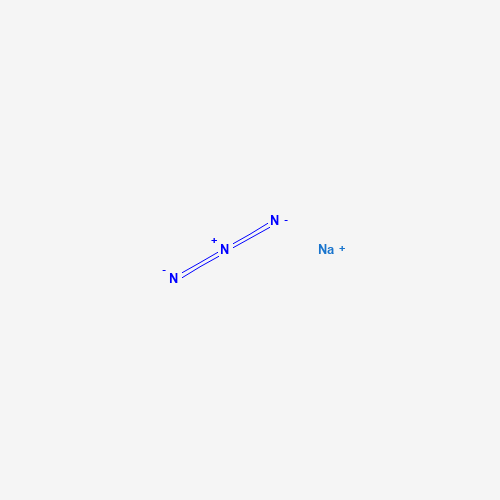
CAS26628-22-8
分子式N3Na
分子量65.01 g/mol
危化品
Physical Description | Sodium azide appears as a colorless crystalline solid. Density 1.85 g / cm3. Burns in air and may explode if large quantities are involved. Toxic by ingestion. Toxic oxides of nitrogen are produced in fires.
科学粮草官-词典编辑部,修订于:2026-07-06
Toxicity
ToxicityEcotoxicity Values
USDA APHIS Chemical Effects: collection=usda_chemeffect&query_type=synonym&query='^26628-22-8$'
Fate Summary
Aquatic Fate: Photolysis of sodium azide may result in metal nitrides initially, with the eventual formation of the free metal and nitrogen gas.
Soil Adsorption / Mobility
Sodium azide is a reactive, polar compound(1); therefore, adsorption to soil and soil mobility are not expected to be important environmental fate processes(SRC).
Environmental Bioconcentration
Sodium azide is a reactive, polar compound that should not bioaccumulate(1).
Volatilization from Water / Soil
Aqueous sodium azide is readily hydrolyzed to yield hydrazoic acid, a volatile substance that partitions strongly to the gas phase(1).
Environmental Abiotic Degradation
Sodium azide is stable in water in the absence of light but appears to be susceptible to photo-decomposition by solar radiation. Photolysis of sodium azide may result in metal nitrides initially, with the eventual formation of the free metal and nitrogen gas.
ICSC Environmental Data
The substance is very toxic to aquatic organisms. This substance does enter the environment under normal use. Great care, however, should be taken to avoid any additional release, for example through inappropriate disposal.
Natural Pollution Sources
... Sodium azide (NaN3) ... appears naturally in soil. ...
Artificial Pollution Sources
Sodium azide's production and use as an airbag and airline safety chute inflator, in organic synthesis; in the preparation of hydrazoic acid, lead azide, pure sodium, in the differential selection of bacteria; in automatic blood counters; and as a preservative for laboratory reagents(1) may result in its release to the environment through various waste streams(SRC). Its former use as a biocide and soil fumigant, agricultural nematocide, herbicide and in fruit rot control(1) resulted in its direct release to the environment(SRC).
Probable Routes of Human Exposure
The largest potential exposure is that to automotive workers, repairmen and wreckers if inflatible airbags are installed on all passenger cars(1) and if sodium azide is used as the inflation chemical(1,2).
Other Environmental Concentrations
Sodium azide concentration is typically 60% of compressed disks or pellets blended with other ingredients, and packed into sealed canisters in airbags(1).
Environmental Fate / Exposure Summary
Sodium azide's production and use as an airbag and airline safety chute inflator, in organic synthesis; in the preparation of hydrazoic acid, lead azide, pure sodium, in the differential selection of bacteria; in automatic blood counters; and as a preservative for laboratory reagents may result in its release to the environment through various waste streams. Its former use as a biocide and soil fumigant, agricultural nematocide, herbicide and in fruit rot control resulted in its direct release to the environment. Sodium azide is a reactive, polar compound. As a result, adsorption, volatilization and biodegradation are not expected to be important fate processes in soil. Aqueous sodium azide is readily hydrolyzed to yield hydrazoic acid. Adsorption to suspended solids and sediment, bioco...
Symptoms
Skin Exposure: - See ingestion for more comprehensive information.
Target Organs
Eyes, skin, central nervous system, cardiovascular system, kidneys
Adverse Effects
ACGIH Carcinogen - Not Classifiable.
Exposure Routes
Sodium azide can be absorbed into the body by inhalation, ingestion, skin contact, or eye contact. Ingestion is an important route of exposure to solid sodium azide. Inhalation is an important route of exposure to the vapor, hydrazoic acid.
Toxicity Summary
IDENTIFICATION AND USE: Sodium azide is a colorless to white crystalline solid, forming hydrazoic acid in water. It is used in organic synthesis, and in the preparation of hydrazoic acid, lead azide, and pure sodium. Other uses include the differential selection of bacteria, in automatic blood counters, and as a preservative for laboratory reagents. It is also a propellant for inflating automotive safety bags. Agricultural uses including nematocide, herbicide, and fruit rot control. HUMAN STUDIES: Potential symptoms of overexposure include irritation of eyes and skin, nausea, vomiting, restlessness, diarrhea, headache, dizziness, weakness, blurred vision, dyspnea, hypotension, tachycardia, bradycardia, tachypnea, hypothermia, acidosis, convulsions, and kidney changes. Cases of fatal sod...
RAIS Toxicity Values
Oral Chronic Reference Dose Reference: IRIS Current
Human Toxicity Values
DNA inhibition human fibroblast 50 mg/L.
Carcinogen Classification
Summary: Sodium azide induced necrosis in the cerebrum and the thalamus of the brain in both male and female rats.
1 or Cancer Risk Level 1E-06
Fraction of Contaminant Absorbed in Gastrointestinal Tract: 1
Evidence for Carcinogenicity
A4; Not classifiable as a human carcinogen. /As sodium azide or as hydrazoic acid vapor/
Antidote and Emergency Treatment
If this chemical gets into the eyes, remove any contact lenses at once and irrigate immediately for at least 15 min, occasionally lifting upper and lower lids. Seek medical attention immediately. If this chemical contacts the skin, remove contaminated clothing and wash immediately with soap and water. Seek medical attention immediately. If this chemical has been inhaled, remove from exposure, begin rescue breathing (using universal precautions, including resuscitation mask) if breathing has stopped and CPR if heart action has stopped. Transfer promptly to a medical facility. When this chemical has been swallowed, get medical attention. If victim is conscious, administer water or milk. Do not induce vomiting. Medical observation is recommended for 24-48 hr after breathing overexposure, a...
Hazard Quotient Level 3 or Cancer Risk Level 1E-04
Fraction of Contaminant Absorbed in Gastrointestinal Tract: 1









