


 一键配货
一键配货
化合物详情
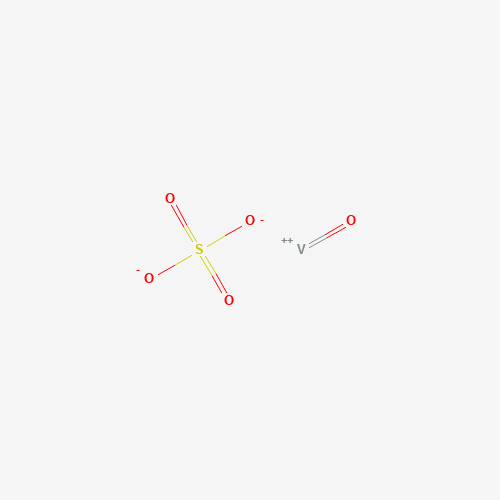
CAS27774-13-6
分子式O5SV
分子量163 g/mol
危化品
Physical Description | Vanadyl sulfate appears as a blue crystalline solid. Very soluble in water. Denser than water. Contact may irritate skin, eyes, and mucous membranes. May be toxic by ingestion, inhalation and skin absorption.
科学粮草官-词典编辑部,修订于:2026-07-06
Toxicity
ToxicityFood Survey Values
The best food sources of vanadium are mushrooms, shellfish, black pepper, parsley, dill weed, beer, wine, grain and grain products, and artificially sweetened drinks. Vanadium exists in several forms, including vanadyl sulfate and vanadate. Vanadyl sulfate is most commonly found in nutritional supplements(1).
Natural Pollution Sources
Anhydrous vanadyl sulfate occurs in the mineral pauflerite which is a mineral of fumarolic origin (often in the vicinity of volcanoes)(1). Hydrated forms of vanadyl sulfate, also rare occurrence in nature minerals, include hexahydrate (stanleyite), pentahydrates (minasragrite, orthominasragrite and anorthominasragrite) and trihydrate (bobjonesite)(2,3).
Probable Routes of Human Exposure
... Inhalation; possibly, though to a lesser extent, from ingestion of the pentoxide, sulfate or mixed vanadium dust. The exposure has usually occurred during the cleaning of oil fired burners or gas turbines, but has also been noticed in the extraction process of vanadium from vanadium containing ores; one of the earliest of these observations was ... /published in 1911, but the/ conclusions have not been universally confirmed ...
Symptoms
Inhalation of vanadium causes lung irritation, coughing, wheezing, chest pain, runny nose, and a sore throat. (L837)
Treatment
EYES: irrigate opened eyes for several minutes under running water. INGESTION: do not induce vomiting. Rinse mouth with water (never give anything by mouth to an unconscious person). Seek immediate medical advice. SKIN: should be treated immediately by rinsing the affected parts in cold running water for at least 15 minutes, followed by thorough washing with soap and water. If necessary, the person should shower and change contaminated clothing and shoes, and then must seek medical attention. INHALATION: supply fresh air. If required provide artificial respiration.
Interactions
... Two vanadium compounds, VOSO4 and V2O5, and fly ash from an oil-fueled power plant were dissolved or suspended in culture medium over a range of concentrations and epithelia were exposed for 1 hr/day, for 9 consecutive days. At intervals during this period, alterations in cilia-beating frequency, cytology, and histology were documented by light microscopy. Explants treated with VOSO4 either decreased ciliary activity or produced ciliostasis depending upon the concentration and length of exposure. Early morphological alterations consisted of vacuolization of both nuclei and cytoplasm. After multiple exposures, cytology of VOSO4-treated respiratory mucosa was markedly affected. Similar changes were observed in cultures exposed to V2O5; however, the cytotoxicity appeared earlier and wa...
Toxicity Data
LD50: 4 mg/kg (Intraperitoneal, Mouse) (T14) LD50: 560 mg/kg (Subcutaneous, Mouse) (T14) LD50: 4450 mg/kg (Dermal, Rabbit) (T14)
Health Effects
Breathing high levels of vanadium affects the lungs, throat, and eyes. Ingestion of vanadium may cause kidney and liver damage, birth defects, or death. (L837)
Exposure Routes
Oral (L837); inhalation (L837); dermal (L837)
Toxicity Summary
Vanadium damages alveolar macrophages by decreasing the macrophage membrane integrity, thus impairing the cells' phagocytotic ability and viability. The pentavalent form of vanadium, vanadate, is a potent inhibitor of the Ca+-ATPase and Na+,K+-ATPase of plasma membranes, which decreases intracellular ATP concentration. Vanadium is also believed to induce the production of reactive oxygen species. This may damage DNA and also cause oxidative stress, which can damage the reproductive system. Vanadium also inhibits protein tyrosine phosphatases, producing insulin-like effects. (L837, A247, A248, A249, A250, A251)
Minimum Risk Level
Acute Inhalation: 0.0002 mg/m3 (L134) Intermediate Oral: 0.003 mg/kg/day (L134)
Carcinogen Classification
No indication of carcinogenicity to humans (not listed by IARC).
Antidote and Emergency Treatment
Advanced treatment: Consider orotracheal or nasotracheal intubation for airway control in the patient who is unconscious, has severe pulmonary edema, or is in severe respiratory distress. Positive-pressure ventilation techniques with a bag valve mask device may be beneficial. Consider drug therapy for pulmonary edema ... . Consider administering a beta agonist such as albuterol for severe bronchospasm ... . Monitor cardiac rhythm and treat arrhythmias as necessary ... . Start IV administration of D5W TKO /SRP: "To keep open", minimal flow rate/. Use 0.9% saline (NS) or lactated Ringer's (LR) if signs of hypovolemia are present. For hypotension with signs of hypovolemia, administer fluid cautiously. Watch for signs of fluid overload ... . Treat seizures with diazepam or lorazepam ... . U...









