


 一键配货
一键配货
化合物详情
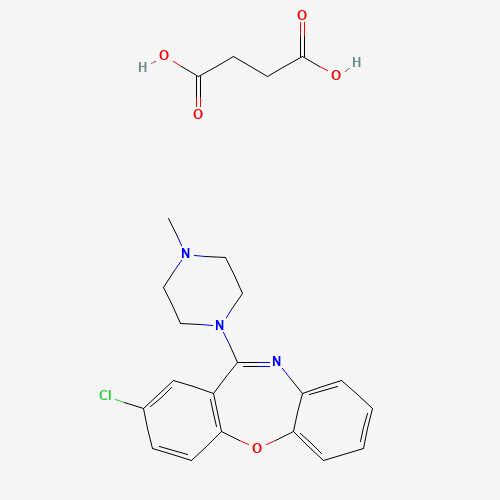
CAS27833-64-3
分子式C18H18ClN3O.C4H6O4
分子量443.9 g/mol
非危品
Loxapine Succinate is the succinate salt form of loxapine, a tricyclic dibenzoxazepine antipsychotic agent with antiemetic, sedative, anticholinergic, and antiadrenergic actions. Loxapine succinate exerts its actions by blocking the dopamine receptors at postsynaptic receptor sites in the limbic system, cortical system and basal ganglia, thereby reducing the hallucinations and delusions that are associated with schizophrenia. This agent also exerts extrapyramidal side effects.
科学粮草官-词典编辑部,修订于:2026-07-06
Toxicity
ToxicitySymptoms
LD<sub>50</sub>=65 mg/kg (Orally in mice)
Treatment
The treatment of overdosage is essentially symptomatic and supportive. Early gastric lavage and extended dialysis might be expected to be beneficial. Centrally-acting emetics may have little effect because of the antiemetic action of loxapine. In addition, emesis should be avoided because of the possibility of aspiration of vomitus. Avoid analeptics, such as pentylenetetrazol, which may cause convulsions. Severe hypotension might be expected to respond to the administration of levarterenol or phenylephrine. Epinephrine should not be used since its use in a patient with partial adrenergic blockade may further lower the blood pressure. Severe extrapyramidal reactions should be treated with anticholinergic antiparkinson agents or diphenhydramine hydrochloride, and anticonvulsant therapy sh...
Toxicity Data
LD<sub>50</sub>=65 mg/kg (Orally in mice)
Exposure Routes
Oral, Intramuscular. Systemic bioavailability of the parent drug was only about one third that after an equivalent intramuscular dose (25 mg base) in male volunteers.
Toxicity Summary
Loxapine is a dopamine antagonist, and also a serotonin 5-HT2 blocker. The exact mode of action of Loxapine has not been established, however changes in the level of excitability of subcortical inhibitory areas have been observed in several animal species in association with such manifestations of tranquilization as calming effects and suppression of aggressive behavior.
Carcinogen Classification
No indication of carcinogenicity to humans (not listed by IARC).
Drug Induced Liver Injury
References: DOI:10.1016/j.drudis.2016.02.015









