

 一键配货
一键配货
化合物详情
CAS28860-95-9
分子式C10H14N2O4
分子量226.23 g/mol g/mol
危化品
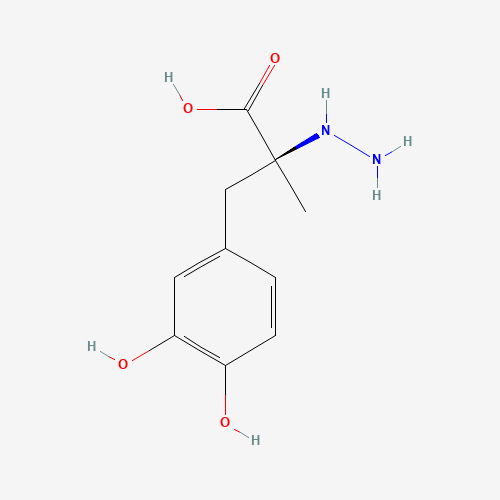
Carbidopa (anhydrous) is 3-(3,4-Dihydroxyphenyl)propanoic acid in which the hydrogens alpha- to the carboxyl group are substituted by hydrazinyl and methyl groups (S-configuration). Carbidopa is a dopa decarboxylase inhibitor, so prevents conversion of levodopa to dopamine. It has no antiparkinson activity by itself, but is used (commonly as its hydrate) in the management of Parkinson's disease to reduce peripheral adverse effects of levodopa. It has a role as an antiparkinson drug, a dopaminergic agent and an EC 4.1.1.28 (aromatic-L-amino-acid decarboxylase) inhibitor. It is a member of hydrazines, a monocarboxylic acid and a member of catechols.
科学粮草官-词典编辑部,修订于:2026-07-06
Toxicity
ToxicityAdverse Effects
Recognizing the adverse effects associated with carbidopa/levodopa combinations is also essential. In addition to dyskinetic movements, there are reports of psychiatric problems, autonomic dysfunction, and sensory/pain symptoms with levodopa use. These non-motor symptoms range from euphoric mood, hallucinations, and worsening cognition, to poor thermoregulation, dysphagia, and peripheral neuropathy and can vary depending on the “on/off” fluctuations of levodopa.
Toxicity Summary
There is little data to suggest a possibility for or symptoms of carbidopa toxicity. However, reported data indicate that carbidopa/levodopa intestinal gel infusion can cause significant damage to small nerve fibers leading to pain and sensory discomfort.
Drug Induced Liver Injury
References: DOI:10.1016/j.drudis.2019.09.022