


 一键配货
一键配货
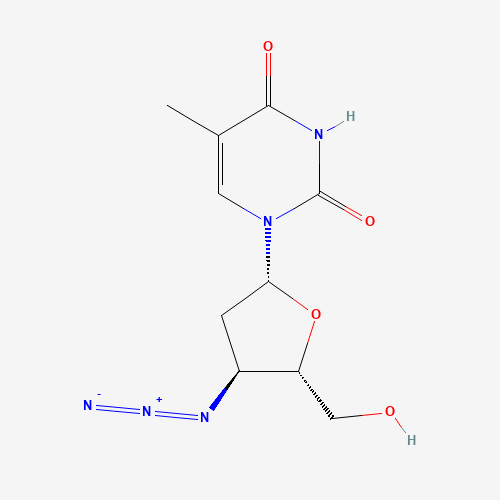
化合物详情
CAS30516-87-1
分子式C10H13N5O4
分子量267.24 g/mol g/mol
危化品
Zidovudine (AZT) can cause cancer according to California Labor Code.
科学粮草官-词典编辑部,修订于:2026-07-06
Toxicity
ToxicityMilk Concentrations
Zidovudine is distributed into milk. In a study in HIV-infected women who received a single 200 mg dose of zidovudine, concentrations of the drug in milk were similar to concurrent serum concentrations.
Symptoms
Symptoms of overdose include fatigue, headache, nausea, and vomiting.
Toxicity Data
LD<sub>50</sub> is 3084 mg/kg (orally in mice).
Hepatotoxicity
Likelihood score: B (likely cause of clinically apparent acute and chronic liver disease).
Adverse Effects
Bone marrow suppression seen with zidovudine includes neutropenia, leukopenia, and anemia. Anemia requiring blood transfusions was reported to be as high as 19.7% with the use of zidovudine. Anemia and neutropenia are usually reversible when zidovudine is stopped.
Exposure Routes
Rapid and nearly complete absorption from the gastrointestinal tract following oral administration; however, because of first-pass metabolism, systemic bioavailability of zidovudine capsules and solution is approximately 65% (range, 52 to 75%). Bioavailability in neonates up to 14 days of age is approximately 89%, and it decreases to approximately 61% and 65% in neonates over 14 days of age and children 3 months to 12 years, respectively. Administration with a high-fat meal may decrease the rate and extent of absorption.
Toxicity Summary
Zidovudine, a structural analog of thymidine, is a prodrug that must be phosphorylated to its active 5ду_-triphosphate metabolite, zidovudine triphosphate (ZDV-TP). It inhibits the activity of HIV-1 reverse transcriptase (RT) via DNA chain termination after incorporation of the nucleotide analogue. It competes with the natural substrate dGTP and incorporates itself into viral DNA. It is also a weak inhibitor of cellular DNA polymerase ‘± and ‘_.
Carcinogen Classification
2B, possibly carcinogenic to humans. (L135)
Drug Induced Liver Injury
References: DOI:10.1016/j.drudis.2019.09.022
Non-Human Toxicity Values
LD50 Mice iv > 3000 mg/kg
Evidence for Carcinogenicity
Evaluation: There is inadequate evidence in humans for the carcinogenicity of zidovudine. There is sufficient evidence in experimental animals for the carcinogenicity of zidovudine. Overall evaluation: Zidovudine is possibly carcinogenic to humans (Group 2B).
Antidote and Emergency Treatment
Maintain an open airway and assist ventilation if needed. Treat coma, seizures, hypotension or anaphylaxis if they occur. replace fluid losses resulting from gastroenteritis with intravenous crystalloids. Maintain steady urine flow with intravenous fluids to alleviate crystalluria and reverse renal dysfunction. Treat lactic acidosis with judicious doses of sodium bicarbonate and by withdrawal of the offending drug. There are no specific antidotes for these agents. Administer activated charcoal.
Effects During Pregnancy and Lactation
Relevant published information was not found as of the revision date.









