


 一键配货
一键配货
化合物详情
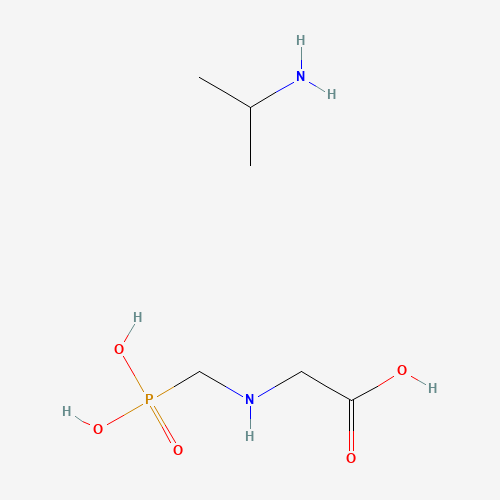
CAS38641-94-0
分子式C3H9N.C3H8NO5P
分子量228.18 g/mol
非危品
Glyphosate-isopropylammonium is an organic molecular entity.
科学粮草官-词典编辑部,修订于:2026-07-06
Toxicity
ToxicityEPA Ecotoxicity
Pesticide Ecotoxicity Data from EPA: 102
Milk Concentrations
EXPERIMENTAL: In lactating goats concentrations of carbon-14 label in milk were measured after giving capsules containing a 9:1 mixture of 14C-glyphosate and 14C-aminomethylphosphonic acid (AMPA) to a dose level equivalent to 120 mg/kg diet (expressed as free acid) for 5 days. Concentrations in milk (as mg equivalents glyphosate/kg whole milk) ranged from 0.019 to 0.086 mg/kg during the test period; at day 5 after the last dose the concentration was 0.006 mg/kg.
Toxicity Data
LC50 (rat) > 0.0013 mg/m3/4h
Adverse Effects
Occupational hepatotoxin - Secondary hepatotoxins: the potential for toxic effect in the occupational setting is based on cases of poisoning by human ingestion or animal experimentation.
Toxicity Summary
IDENTIFICATION AND USE: Glyphosate isopropylamine salt is a white odorless powder that is commonly used as a herbicide to control broadleaf weeds and grasses, in many food and non-food crops. It is an active ingredient in the herbicide Roundup. HUMAN EXPOSURE AND TOXICITY: Clinical experiences with patients exposed to Roundup either accidentally or through deliberate ingestion have been reported by investigators. Symptoms resulting from dermal exposure incidental to the use of the product included periorbital edema and chemosis of the eye, cardiovascular effects (tachycardia and elevated blood pressure), swelling and paraesthesia at the site of dermal contact and prolonged skin irritation. Deliberate ingestion resulted in more severe effects, including lethality from apparent respirator...









