


 一键配货
一键配货
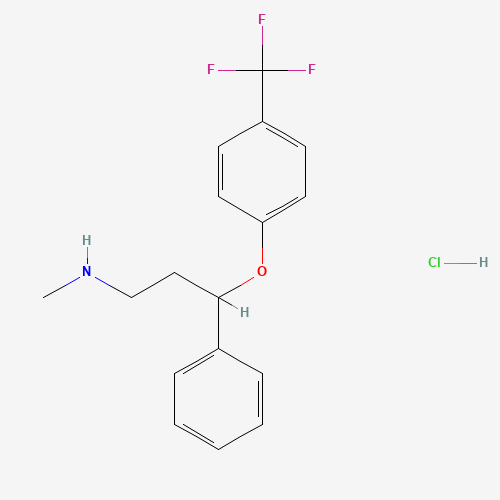
化合物详情
CAS56296-78-7
分子式C17H18F3NO·HCl
分子量345.79 g/mol g/mol
危化品
N-methyl-3-phenyl-3-[4-(trifluoromethyl)phenoxy]-1-propanamine hydrochloride (1:1) is a hydrochloride and a N-methyl-3-phenyl-3-[4-(trifluoromethyl)phenoxy]propan-1-amine.
科学粮草官-词典编辑部,修订于:2026-07-06
Toxicity
ToxicityBody Burden
Fluoxetine (range 20-252 ug/L) was detected in five of the nine infants from whom /plasma/ samples were collected, and norfluoxetine (range 17-187 ug/L) was detected in seven of the nine infants. Mothers of these infants were being treated with fluoxetine for depression. The highest of these concentrations was about 70% of the maternal plasma concentrations. The mean combined dose of fluoxetine and norfluoxetine transmitted to infants via breast milk is below the 10% national level of concern. However, there was considerable interpatient variability in estimated infant dose and in some of the patients, the dose was >10%. Further, since adverse effects have been observed in breast-fed infants, careful monitoring of the infants is mandatory. Neonates exposed to these drugs in utero had hi...
Milk Concentrations
To characterize milk/plasma (M/P) ratio and infant dose, for fluoxetine and norfluoxetine, in breast-feeding women taking fluoxetine for the treatment of depression, and to determine the plasma concentration of these drugs in their infants. Fourteen women (mean age 32.2 years) taking fluoxetine (mean dose 0.51 mg/kg/day) and their infants (mean age 3.4 months) were studied. Fluoxetine and norfluoxetine in plasma and milk were measured by high-performance liquid chromatography over a 24 hr dose interval in four patients, and by single point data collection in 10 patients. Infant exposure was estimated as the product of estimated milk production, and average drug concentration in milk, normalized to body weight and expressed as a percentage of the weight-adjusted maternal dose. RESULTS: M...
Symptoms
Symptoms of overdose include agitation, restlessness, hypomania, and other signs of CNS excitation. The most frequent side effects include: nervous system effects such as anxiety, nervousness, insomnia, drowsiness, fatigue or asthenia, tremor, and dizziness or lightheadedness; GI effects such as anorexia, nausea, and diarrhea; vasodilation; dry mouth; abnormal vision; decreased libido; abnormal ejaculation; rash; and sweating. Withdrawal symptoms include flu-like symptoms, insomnia, nausea, imbalance, sensory changes and hyperactivity.
Treatment
If the compound has been ingested, rapid gastric lavage should be performed using 5% sodium bicarbonate. For skin contact, the skin should be washed with soap and water. If the compound has entered the eyes, they should be washed with large quantities of isotonic saline or water. In serious cases, atropine and/or pralidoxime should be administered. Anti-cholinergic drugs work to counteract the effects of excess acetylcholine and reactivate AChE. Atropine can be used as an antidote in conjunction with pralidoxime or other pyridinium oximes (such as trimedoxime or obidoxime), though the use of '-oximes' has been found to be of no benefit, or possibly harmful, in at least two meta-analyses. Atropine is a muscarinic antagonist, and thus blocks the action of acetylcholine peripherally.
Interactions
Concurrent use of fluoxetine with monamine oxidase (MAO) inhibitors may result in confusion, agitation, restlessness, gastrointestinal symptoms, hyperpyretic episodes, severe convulsion, hypertensive crises, the serotonin syndrome, or death. Concurrent use is contraindicated, and at least 14 days should elapse between discontinuation of an MAO inhibitor and initiation of fluoxetine. However, because of the long half-lives of fluoxetine and its active metabolite, at least 5 weeks (approximately 5 half-lives of norfluoxetine) should elapse between discontinuation of fluoxetine and initiation of therapy with an MAO inhibitor. Deaths following the initiation of an MAO inhibitor shortly after stopping fluoxetine administration have been reported.
Toxicity Data
LD<sub>50</sub>=284mg/kg (orally in mice).
Health Effects
Acute exposure to cholinesterase inhibitors can cause a cholinergic crisis characterized by severe nausea/vomiting, salivation, sweating, bradycardia, hypotension, collapse, and convulsions. Increasing muscle weakness is a possibility and may result in death if respiratory muscles are involved. Accumulation of ACh at motor nerves causes overstimulation of nicotinic expression at the neuromuscular junction. When this occurs symptoms such as muscle weakness, fatigue, muscle cramps, fasciculation, and paralysis can be seen. When there is an accumulation of ACh at autonomic ganglia this causes overstimulation of nicotinic expression in the sympathetic system. Symptoms associated with this are hypertension, and hypoglycemia. Overstimulation of nicotinic acetylcholine receptors in the central...
Exposure Routes
Well absorbed from the GI tract following oral administration. Oral bioavailability is estimated to be at least 60-80%. Peak plasma concentrations occur within 6-8 hours following a single oral administration of a 40 mg dose. The oral solution and delayed-release capsule are bioequivalent. Food does not affect the systemic bioavailability of fluoxetine but it delays the absorption by 1-2 hours (not clinically significant). Prozac Weekly capsules, a delayed-release formulation, contain enteric-coated pellets that resist dissolution until reaching a segment of the gastrointestinal tract where the pH exceeds 5.5. The enteric coating delays the onset of absorption of fluoxetine 1 to 2 hours relative to the immediate-release formulations.
Toxicity Summary
Fluoxetine is a cholinesterase or acetylcholinesterase (AChE) inhibitor. A cholinesterase inhibitor (or 'anticholinesterase') suppresses the action of acetylcholinesterase. Because of its essential function, chemicals that interfere with the action of acetylcholinesterase are potent neurotoxins, causing excessive salivation and eye-watering in low doses, followed by muscle spasms and ultimately death. Nerve gases and many substances used in insecticides have been shown to act by binding a serine in the active site of acetylcholine esterase, inhibiting the enzyme completely. Acetylcholine esterase breaks down the neurotransmitter acetylcholine, which is released at nerve and muscle junctions, in order to allow the muscle or organ to relax. The result of acetylcholine esterase inhibition...
Human Toxicity Excerpts
/CASE REPORTS/ Self-injurious ideation or behavior appeared de novo or intensified during fluoxetine treatment of obsessive-compulsive disorder in six patients, age 10-17 yr old, who were among 42 young patients receiving fluoxetine for obsessive-compulsive disorder at a university clinical research center. These symptoms required the hospitalization of four patients. Before receiving fluoxetine, four patients had major risk factors for self-destructive behavior including depression or prior suicidal ideation or self-injury.
Carcinogen Classification
No indication of carcinogenicity to humans (not listed by IARC).
Drug Induced Liver Injury
References: DOI:10.1016/j.drudis.2016.02.015
Non-Human Toxicity Values
LD50 Mouse oral 248 mg/kg
Non-Human Toxicity Excerpts
/GENOTOXICITY/ Fluoxetine and norfluoxetine have shown no genotoxic effects in the bacterial mutation assay; DNA repair assay in cultured rat hepatocytes; mouse lymphoma assay; or in vivo sister chromatid exchange assay in Chinese hamster bone marrow cells.
Antidote and Emergency Treatment
...In this descriptive case series, five cases of serotonin syndrome are reported. All patients gave a history of recent exposure to one or more serotonergic medications, including moclobemide, paroxetine, sertraline, and venlafaxine, with clinical evidence of serotonin syndrome. All patients were administered cyproheptadine (4-8 mg orally) for serotonergic signs. Three had complete resolution of signs within 2 hr of administration. Another two had a residual tremor or hyperreflexia following the first dose, which resolved following a repeat dose. There were no adverse outcomes from cyproheptadine use. The role of specific serotonin receptor antagonists such as cyproheptadine in the treatment of the serotonin syndrome remains to be delineated. Its use should be considered an adjunct to...
Effects During Pregnancy and Lactation
In a study of 80,882 Norwegian mother-infant pairs from 1999 to 2008, new postpartum antidepressant use was reported by 392 women and 201 reported that they continued antidepressants from pregnancy. Compared with the unexposed comparison group, late pregnancy antidepressant use was associated with a 7% reduced likelihood of breastfeeding initiation, but with no effect on breastfeeding duration or exclusivity. Compared with the unexposed comparison group, new or restarted antidepressant use was associated with a 63% reduced likelihood of predominant, and a 51% reduced likelihood of any breastfeeding at 6 months, as well as a 2.6-fold increased risk of abrupt breastfeeding discontinuation. Specific antidepressants were not mentioned.









