


 一键配货
一键配货
化合物详情
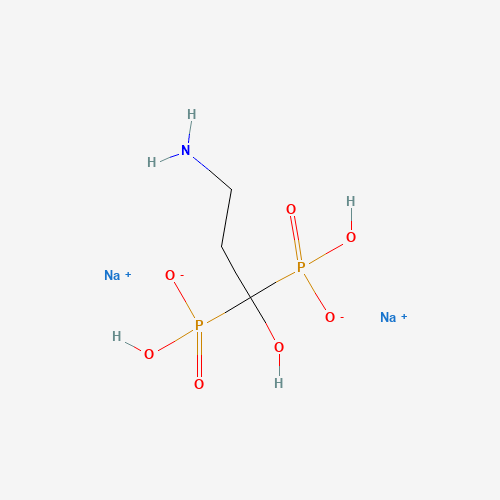
CAS57248-88-1
分子式C3H9NNa2O7P2 · xH2O
分子量279.03 (anhydrous ba g/mol
危化品
Pamidronate Disodium is the disodium salt of the synthetic bisphosphonate pamidronate. Although its mechanism of action is not completely understood, pamidronate appears to adsorb to calcium phosphate crystals in bone, blocking their dissolution by inhibiting osteoclast-mediated bone resorption. This agent does not inhibit bone mineralization and formation.
科学粮草官-词典编辑部,修订于:2026-07-06
Toxicity
ToxicitySymptoms
Side effects include an allergic reaction, kidney problems, seizures, low levels of calcium, magnesium, or phosphorus in the blood
Treatment
If overdosage occurs, symptomatic hypocalcemia could also result; such patients should be treated with short-term intravenous calcium. (L1712)
Lethal Dose
collection=toxvaldb&kind=^LD$
Health Effects
Rare cases of uveitis, iritis, scleritis, and episcleritis have been reported, including one case of scleritis, and one case of uveitis upon separate rechallenges.
Exposure Routes
Parenteral (intravenous). Plasma concentration rises rapidly upon IV administration.
Toxicity Summary
The mechanism of action of pamidronate is inhibition of bone resorption. Pamidronate adsorbs to calcium phosphate (hydroxyapatite) crystals in bone and may directly block dissolution of this mineral component of bone. In vitro studies also suggest that inhibition of osteoclast activity contributes to inhibition of bone resorption. Pamidronate also targets farnesyl pyrophosphate (FPP) synthase. Nitrogen-containing bisphosphonates (such as pamidronate, alendronate, risedronate, ibandronate and zoledronate) appear to act as analogues of isoprenoid diphosphate lipids, thereby inhibiting FPP synthase, an enzyme in the mevalonate pathway. Inhibition of this enzyme in osteoclasts prevents the biosynthesis of isoprenoid lipids (FPP and GGPP) that are essential for the post-translational farnesy...
Carcinogen Classification
No indication of carcinogenicity to humans (not listed by IARC).
Drug Induced Liver Injury
References: DOI:10.1016/j.drudis.2016.02.015









