


 一键配货
一键配货
化合物详情
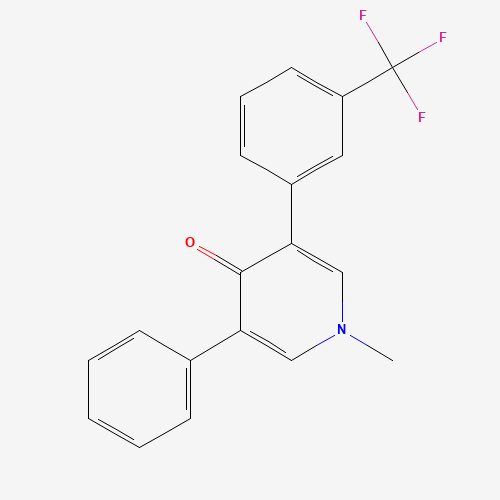
CAS59756-60-4
分子式C19H14F3NO
分子量329.32 g/mol
非危品
Fluridone is a phenylpyridine. It has a role as a carotenoid biosynthesis inhibitor.
科学粮草官-词典编辑部,修订于:2026-07-06
Toxicity
ToxicityEPA Ecotoxicity
Pesticide Ecotoxicity Data from EPA: 91
Ecotoxicity Values
LC50 /Oncorhynchus mykiss/ (Rainbow Trout) 11.7 mg/L/ 96 hr /Conditions of bioassay not specified in source examined/
Fate Summary
UNREVIEWED | ATMOSPHERIC FATE: According to a model of gas/particle partitioning of semivolatile organic compounds in the atmosphere(1), fluridone, which has a vapor pressure of 9.8X10⁻⁹ mm Hg at 25 °C(2), is expected to exist solely in the particulate phase in the ambient atmosphere. Particulate-phase fluridone may be removed from the air by wet or dry deposition(SRC).
Soil Adsorption / Mobility
Koc values for fluridone measured in 6 soils were reported to range from 350 to 2,462(1-3). According to a classification scheme(4), these Koc values suggest that fluridone is expected to have low to slight mobility in soil. The pKa of fluridone is 12.3(5), indicating that this compound will primarily exist in the protonated form in the environment and cations generally adsorb more strongly to organic carbon and clay than their neutral counterparts(6).
Environmental Biodegradation
AEROBIC: A half-life of 12 months was reported for fluridone in sediment under laboratory conditions and 17 weeks under field conditions(1). Fluridone was reported to dissipate with average half-lives of 20 days and 3 months in pond water and in pond hydrosoil, respectively(2). A half-life of 4 days was observed for fluridone after treatment in a pond(3). A half-life of 1 year or more was observed for fluridone in hydrosoils(3). Photodegradation was found to be the major degradation pathway of fluridone in aquatic systems under actual-use conditions(1). In field studies using different soil types, <10% of the originally applied fluridone was found after 220 days in Miller clay and 20% was found remaining after 385 days in Lufkin fine sandy loam soil(4). In laboratory studies, fluridone...
Environmental Bioconcentration
BCF values ranging from 0 to 91 have been reported for fluridone in various fish(1-4). According to a classification scheme(5), BCF values of <30 are low, and from 30 to 100 are moderate.
Volatilization from Water / Soil
The Henry's Law constant for fluridone is estimated as 3.5X10⁻⁹ atm-cu m/mole(SRC) derived from its vapor pressure, 9.8X10⁻⁸ mm Hg(1), and water solubility, 12 mg/L(2). This Henry's Law constant indicates that fluridone is expected to be essentially nonvolatile from water surfaces(3). Fluridone is not expected to volatilize from dry soil surfaces(SRC) based upon its vapor pressure(1).
Environmental Abiotic Degradation
Fluridone is stable to hydrolysis(1,2). Aqueous photolysis half-lives ranging from 1 to 6 days were reported in various studies(1). Photolysis half-lives in aqueous solution (pH 3, 6, and 9) ranging from 22 to 55 hours were reported for fluridone in laboratory experiments (>280 nm)(3). Major photolysis products were two benzaldehydes, two benzoic acids and N-methylformamide(3). Fluridone was reported to degrade in photolysis experiments using water obtained from a small eutrophic pond in southern Hancock County, IN; after 30 days of exposure to sunlight, 20 to 16% of the initially applied amount of fluridone was remaining in distilled and pond water, respectively(3).
Environmental Water Concentrations
DRINKING WATER: Fluridone was not detected (minimum reporting limit = 0.90 ug/L) in the US Environmental Protection Agency five-year National Survey of Pesticides in Drinking Water Wells(1). Water samples form 783 rural domestic wells and 566 community water system wells were studied in this survey(1).
Food Survey Values
Fluridone was not detected in any of 26 crops irrigated with water containing fluridone(1). The detection limit for fluridone in this study was 0.05 ppm(1).
Ecotoxicity Excerpts
/AQUATIC SPECIES/ The acute median lethal concentrations (LC50s) of fluridone were 4.3 plus or minus 3.7 mg/L for invertebrates and 10.4 plus or minus 3.9 mg/L for fish. In chronic studies, no effects were detected when daphnids (Daphnia magna ) were continuously exposed to fluridone concentrations of 0.2 mg/L or less for 32 days, amphiopods (Gammarus pseudolimnaeus ) to 0.6 mg/L or less for 60 days or midge larvae (Chironomus plumosus ) to 0.6 mg/L or less for 30 days. Fathead minnows (Pimephales promelas ) were not affected by continuous exposure to fluridone concentration of 0.48 mg/L or less over their life cycle. The growth and survival of channel catfish (Ictalurus punctatus ) were not adversely affected by continuous exposure to fluridone concentrations of 0.5 mg/L or less for 60...
Plant Concentrations
Fluridone was detected in orchardgrass and alfalfa at concentrations of 0.11 and 0.07 ppm, respectively, following irrigation of 26 associated crops with water containing fluridone(1). The detection limit for fluridone in this study was 0.05 ppm(1).
Artificial Pollution Sources
Fluridone's production may result in its release to the environment through various waste streams(SRC); its use as a herbicide(1) will result in its direct release to the environment(SRC).
Probable Routes of Human Exposure
Occupational exposure to fluridone may occur through inhalation and dermal contact with this compound at workplaces where fluridone is produced or used. Limited monitoring data indicate that the general population is unlikely to be exposed to fluridone via ingestion of food and drinking water. (SRC)
Environmental Fate / Exposure Summary
Fluridone's production may result in its release to the environment through various waste streams; its use as a herbicide will result in its direct release to the environment. If released to air, a vapor pressure of 9.8X10⁻⁸ mm Hg at 25 °C indicates fluridone will exist solely in the particulate phase in the ambient atmosphere. Particulate-phase fluridone will be removed from the atmosphere by wet or dry deposition. If released to soil, fluridone is expected to have low to slight mobility based upon Koc values ranging from 350 to 2,462. The pKa of fluridone is 12.3 (tertiary amine), indicating that this compound will primarily exist in the protonated form in the environment and cations generally adsorb more strongly to organic carbon and clay than their neutral counterparts. Volatilizat...
Target Organs
Urinary
Toxicity Data
LC50 (rat) > 2,130,000 mg/m3/1h
RAIS Toxicity Values
Oral Subchronic Chronic Reference Dose Reference: HEAST Current
Non-Human Toxicity Values
LD50 Rabbit percutaneous >5000 mg/kg
Non-Human Toxicity Excerpts
/LABORATORY ANIMALS: Subchronic or Prechronic Exposure/ The results of the subchronic dietary feeding studies showed that fluridone caused increased incidence of hepatic centrilobular hypertrophy in mice and increased absolute and relative liver weights and relative kidney weights in rats. It produced no effects in subchronic dietary feeding study in dogs at 200 mg/kg/day, the highest doses tested.
1 or Cancer Risk Level 1E-06
Fraction of Contaminant Absorbed Dermally from Soil: 0.1
Hazard Quotient Level 3 or Cancer Risk Level 1E-04
Fraction of Contaminant Absorbed Dermally from Soil: 0.1









