


 一键配货
一键配货
化合物详情
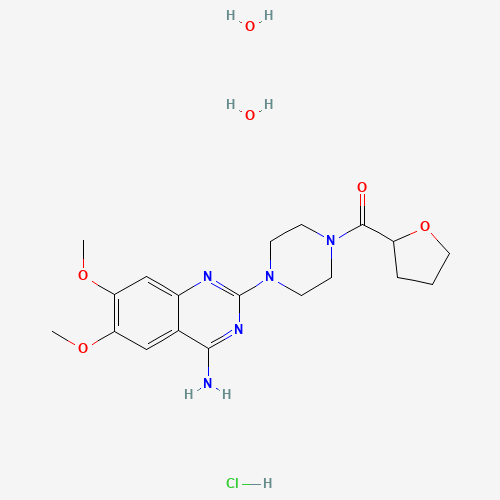
CAS70024-40-7
分子式C19H25N5O4·HCl·2H2O
分子量459.93 g/mol g/mol
危化品
Terazosin Hydrochloride is the hydrochloride salt form of terazosin, a quinazoline derivative with adrenergic antagonistic property. Terazosin hydrochloride selectively inhibits alpha-1 adrenergic receptors, resulting in vasodilation leading to decreased peripheral vascular resistance and a reduced venous return to the heart as well as decreased urethral resistance, which potentially improving urine flow and symptoms related to benign prostatic hyperplasia. In addition, terazosin decreases low-density lipoproteins (LDL) and triglycerides while increasing the concentration of high-density lipoproteins (HDL).
科学粮草官-词典编辑部,修订于:2026-07-06
Toxicity
ToxicitySymptoms
Asthenia, postural hypotension, dizziness, somnolence, nasal congestion/rhinitis.
Treatment
Should overdosage of Terazosin lead to hypotension, support of the cardiovascular system is of first importance. Restoration of blood pressure and normalization of heart rate may be accomplished by keeping the patient in the supine position. If this measure is inadequate, shock should first be treated with volume expanders. If necessary, vasopressors should then be used and renal function should be monitored and supported as needed. Laboratory data indicate that Terazosin is highly protein bound; therefore, dialysis may not be of benefit. (L1712)
Toxicity Data
LD50: 259.3mg/kg (parental-intravenous, Mouse) (A308)
Health Effects
Hypotension, palpitations, postural hypotension, syncope, peripheral edema, weight gain, dyspnea, nasal congestion/rhinitis, impotence.
Exposure Routes
Oral. Essentially completely absorbed in man (90% bioavailability).
Toxicity Summary
Terazosin selectively and competitively inhibits vascular postsynaptic alpha(1)-adrenergic receptors, resulting in peripheral vasodilation and a reduction of vascular resistance and blood pressure. Unlike the nonselective alph-adrenergic blockers phenoxybenzamine and phentolamine, terazosin does not block presynaptic alpha(2)-receptors and, hence, does not cause reflex activation of norepinephrine release to produce reflex tachycardia.
Carcinogen Classification
No indication of carcinogenicity to humans (not listed by IARC).
Drug Induced Liver Injury
References: DOI:10.1016/j.drudis.2016.02.015









