

 一键配货
一键配货
化合物详情
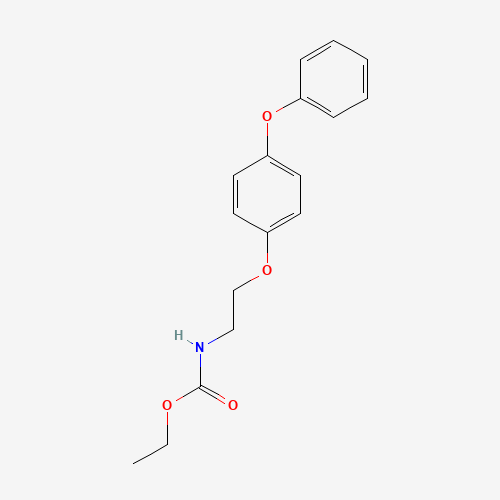
CAS72490-01-8
分子式C17H19NO4
分子量301.34 g/mol
非危品
Fenoxycarb can cause cancer according to The Environmental Protection Agency (EPA).
科学粮草官-词典编辑部,修订于:2026-07-06
Toxicity
ToxicityEPA Ecotoxicity
Pesticide Ecotoxicity Data from EPA: 23
Ecotoxicity Values
LD50; Species: Anas platyrhynchos (Mallard duck) adult; oral >3000 mg/kg[USEPA, Office of Pesticide Programs; Pesticide Ecotoxicity Database (2000) on
Fate Summary
ATMOSPHERIC FATE: According to a model of gas/particle partitioning of semivolatile organic compounds in the atmosphere(1), fenoxycarb, which has a vapor pressure of 6.5X10⁻⁹ mm Hg at 25 °C(2), is expected to exist solely in the particulate phase in the ambient atmosphere. Particulate-phase fenoxycarb may be removed from the air by wet or dry deposition(SRC). Fenoxycarb contains chromophores that absorb at wavelengths >290 nm(3) and, therefore, may be susceptible to direct photolysis by sunlight(SRC).
Soil Adsorption / Mobility
Using a structure estimation method based on molecular connectivity indices(1), the Koc of fenoxycarb can be estimated to be 4,800(SRC). According to a classification scheme(2), this estimated Koc value suggests that fenoxycarb is expected to have slight mobility in soil(SRC).
Environmental Biodegradation
AEROBIC: It has been postulated that the bioavailability of diaryl ether pesticides such as fenoxycarb decreases under the influence of sunlight, as the production of polymeric material and formation of bound residues from activated derivatives will occur(1). Fenoxycarb tends to absorb to organic matter which largely limits its persistence in water as well as in the field(2). When sterilized tap water, filtered and unfiltered sewage water were spiked with fenoxycarb at a concentration of 0.02 mg/L and incubated in the absence of light, only 15% loss of fenoxycarb was observed from tap water in 4 days. Conversely, no fenoxycarb was detected (detection limit <0.0004 mg/L) in 4 days in filtered sewage and in 3 days in unfiltered sewage(2). A 40% loss was observed in 9 days when tap water c...
Environmental Bioconcentration
Using a flow-through system, bluegill sunfish (Lepomis macrochirus) were continuously exposed to 1 mg/L of fenoxycarb for a maximum period of 4 days. Fish were removed after exposures of 24, 48, 72, and 96 hours, all followed by a continuous-flow rinse with untreated tap water for 24, 48, 72, and 96 hours. Concentrations of 10.99, 7.45 and 20.09 ppm were observed in whole body, edible tissue and viscera, respectively, after 24 hours(1). Concentrations of 21.04, 6.93 and 23.29 ppm were observed in whole body, edible tissue and viscera, respectively, after 48 hours(1). Concentrations of 17.34, 6.31 and 26.93 ppm were observed in whole body, edible tissue and viscera, respectively, after 72 hours(1). Concentrations of 21.22, 6.04 and 24.42 ppm were observed in whole body, edible tissue and...
Volatilization from Water / Soil
The Henry's Law constant for fenoxycarb is estimated as 4.3X10⁻¹⁰ atm-cu m/mole(SRC) derived from its vapor pressure, 6.50X10⁻⁹ mm Hg(1), and water solubility, 6.00 mg/L(2). This Henry's Law constant indicates that fenoxycarb is expected to be essentially nonvolatile from water surfaces(3). Fenoxycarb is not expected to volatilize from dry soil surfaces(SRC) based upon its vapor pressure of 6.5X10⁻⁹ mm Hg(1).
Environmental Abiotic Degradation
Fenoxycarb is moderately stable in water(1,2). Aqueous solutions of 0.02 mg/L fenoxycarb buffered at pH 6.5-10.0 were incubated in the dark and exposed to sunlight(2). The temperature of the solutions were maintained at 10-38 °C; no evidence of hydrolysis or photolysis of fenoxycarb were found(2). Another study has concluded that in aquatic environments, fenoxycarb is moderately resistant to photolysis, reporting an aqueous photolysis half-life of 19-23 days(1). Photolysis of fenoxycarb in aqueous solution results in the formation of p-phenylphenol and 2-hydroxydibenzofuran(3). A base-catalyzed second-order hydrolysis rate constant of 1.8X10⁻⁵ L/mole-sec(SRC) was estimated using a structure estimation method(4); this corresponds to half-lives of 1.3X10+4 and 1,250 years at pH values of...
Environmental Water Concentrations
RAIN/SNOW/FOG: Fenoxycarb was detected at a minimum level of 0.005 ug/L and a maximum level of 0.07 ug/L in rain collected in the Axios River Basin in Greece(1). A mean concentration of 0.02 ug/L was calculated from 8 samplings conducted between 1997 and 1998(1).
Ecotoxicity Excerpts
/AQUATIC SPECIES/ Previous studies have found that exposure of a cyclic parthenogen, the water flea Daphnia magna (Cladocera, Crustacea), to juvenile hormones and their analogs results in the production of neonates of male sex at concentration-dependent rates. Reproduction experiments /were conducted/ in four different species (Moina macrocopa, M. micrura, Ceriodaphnia dubia and C. reticulata) of cladoceran to test for the first time whether the occurrence of this phenomenon after exposure of the parent to such hormones is a generalized phenomenon. In the presence of a juvenile hormone analog, fenoxycarb, all four species produced male neonates and showed reduced rates of reproduction. The estimated median effective concentration (EC50) for the production of male neonates varied with sp...
Artificial Pollution Sources
Fenoxycarb's production may result in its release to the environment through various waste streams; its use as an insect growth regulator(1) will result in its direct release to the environment.
Probable Routes of Human Exposure
Occupational exposure to fenoxycarb may occur through inhalation and dermal contact with this compound at workplaces where fenoxycarb is produced or used(SRC). Occupational handler scenarios that were assessed in the past include mixing and loading for ground and aerial equipment and ground/aerial applicator scenarios based on agricultural uses; no risks of concern for occupational handler inhalation scenarios were identified(1). Limited monitoring data indicate that the general population may be exposed to fenoxycarb via ingestion of water containing fenoxycarb(SRC).
Environmental Fate / Exposure Summary
Fenoxycarb's production may result in its release to the environment through various waste streams; its use as an insect growth regulator will result in its direct release to the environment. If released to air, a vapor pressure of 6.5X10⁻⁹ mm Hg at 25 °C indicates fenoxycarb will exist solely in the particulate phase in the atmosphere. Particulate-phase fenoxycarb will be removed from the atmosphere by wet or dry deposition. Fenoxycarb contains chromophores that absorb at wavelengths >290 nm and, therefore, may be susceptible to direct photolysis by sunlight. If released to soil, fenoxycarb is expected to have slight mobility based upon an estimated Koc of 4,800. Volatilization from moist soil surfaces is not expected to be an important fate process based upon an estimated Henry's Law...
Symptoms
As with organophosphates, the signs and symptoms are based on excessive cholinergic stimulation. Unlike organophosphate poisoning, carbamate poisonings tend to be of shorter duration because the inhibition of nervous tissue acetylcholinesterase is reversible, and carbamates are more rapidly metabolized. Muscle weakness, dizziness, sweating and slight body discomfort are commonly reported early symptoms. Headache, salivation, nausea, vomiting, abdominal pain and diarrhea are often prominent at higher levels of exposure. Contraction of the pupils with blurred vision, incoordination, muscle twitching and slurred speech have been reported. (L795)
Treatment
If the compound has been ingested, rapid gastric lavage should be performed using 5% sodium bicarbonate. For skin contact, the skin should be washed with soap and water. If the compound has entered the eyes, they should be washed with large quantities of isotonic saline or water. In serious cases, atropine and/or pralidoxime should be administered. Anti-cholinergic drugs work to counteract the effects of excess acetylcholine and reactivate AChE. Atropine can be used as an antidote in conjunction with pralidoxime or other pyridinium oximes (such as trimedoxime or obidoxime), though the use of '-oximes' has been found to be of no benefit, or possibly harmful, in at least two meta-analyses. Atropine is a muscarinic antagonist, and thus blocks the action of acetylcholine peripherally.
Toxicity Data
LD50: >10 000 mg/kg (Oral, Rat) (T71)
Health Effects
Acute exposure to cholinesterase inhibitors can cause a cholinergic crisis characterized by severe nausea/vomiting, salivation, sweating, bradycardia, hypotension, collapse, and convulsions. Increasing muscle weakness is a possibility and may result in death if respiratory muscles are involved. Accumulation of ACh at motor nerves causes overstimulation of nicotinic expression at the neuromuscular junction. When this occurs symptoms such as muscle weakness, fatigue, muscle cramps, fasciculation, and paralysis can be seen. When there is an accumulation of ACh at autonomic ganglia this causes overstimulation of nicotinic expression in the sympathetic system. Symptoms associated with this are hypertension, and hypoglycemia. Overstimulation of nicotinic acetylcholine receptors in the central...
Adverse Effects
ACGIH Carcinogen - Confirmed Animal.
Exposure Routes
Inhalation (L793); oral (L793); dermal (L793)
Toxicity Summary
Fenoxycarb is a cholinesterase or acetylcholinesterase (AChE) inhibitor. Carbamates form unstable complexes with chlolinesterases by carbamoylation of the active sites of the enzymes. This inhibition is reversible. A cholinesterase inhibitor suppresses the action of acetylcholine esterase. Because of its essential function, chemicals that interfere with the action of acetylcholine esterase are potent neurotoxins, causing excessive salivation and eye-watering in low doses. Headache, salivation, nausea, vomiting, abdominal pain and diarrhea are often prominent at higher levels of exposure. Acetylcholine esterase breaks down the neurotransmitter acetylcholine, which is released at nerve and muscle junctions, in order to allow the muscle or organ to relax. The result of acetylcholine estera...
Human Toxicity Excerpts
/CASE REPORTS/ ...A pesticide incident occurred in 1996, when a pest control operator was sprayed in the face with the product when a hose burst. The operator immediately turned off the pressure and little was released. He rinsed himself off, including his eyes, and used an absorbent material to clean up the spill. Specific symptoms were not mentioned. No further information on the disposition of the case was reported.
Acceptable Daily Intakes
FAO/WHO ADI: 0.02 mg/kg
Carcinogen Classification
Spraying and application of nonarsenical insecticides entail exposures that are probably carcinogenic to humans (Group 2A). (L135)
Non-Human Toxicity Values
LD50 Mouse oral >5 g/kg
Non-Human Toxicity Excerpts
/LABORATORY ANIMALS: Chronic Exposure or Carcinogenicity/ ... /Fenoxycarb/ (Ro 13-5223/000 Technical, purity = 96.6%) was fed in the diet to Crl:CD(SD)BR rats at 0, 200, 600 and 1800 ppm (60 rats/sex/group) for 104 weeks. An interim kill was made at week 52 (10/sex/group). NOEL = 200 ppm (increase in GOT, GPT and alkaline phosphatase levels; increase in mean relative liver weight; centrilobular hypertrophy of the liver--primarily in males--associated with focal necrosis and foci of pigmented histiocytes; focal fibrosis). No oncogenic effects were observed.
Evidence for Carcinogenicity
In 1995, the Cancer Peer Review Committee classified fenoxycarb as a Group B2-probably human carcinogen... .
Antidote and Emergency Treatment
/SRP:/ Advanced treatment: Consider orotracheal or nasotracheal intubation for airway control in the patient who is unconscious, has severe pulmonary edema, or is in severe respiratory distress. Positive=pressure ventilation techniques with a bag-valve-mask device may be beneficial. Monitor cardiac rhythm and treat arrhythmias if necessary ... . Start IV administration of D5W /SRP: "To keep open", minimal flow rate/. Use 0.9% saline (NS) or lactated Ringer's (LR) if signs of hypovolemia are present. For hypotension with signs of hypovolemia, administer fluid cautiously. Watch for signs of fluid overload ... . Administer atropine. Correct hypoxia before administration ... . In severely poisoned patients, administer pralidoxime chloride (2 PAM). ... . Treat seizures with adequate atropini...