


 一键配货
一键配货
化合物详情
CAS78246-49-8
分子式C19H21ClFNO3
分子量365.83 g/mol
非危品
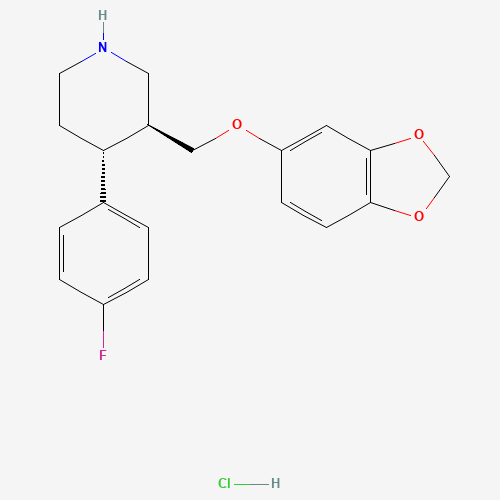
Paroxetine hydrochloride is the hydrochloride salt of paroxetine. It is an antidepressant drug. It has a role as an antidepressant, an anxiolytic drug, a P450 inhibitor, a hepatotoxic agent and a serotonin uptake inhibitor. It contains a paroxetinium(1+).
科学粮草官-词典编辑部,修订于:2026-07-06
Toxicity
ToxicitySymptoms
Coma, dizziness, drowsiness, facial flushing, nausea, sweating, tremor, vomiting
Treatment
Treatment should consist of those general measures employed in the management of overdosage with any drugs effective in the treatment of major depressive disorder. Ensure an adequate airway, oxygenation, and ventilation. Monitor cardiac rhythm and vital signs. General supportive and symptomatic measures are also recommended. Induction of emesis is not recommended. Gastric lavage with a large-bore orogastric tube with appropriate airway protection, if needed, may be indicated if performed soon after ingestion, or in symptomatic patients. Activated charcoal should be administered. Due to the large volume of distribution of this drug, forced diuresis, dialysis, hemoperfusion, and exchange transfusion are unlikely to be of benefit. No specific antidotes for paroxetine are known. (L1712)
Toxicity Data
LD50: 500mg/kg (Oral, Mouse) (A308)
Exposure Routes
Paroxetine hydrochloride is slowly, but completely absorbed following oral administration. Paroxetine mesylate salt is also completely absorbed after oral dosing. The oral bioavailability appears to be low due to extensive first-pass metabolism. Paroxetine hydrochloride oral tablets and suspension are reportedly bioequivalent. Absorption of either salt form is not substantially affected by food. Peak concentrations of Brisbelle (mesylate salt) were reached at 6 hours (3 to 8 hours range). Steady state Cmax was 13.10 ng/mL. The steady state AUC (0-last) was 237 hr*ng/mL. Paroxetine mesylate generally follows non-linear pharmacokinetics because CYP2D6, the enzyme that is part responisible for paroxetine metabolism, is readily saturable.
Toxicity Summary
Paroxetine is a potent and highly selective inhibitor of neuronal serotonin reuptake. Paroxetine likely inhibits the reuptake of serotonin at the neuronal membrane, enhances serotonergic neurotransmission by reducing turnover of the neurotransmitter, therefore it prolongs its activity at synaptic receptor sites and potentiates 5-HT in the CNS; paroxetine is more potent than both sertraline and fluoxetine in its ability to inhibit 5-HT reuptake. Compared to the tricyclic antidepressants, SSRIs have dramatically decreased binding to histamine, acetylcholine, and norepinephrine receptors. The mechanism of action for the treatment of vasomotor symptoms is unknown.
Carcinogen Classification
No indication of carcinogenicity to humans (not listed by IARC).
Drug Induced Liver Injury
References: DOI:10.1016/j.drudis.2016.02.015









