

 一键配货
一键配货
化合物详情
CAS106685-40-9
分子式C28H28O3
分子量412.52 g/mol g/mol
危化品
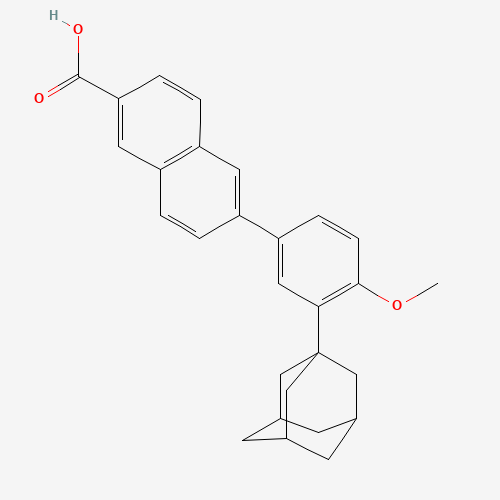
Adapalene is a naphthoic acid that is CD437 in which the phenolic hydroxy group has been converted to its methyl ether. It has a role as a non-steroidal anti-inflammatory drug, a dermatologic drug and an EC 2.7.11.22 (cyclin-dependent kinase) inhibitor. It is a monocarboxylic acid, a naphthoic acid and a member of adamantanes. It is functionally related to a CD437.
科学粮草官-词典编辑部,修订于:2026-07-06
Toxicity
ToxicityToxicity Data
The acute oral toxicity of adapalene in mice and rats is greater than 10 mL/kg
Health Effects
Chronic ingestion of the drug may lead to the same side effects as those associated with excessive oral intake of Vitamin A.
Adverse Effects
Rare, severe allergic reactions characteristically demonstrate pruritus, facial edema, lip swelling, and eyelid swelling. If a patient experiences anaphylactic reactions with symptoms, including facial swelling, hives, chest pain, or shortness of breath, adapalene should be discontinued, and the patient should seek immediate medical evaluation.
Exposure Routes
Absorption of adapalene through human skin is low. Only trace amounts (<0.25 ng/mL) of parent substance have been found in the plasma of acne patients following chronic topical application of adapalene in controlled clinical trials
Toxicity Summary
Mechanistically, adapalene binds to specific retinoic acid nuclear receptors (gamma and beta) and retinoid X receptors but does not bind to the cytosolic receptor protein. Although the exact mode of action of adapalene is unknown, it is suggested that topical adapalene may normalize the differentiation of follicular epithelial cells resulting in decreased microcomedone formation.
Carcinogen Classification
No indication of carcinogenicity to humans (not listed by IARC).
Effects During Pregnancy and Lactation
◉ Effects on Lactation and Breastmilk