


 一键配货
一键配货
化合物详情
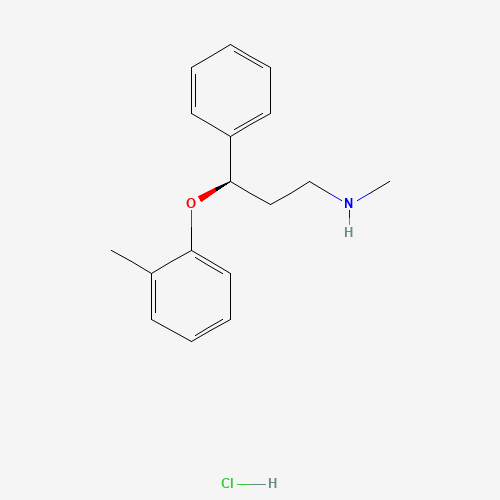
CAS82248-59-7
分子式C17H21NO·HCl
分子量291.82 g/mol g/mol
危化品
Atomoxetine hydrochloride is the hydrochloride salt of atomoxetine. It has a role as an antidepressant and an adrenergic uptake inhibitor. It contains an atomoxetine.
科学粮草官-词典编辑部,修订于:2026-07-06
Toxicity
ToxicitySymptoms
The most commonly reported symptoms accompanying acute and chronic overdoses are somnolence, agitation, hyperactivity, abnormal behavior, and gastrointestinal symptoms.
Treatment
An airway should be established. Monitoring of cardiac and vital signs is recommended, along with appropriate symptomatic and supportive measures. Gastric lavage may be indicated if performed soon after ingestion. Activated charcoal may be useful in limiting absorption. Because atomoxetine is highly protein-bound, dialysis is not likely to be useful in the treatment of overdose. (L1712)
Exposure Routes
Atomoxetine is rapidly absorbed after oral administration, with absolute bioavailability of about 63% in EMs and 94% in PMs. Drugs that elevate gastric pH (magnesium hydroxide/aluminum hydroxide, omeprazole) have no effect on atomoxetine bioavailability. Absorption is minimally affected by food.
Toxicity Summary
The precise mechanism by which atomoxetine produces its therapeutic effects in Attention-Deficit/Hyperactivity Disorder (ADHD) is unknown, but is thought to be related to selective inhibition of the pre-synaptic norepinephrine transporter, as determined through in-vitro studies. Atomoxetine appears to have minimal affinity for other noradrenergic receptors or for other neurotransmitter transporters or receptors.
Carcinogen Classification
No indication of carcinogenicity to humans (not listed by IARC).
Drug Induced Liver Injury
References: DOI:10.1016/j.drudis.2016.02.015









