


 一键配货
一键配货
化合物详情
CAS83015-26-3
分子式C17H21NO
分子量255.36 g/mol
非危品
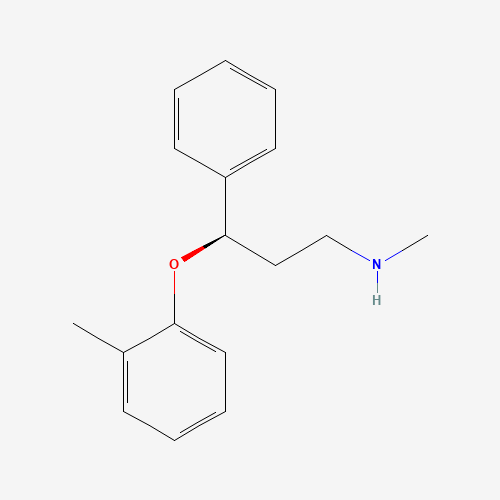
Atomoxetine is a secondary amino compound having methyl and 3-(2-methylphenoxy)-3-phenylpropan-1-yl substituents. It has a role as an antidepressant, an adrenergic uptake inhibitor, a xenobiotic and an environmental contaminant. It is a member of toluenes, an aromatic ether and a secondary amino compound.
科学粮草官-词典编辑部,修订于:2026-07-06
Toxicity
ToxicityEnvironmental Water Concentrations
While data specific to atomoxetine were not available(SRC, 2005), the literature suggests that some pharmaceutically active compounds originating from human and veterinary therapy are not eliminated completely in municipal sewage treatment plants and are therefore discharged into receiving waters(1). Wastewater treatment processes often were not designed to remove them from the effluent(2). Selected organic waste compounds may be degrading to new and more persistent compounds that may be released instead of or in addition to the parent compound(2). Studies have indicated that several polar pharmaceutically active compounds can leach through subsoils into aquifers(1).
Symptoms
The most commonly reported symptoms accompanying acute and chronic overdoses are somnolence, agitation, hyperactivity, abnormal behavior, and gastrointestinal symptoms.
Treatment
An airway should be established. Monitoring of cardiac and vital signs is recommended, along with appropriate symptomatic and supportive measures. Gastric lavage may be indicated if performed soon after ingestion. Activated charcoal may be useful in limiting absorption. Because atomoxetine is highly protein-bound, dialysis is not likely to be useful in the treatment of overdose. (L1712)
Interactions
Potential pharmacologic interaction (increased hypertensive effects) with concomitant use of pressor agents (e.g., dopamine, dobutamine) and atomoxetine. Use with caution.
Hepatotoxicity
Likelihood score: C (probable cause of clinically apparent liver injury).
Adverse Effects
* Hepatotoxicity (hepatocellular with marked increases in serum aminotransferase level) Likelihood score: C (probable cause of clinically apparent liver injury)
Exposure Routes
Atomoxetine is rapidly absorbed after oral administration, with absolute bioavailability of about 63% in EMs and 94% in PMs. Drugs that elevate gastric pH (magnesium hydroxide/aluminum hydroxide, omeprazole) have no effect on atomoxetine bioavailability. Absorption is minimally affected by food.
Toxicity Summary
The precise mechanism by which atomoxetine produces its therapeutic effects in Attention-Deficit/Hyperactivity Disorder (ADHD) is unknown, but is thought to be related to selective inhibition of the pre-synaptic norepinephrine transporter, as determined through in-vitro studies. Atomoxetine appears to have minimal affinity for other noradrenergic receptors or for other neurotransmitter transporters or receptors.
Human Toxicity Excerpts
/CASE REPORTS/ An eight-year-old female with attention deficient hyperactive disorder (ADHD) was treated with atomoxetine hydrochloride. She complained of increased abdominal pain and occasional emesis; her transaminases and bilirubin were markedly elevated. She was admitted to a tertiary-care pediatric hospital and treated for drug-induced hepatitis. Atomoxetine was discontinued and supportive care was instituted. A liver biopsy showed hepatitis with moderate piecemeal necrosis. Clinical status and liver function tests improved over 13 days of hospitalization. ...
Carcinogen Classification
No indication of carcinogenicity to humans (not listed by IARC).
Drug Induced Liver Injury
References: DOI:10.1016/j.drudis.2019.09.022
Non-Human Toxicity Excerpts
/LABORATORY ANIMALS: Developmental or Reproductive Toxicity/ No evidence of drug-associated teratogenicity or retarded fetal development was produced in rabbits or rats administered atomoxetine hydrochloride throughout organogenesis at oral doses up to 100 mg/kg/day and 150 mg/kg/day (at least 20 times the maximum recommended daily oral dose in children and 13 times the maximum recommended daily oral dose in adults, on a mg/sq m basis). In a rat fertility study, decreased pup weight and survival was observed, predominantly during the first week postpartum following maternal dietary atomoxetine timeweighted average doses of 23 mg/kg/day or higher. No adverse effects were observed in surviving pups.
Populations at Special Risk
Strattera should not be used in patients with severe cardiac or vascular disorders whose condition would be expected to deteriorate if they experience increases in blood pressure or heart rate that could be clinically important (for example, 15 to 20 mm Hg in blood pressure or 20 beats per minute in heart rate).
Antidote and Emergency Treatment
Emergency and supportive measures. 1. Maintain an open airway and assist ventilation if necessary. 2. Treat agitation, seizures, coma, and hyperthermia if they occur. 3. Continuously monitor the temperature, other vital signs, and the ECG for a minimum of 6 hours. /Amphetamines/
Effects During Pregnancy and Lactation
Studies have not been done to see if atomoxetine could affect male fertility or increase the chance of birth defects. In general, exposures that fathers or sperm donors have are unlikely to increase the risks to a pregnancy. For more information, please see the MotherToBaby fact sheet Paternal Exposures at https://mothertobaby.org/fact-sheets/paternal-exposures-pregnancy/.









